
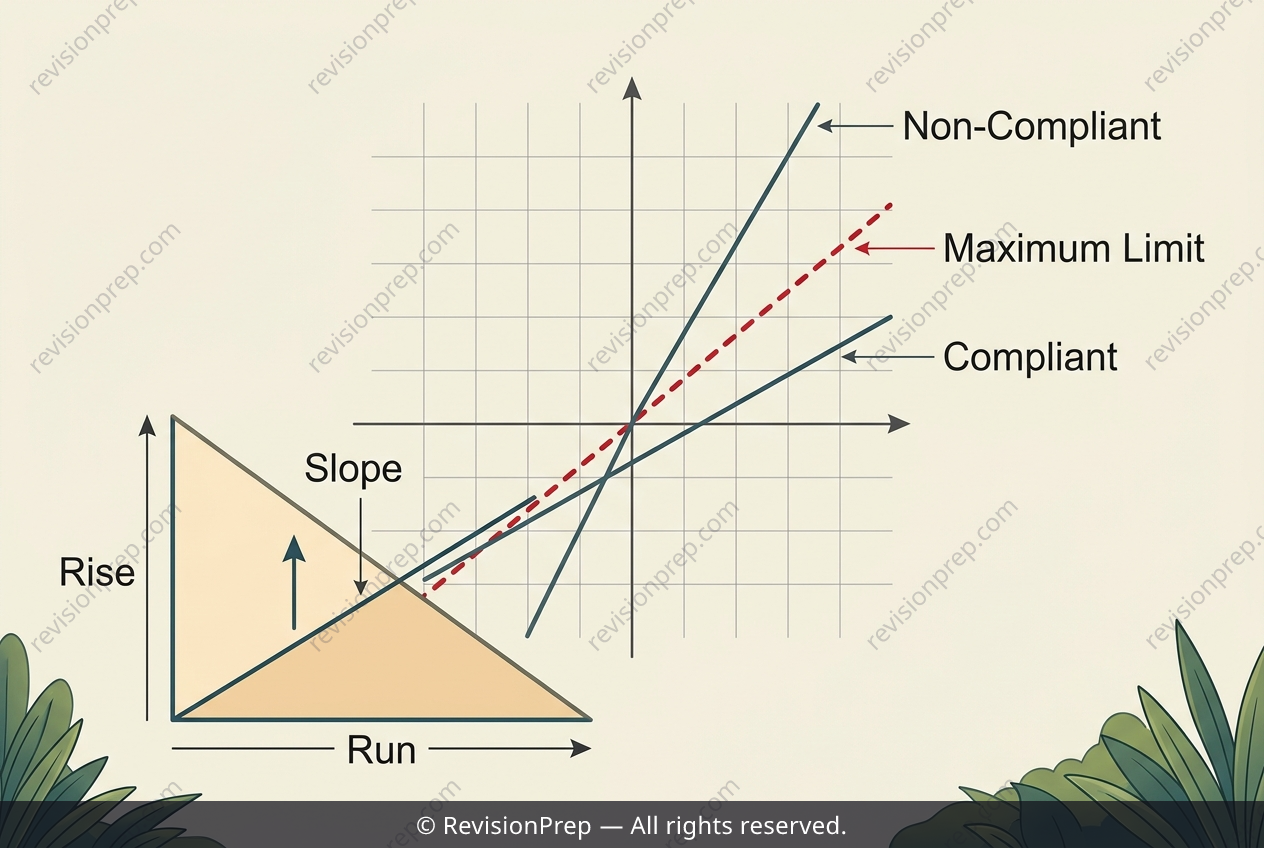
Maths: Rise, Run, and the 1/12 Rule
The slope of a line is its gradient—a single number that captures how steeply something rises or falls relative to its horizontal travel. In coordinate geometry, slope is calculated as rise over run, or the vertical change divided by the horizontal change. This ratio is not just an abstract idea; it governs real-world safety and design, from road inclines to the wheelchair ramps that ensure accessibility for everyone. Why does this matter? Because regulations often set a maximum allowable slope, such as a ratio like 1/12, meaning the ramp can rise no more than one unit for every twelve units of horizontal distance. To check compliance, you compare your calculated slope against that limit. If your slope is smaller, you are safer and compliant; if larger, you must adjust the design—typically by lengthening the horizontal run or lowering the rise. Understanding this relationship between rise, run, and the regulatory threshold turns a simple fraction into a practical tool for engineering decisions.
Start practising IB questions today
150,000+ IB-styled questions, criteria-mapped and instantly accessible.