
Maths: Two Points, and the 1/8 Safety Test
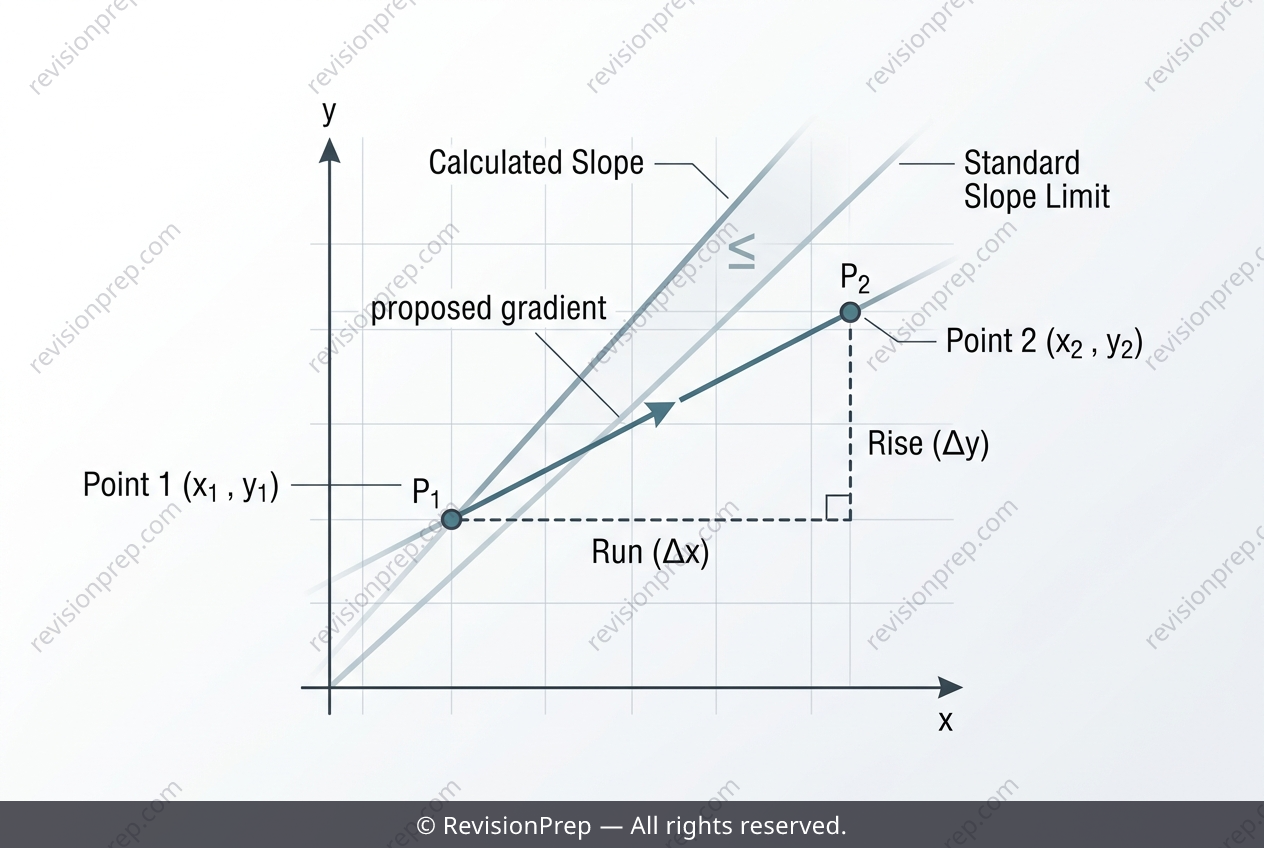
Slope is, at its heart, a measure of rate of change: how steeply a line rises or falls for every unit it moves horizontally. In Cartesian coordinates, this relationship is captured by the formula m = (y₂ − y₁) / (x₂ − x₁), which compares the vertical change (rise) to the horizontal change (run) between any two distinct points on a line. This idea moves far beyond abstract graphs. In real-world design, slope becomes a safety constraint. Consider accessibility ramps: building codes often cap the maximum allowable steepness, such as a ratio of 1/8, meaning the ramp can rise no more than one metre for every eight metres of horizontal distance. To test a proposed ramp, you take two measured points, plug their coordinates into the slope formula, and obtain a single number. That number is then compared directly against the legal limit. If the calculated slope exceeds the permitted value, the design fails the standard; if it is less than or equal to the limit, it passes. The power of the formula lies in this clean translation from physical measurements to a decisive yes-or-no verdict on safety and accessibility.
Start practising IB questions today
150,000+ IB-styled questions, criteria-mapped and instantly accessible.