
Maths: Validating the Decibel Addition Rule
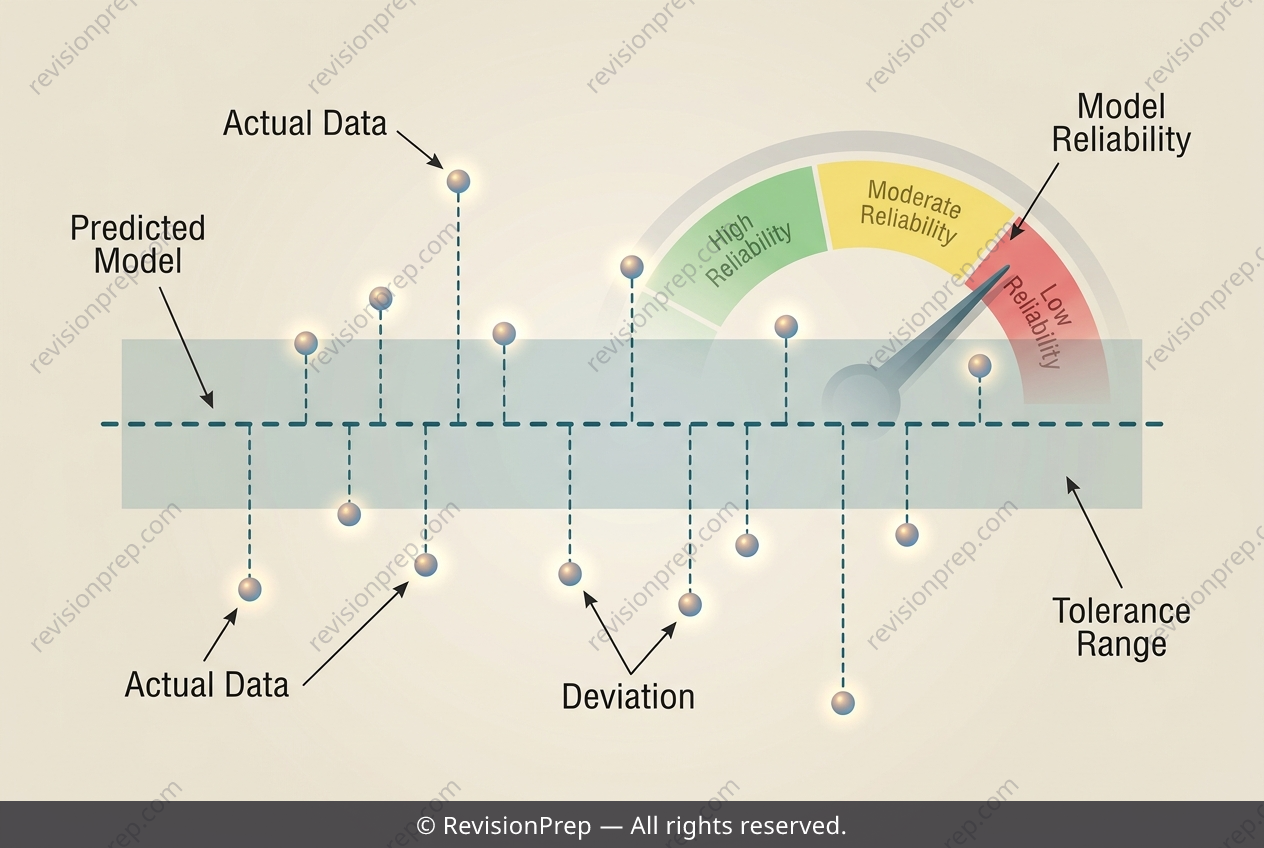
When you connect two amplifiers in series, their gains add—so a 3 dB amplifier followed by a 5 dB amplifier predicts a total of 8 dB. This simple linear rule is the backbone of logarithmic scales like decibels, where multiplication of power ratios becomes addition of numbers. But in the real world, models rarely hold perfectly, and that’s where error analysis steps in. The core idea here is model validation: comparing a predicted value against measured data to decide whether the model is trustworthy. The percentage error formula—absolute difference between predicted and actual, divided by actual, then multiplied by 100%—quantifies how far each observation strays from expectation. When you compute this for multiple input levels, you can average the errors to get a single reliability metric. If that average exceeds a set threshold (like 5%), the model fails the validation test. This process connects the elegance of logarithmic laws to practical engineering judgment, showing that even a correct theoretical rule needs empirical checking before you rely on it.
Start practising IB questions today
150,000+ IB-styled questions, criteria-mapped and instantly accessible.