
Maths: Why Rounding Errors Do Not Always Balance
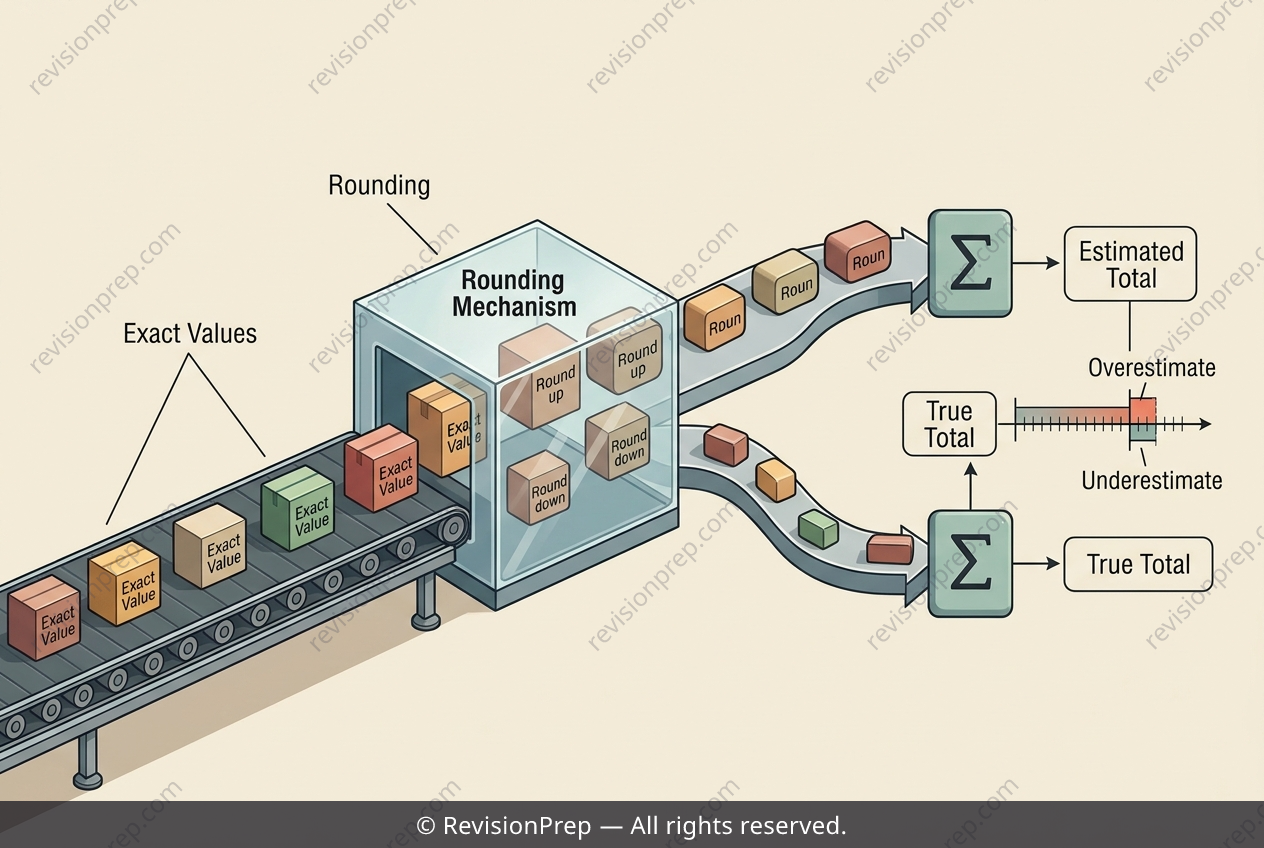
Rounding to the nearest £100 is a form of strategic estimation in which each item price is adjusted to the closest hundred before values are summed. Prices ending in £50–£99 round upward, contributing an overestimate, while those ending in £1–£49 round downward, contributing an underestimate. Because individual items pull the total in opposite directions, the net effect depends entirely on which rounding direction dominates across the whole list, meaning the final estimate may sit above or below the true cost. This matters because estimation is rarely just about speed — it shapes real decisions. In a construction budget, the direction of error carries genuine consequences: an overestimate ensures sufficient funds are allocated and prevents a shortfall, whereas an underestimate risks leaving the project underfunded, causing delays or emergency funding. Understanding how cumulative rounding errors combine, rather than cancelling neatly, is therefore essential for judging whether an estimate is fit for its purpose.
Start practising IB questions today
150,000+ IB-styled questions, criteria-mapped and instantly accessible.