
Maths: Why Time Makes Compound Interest Build Momentum
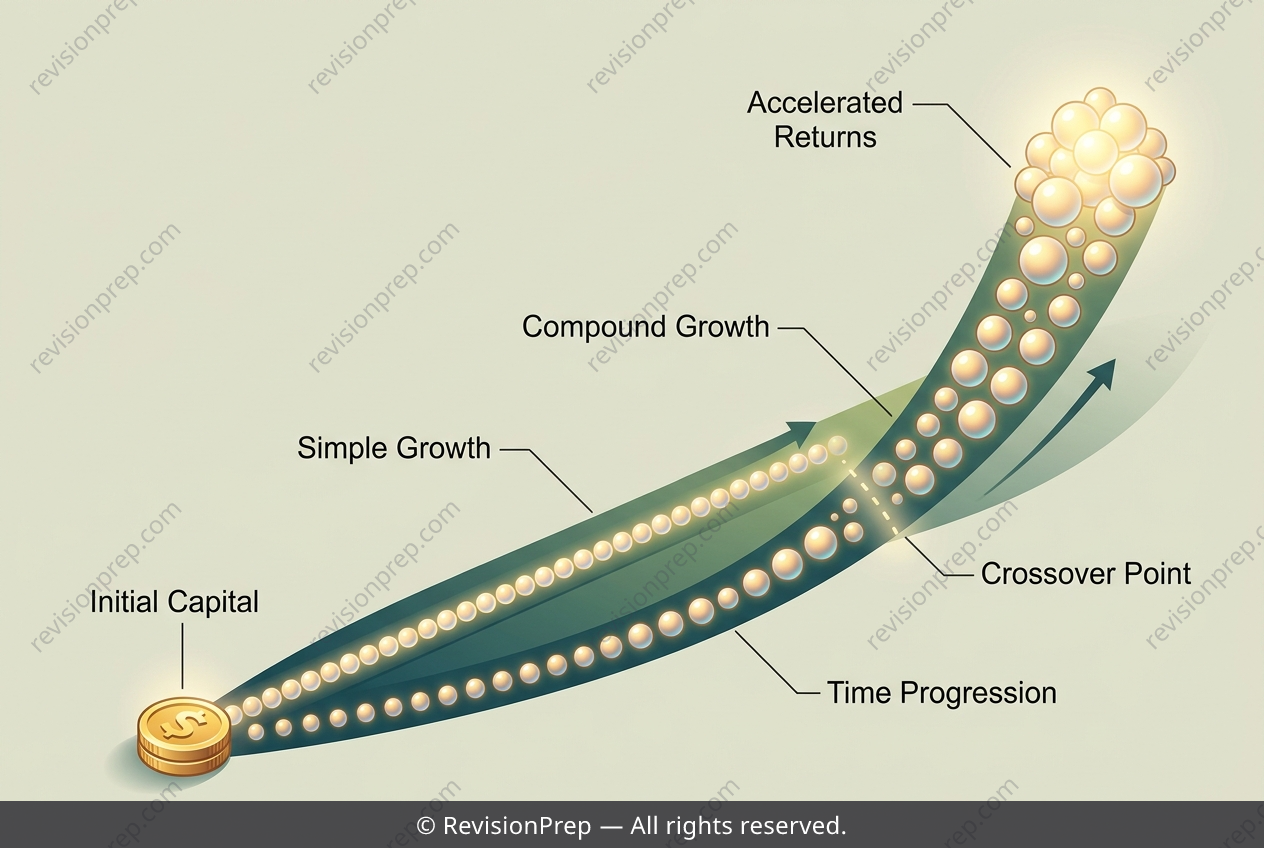
Simple versus compound interest is a study in how money grows at fundamentally different rates. Simple interest applies a fixed percentage only to the original principal, following A = P(1 + rt), so the balance climbs in a straight line. Compound interest applies the rate to the accumulated balance each period, following A = P(1 + r)^t, so growth feeds on itself and accelerates over time. This distinction matters because it shapes real financial decisions, from savings plans to long-term investments. Early on, a higher simple rate can outpace a lower compound rate, since compounding needs time to gather momentum. The two curves therefore cross at some point: the linear path eventually falls behind the exponential one. Understanding where that crossover occurs, and why, reveals how interest rate, time, and compounding frequency interact to determine which investment truly wins in the long run.
Start practising IB questions today
150,000+ IB-styled questions, criteria-mapped and instantly accessible.