
Maths: Why Two Identical Loans Can Cost Differently
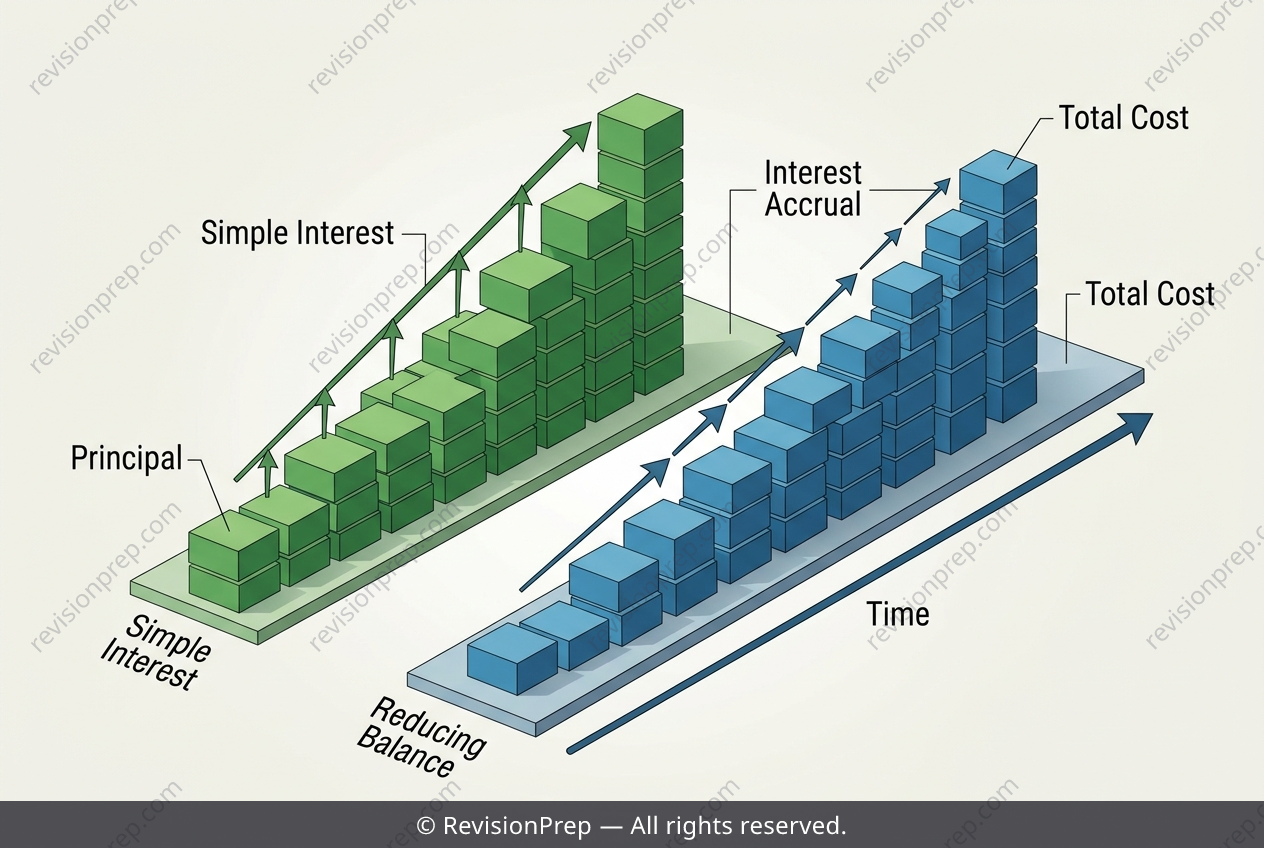
Comparing simple and compound interest is one of the most practical ideas in financial mathematics, because it decides how much a loan or investment really costs you over time. Simple interest is calculated only on the original principal, using I = Prt, where P is the amount borrowed, r is the annual rate as a decimal, and t is the time in years. The interest stays fixed, so the total owed is simply the principal plus that interest, divided evenly across the repayment period. Reducing-balance loans work differently. Interest is charged only on the outstanding balance, which shrinks with every repayment, so less interest accumulates overall. Understanding this distinction matters because two loans can share the same principal, rate, and term yet produce very different total costs. The core skill is connecting the interest formula to the repayment schedule, then comparing total repayments to judge which option is genuinely cheaper for the borrower.
Start practising IB questions today
150,000+ IB-styled questions, criteria-mapped and instantly accessible.