
Physics: Absorbed Dose: Quantifying Radiation's Risk
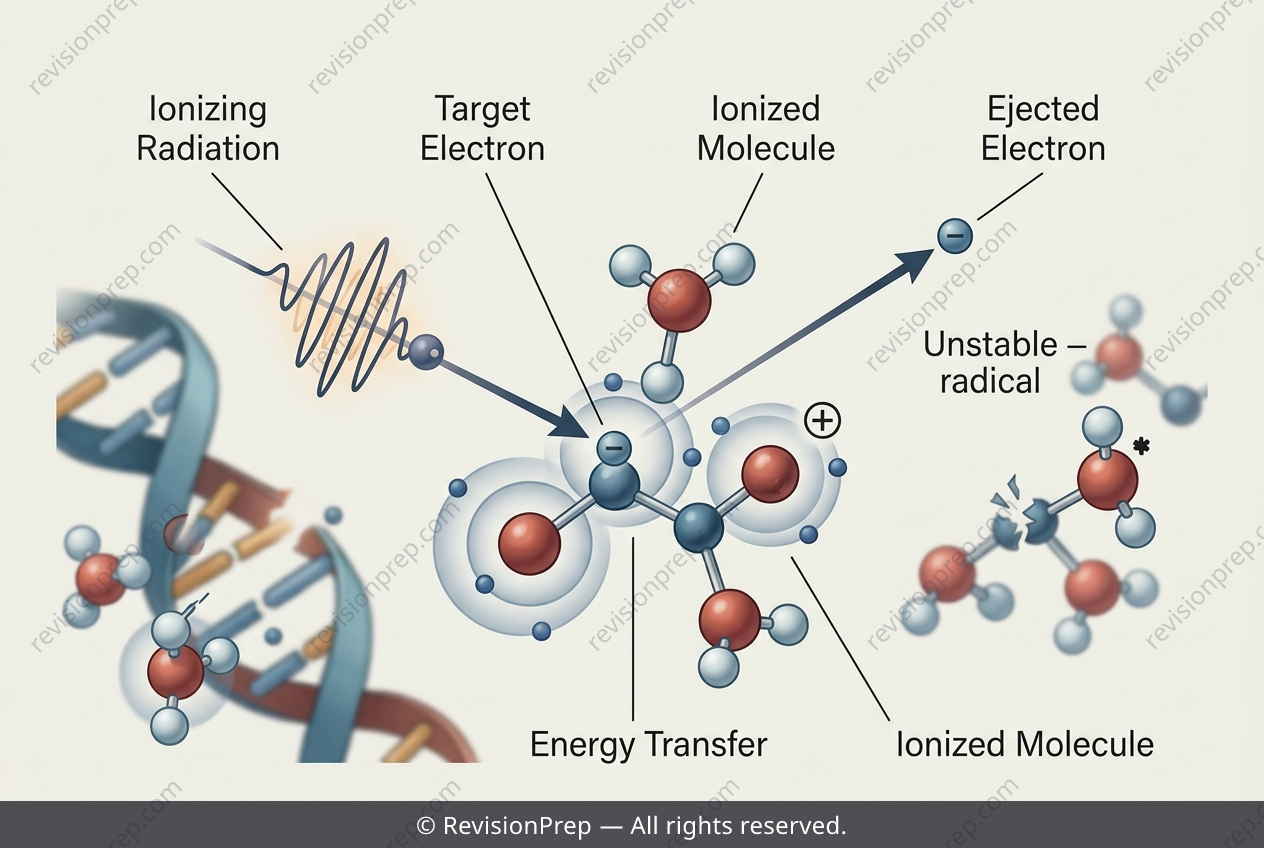
Ionizing radiation transfers energy to living tissue through a fundamentally disruptive process: as it passes through matter, it collides with atoms and molecules, stripping away electrons (ionization) and breaking the chemical bonds that hold cells together. This deposited energy, though often microscopic in scale, can damage DNA, disrupt cellular function, and lead to biological harm—which is why understanding how we quantify and control this exposure is critical in medical settings like radiology and radiotherapy. The key relationship that connects the physical effect to the biological risk is absorbed dose, defined as the energy absorbed per unit mass of tissue. Mathematically, this is expressed as absorbed dose = E/m, where E is the energy in joules and m is the mass in kilograms. The unit for absorbed dose is the gray (Gy), where 1 Gy equals 1 J/kg. Because different tissues have different masses and sensitivities, this measure allows safety officers to compare exposures across procedures and set limits that protect patients and staff from the harmful effects of ionizing radiation.
Start practising IB questions today
150,000+ IB-styled questions, criteria-mapped and instantly accessible.