
Physics: Circuit Safety: Fuses and Overcurrent Protection in Physics
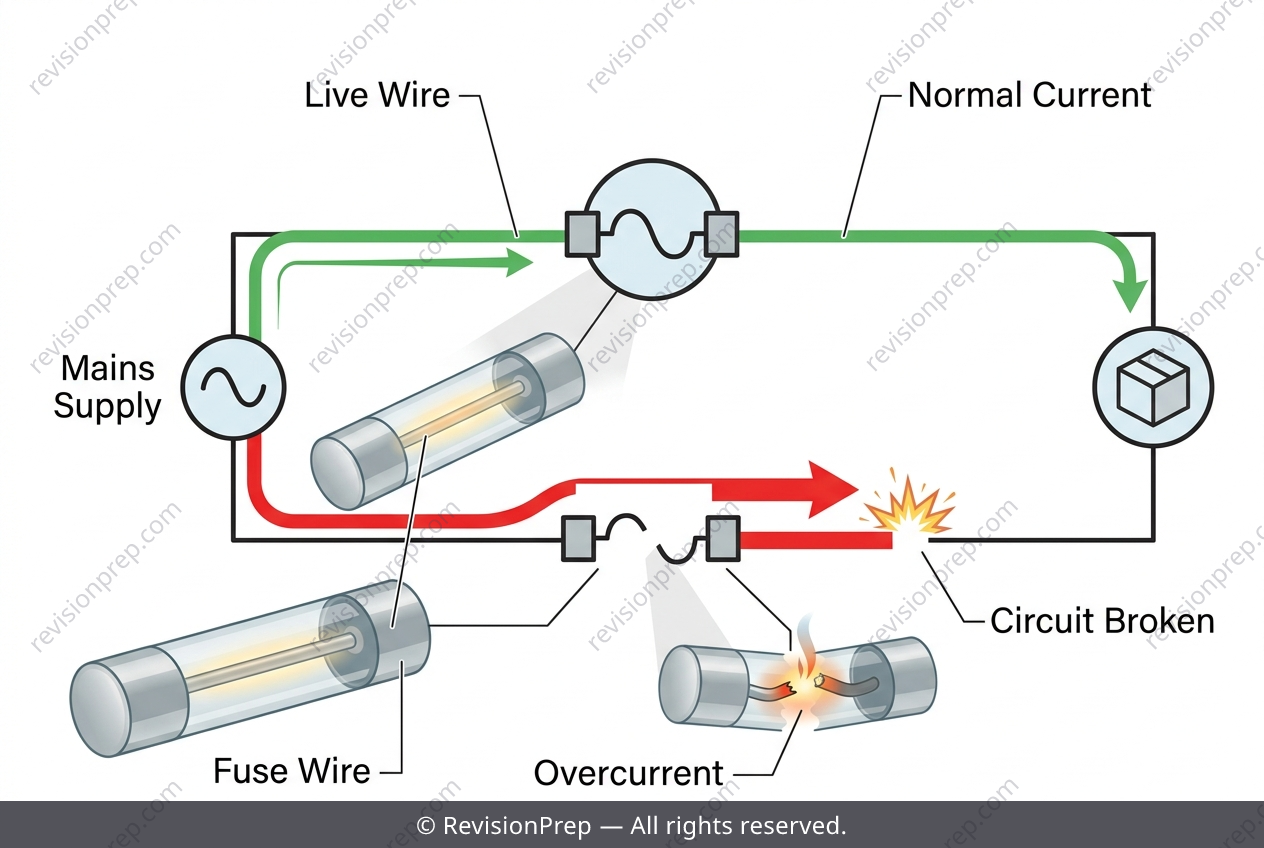
Electrical circuit safety is built on a simple but crucial idea: control the flow of current so that a fault cannot turn into a fire. In any mains-powered device, the relationship P = VI links the power consumed to the voltage supplied and the current drawn. For a laptop operating normally on a 230 V supply, this current is small, but the same formula reveals why protection matters — if a fault reduces resistance, current can surge dramatically, multiplying the heat generated in the wires. The fuse is the frontline defence. Placed in the live wire, it ensures that when current exceeds its rated value, the thin wire inside heats up and melts, creating an open circuit and isolating the appliance from the supply. This mechanism works because the fuse’s rating is chosen to be just above the normal operating current — close enough to trip on a dangerous overload, yet high enough to avoid nuisance breaks. A correctly rated fuse, such as one near the device’s actual draw, limits fault current to a safe level, while an oversized fuse would allow dangerously high currents to flow before breaking, leaving the circuit unprotected against overheating.
Start practising IB questions today
150,000+ IB-styled questions, criteria-mapped and instantly accessible.