
Physics: How Nuclear Stability Shapes Medicine
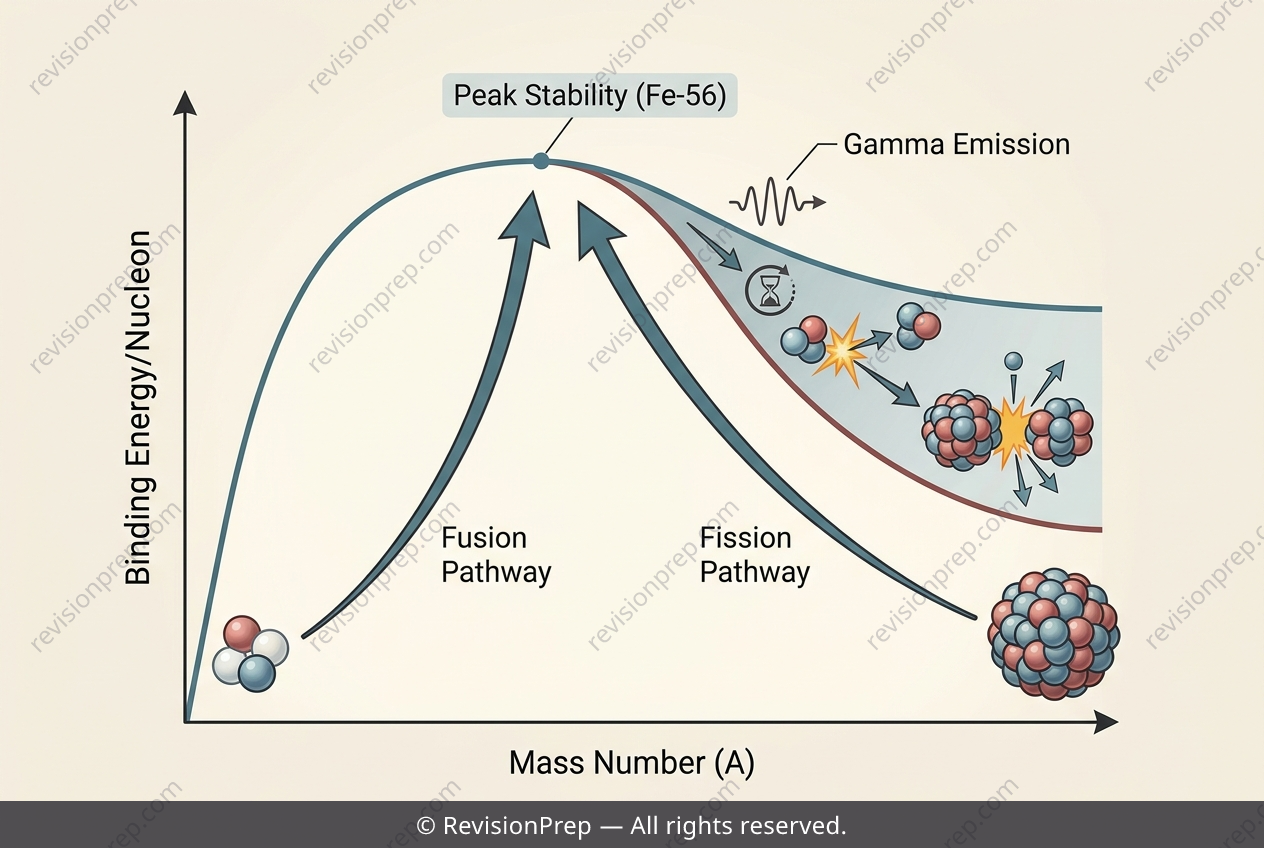
Nuclear stability is the balance point between the forces that hold an atom’s nucleus together and the forces that tear it apart. For an isotope like technetium-99m, this balance is measured by its binding energy per nucleon — the energy required to remove a single proton or neutron from the nucleus. When this value is high, the nucleus is tightly bound and stable; when it dips slightly below that threshold, the nucleus becomes only marginally unstable, seeking a lower-energy state through decay. This concept matters because it dictates which decay pathway an unstable isotope will take — and that pathway determines whether a substance is useful or dangerous in medicine. For ^99mTc, its near-threshold binding energy means it cannot easily eject a particle (like an alpha or beta), so it releases excess energy as pure gamma radiation. That gamma emission is externally detectable, penetrates tissue without causing significant cellular damage, and its 6-hour half-life — a direct consequence of that marginal stability — allows imaging to be completed quickly while ensuring the patient’s radiation exposure fades within a day. However, the same short half-life that makes it safe also prevents long-term storage, meaning it must be produced on-site from a molybdenum generator — a practical limitation rooted entirely in its nuclear stability.
Start practising IB questions today
150,000+ IB-styled questions, criteria-mapped and instantly accessible.