
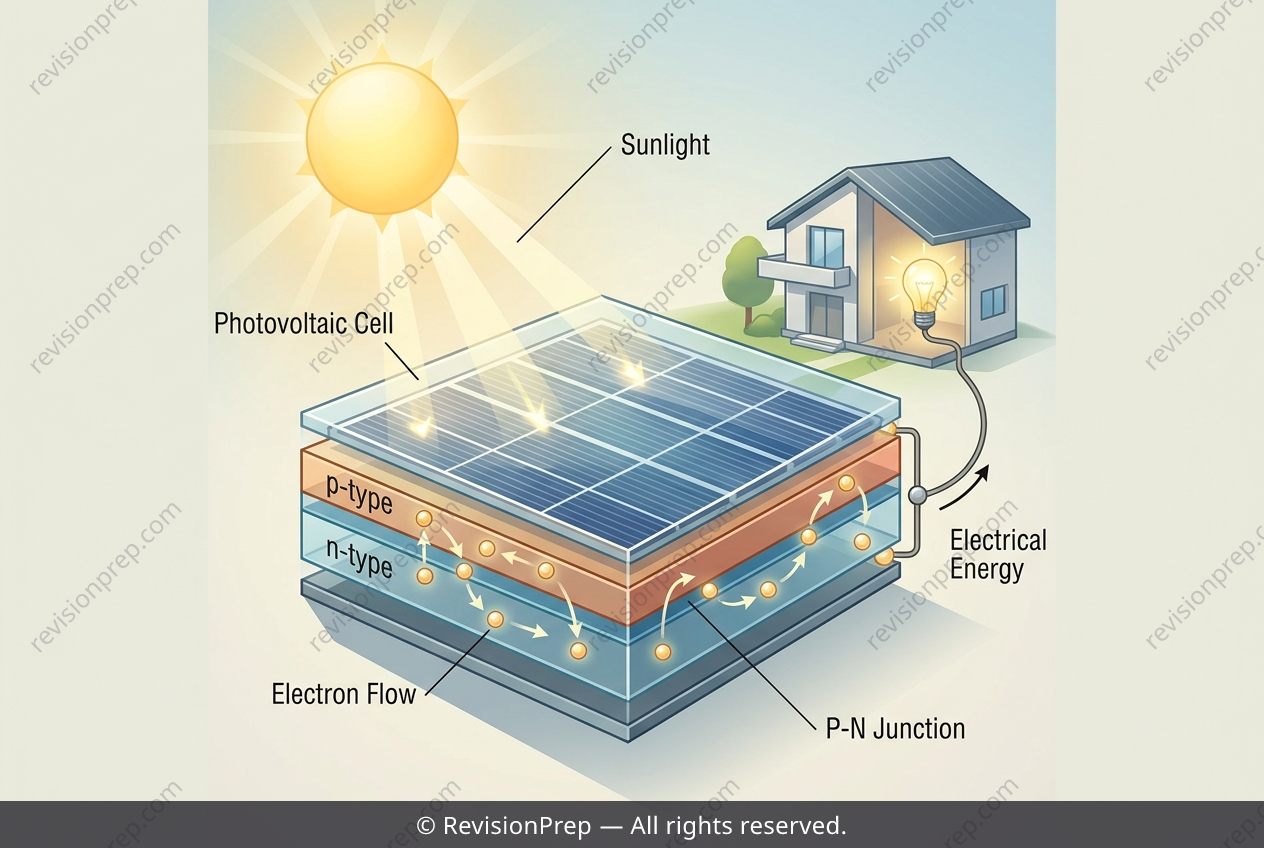
Physics: Photovoltaic Energy Conversion for IB Sciences
When sunlight hits a rooftop solar panel, it delivers roughly 800 watts of power per panel—but what exactly is that energy, and how does it become the electricity that powers your kettle? The answer lies in the distinction between renewable and non-renewable resources. Solar panels harness light energy (also called radiant energy or solar radiation) from the Sun, a continuously available source that will not run out, unlike coal, which stores chemical energy from ancient organisms and releases harmful emissions when burned. At the heart of this conversion are photovoltaic cells. These cells absorb incoming light energy and convert it directly into electrical energy—no fuel, no combustion, no waste gases. This direct transformation is what makes solar power sustainable: it bypasses the burning process entirely, producing electricity while leaving the Sun’s energy supply untouched. Understanding this mechanism—light in, electricity out—reveals why renewable resources like solar are not just an alternative, but a fundamentally cleaner and more durable path for meeting our energy needs.
Start practising IB questions today
150,000+ IB-styled questions, criteria-mapped and instantly accessible.