
Physics: Plate Boundaries: Divergent Margins and Seafloor Spreading
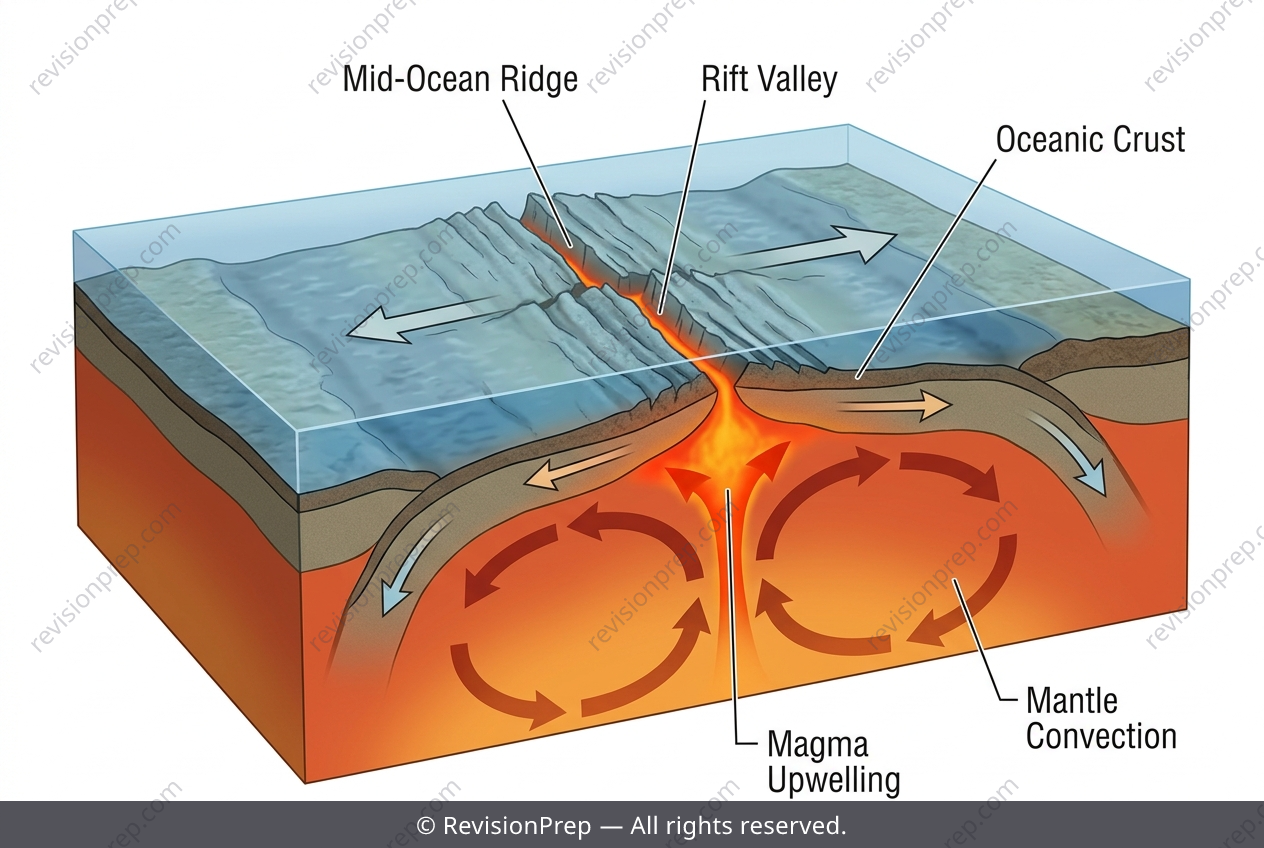
The Earth’s outer shell is not a single, solid piece—it is broken into a mosaic of tectonic plates that glide over the semi-fluid mantle beneath. At the heart of this dynamic system lies plate tectonics, the unifying theory that explains how continents drift, oceans widen, and major geological features form. One of the clearest expressions of this process occurs where two plates move apart, a setting that drives the continuous creation of new lithosphere. When plates diverge, the underlying mantle partially melts as pressure decreases, generating magma that rises to fill the widening gap. This upwelling material cools and solidifies, forming a mid-ocean ridge—a submerged mountain chain that marks the site of seafloor spreading. Here, the relationship between heat flow, magma generation, and crustal formation is direct: as the plates separate, fresh basaltic rock is added to the plate edges, effectively recycling the ocean floor over millions of years. This mechanism not only shapes the seafloor but also drives the slow, measurable movement of continents, linking deep-Earth processes to surface geography. Understanding this boundary type is essential for grasping how Earth’s surface is constantly renewed, not static.
Start practising IB questions today
150,000+ IB-styled questions, criteria-mapped and instantly accessible.