
Physics: Radioactive Instability & Powerful Medicine
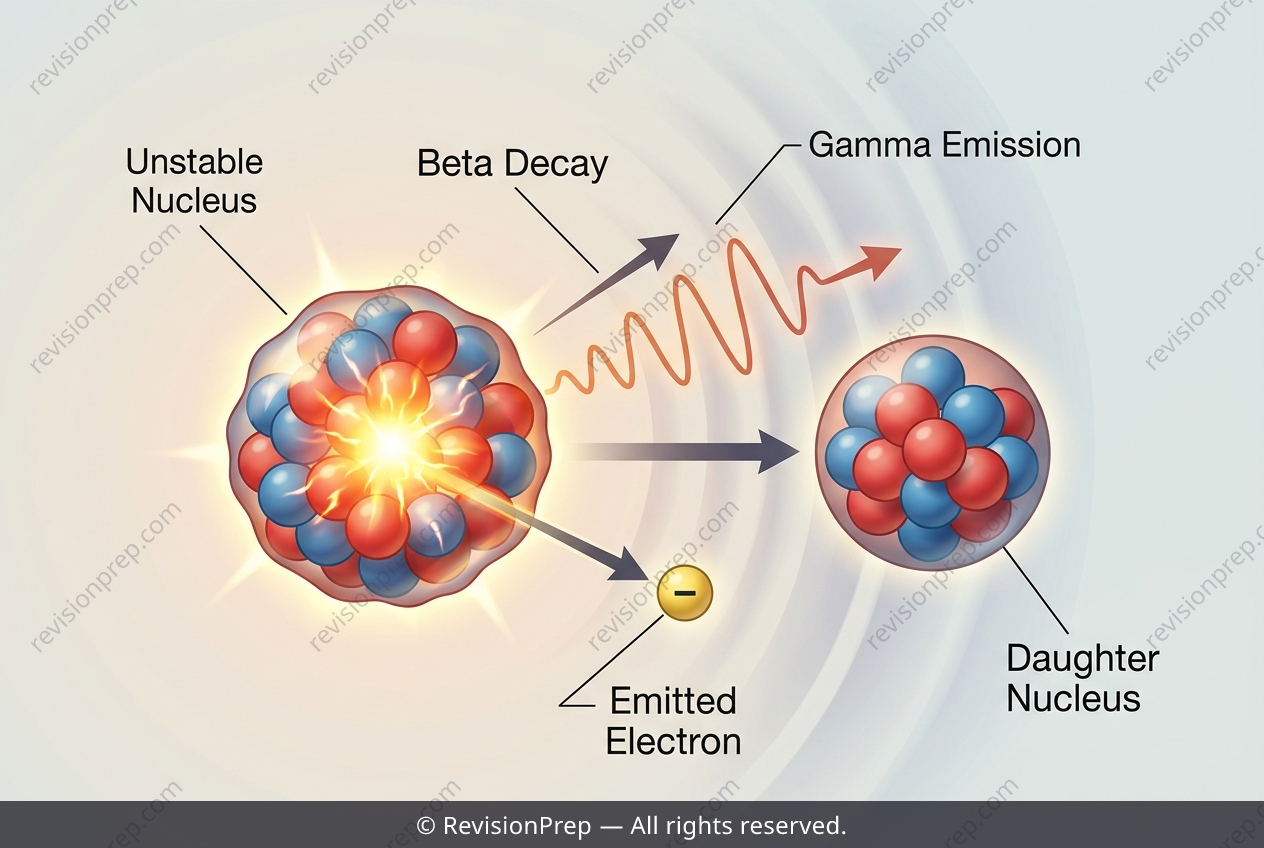
At the heart of the atom lies a delicate balance between the protons that repel each other and the strong nuclear force that binds them together. When this balance tips, the nucleus becomes unstable, seeking stability through the spontaneous emission of particles and energy—a process we call radioactive decay. This is the core of nuclear physics: the transformation of an unstable nucleus into a more stable configuration, often releasing alpha, beta, or gamma radiation in the process. This fundamental instability is not just a theoretical curiosity; it is the engine behind nuclear medicine. In a tracer like Iodine-131, the unstable nucleus decays by emitting beta particles and gamma rays. Because gamma radiation can pass through tissue, external scanners detect its origin, allowing clinicians to map metabolic activity in organs like the thyroid without a single incision. The very mechanism that makes the nucleus unstable—its drive to shed energy and particles—becomes a powerful diagnostic tool. However, that same ionising emission carries a dual edge: the energy released can damage healthy cells, meaning the decay that enables imaging also demands careful shielding and dose limits. Thus, the physics of the nucleus directly dictates both the power and the peril of its medical application.
Start practising IB questions today
150,000+ IB-styled questions, criteria-mapped and instantly accessible.