
Physics: Refraction of Light: IB Science Data Analysis Practice
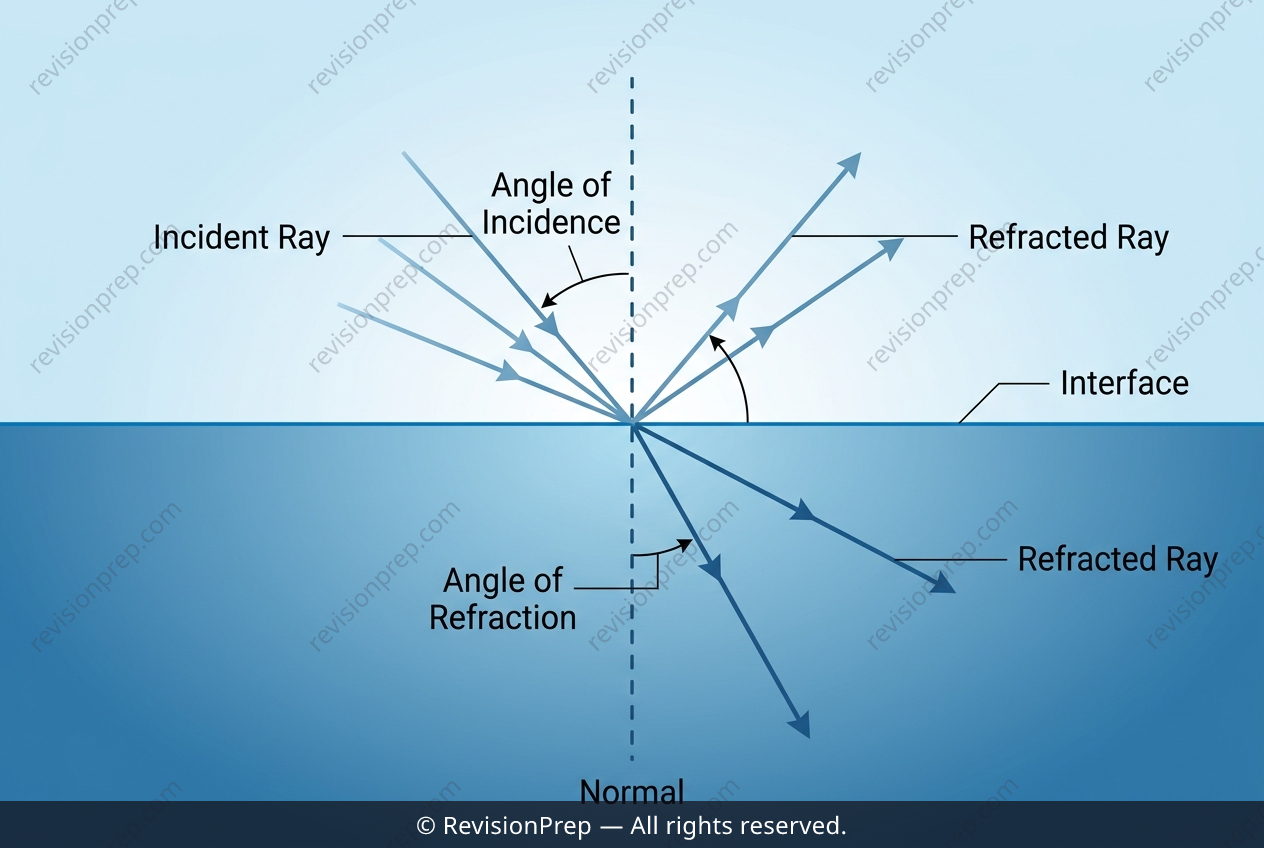
When a beam of light crosses from one transparent medium into another—say, from air into water—it doesn’t simply continue in a straight line. Instead, it bends, and that bending is called refraction. The core relationship at play is Snell’s law: n₁ sin θ₁ = n₂ sin θ₂, where θ₁ is the angle of incidence (the incoming angle relative to the normal) and θ₂ is the angle of refraction (the angle inside the new medium). Because water is denser than air, light slows down and bends toward the normal, so the angle of refraction is always smaller than the angle of incidence. This phenomenon isn’t just a classroom curiosity—it explains why a straw looks broken in a glass of water, why swimming pools appear shallower than they are, and how lenses focus light in glasses and cameras. The key pattern to notice is that the difference between the two angles is not constant. As the angle of incidence increases, the gap between it and the angle of refraction grows larger. That means light bends more sharply at steeper entry angles, a direct consequence of the sine relationship in Snell’s law. Understanding this trend helps you predict how light will behave in prisms, fibre optics, and even the human eye.
Start practising IB questions today
150,000+ IB-styled questions, criteria-mapped and instantly accessible.