
Physics: Series Circuit Logic Through Fire Alarm Design
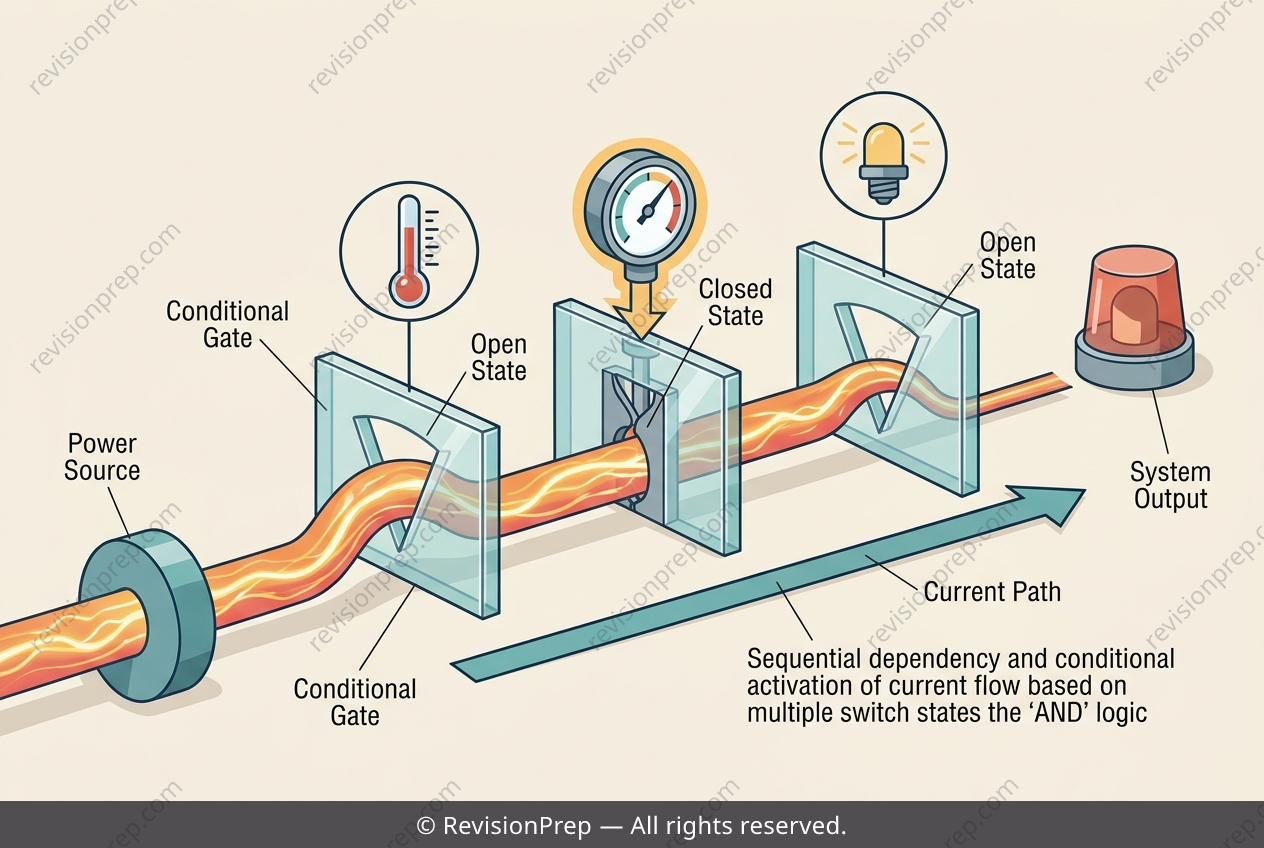
In a series circuit, every component is connected along a single, unbroken path, meaning the same current flows through each element in turn. This is the functional logic behind the fire alarm system described here: four heat sensors, a 6 V supply, and a buzzer are all linked in one loop, with each sensor acting as a normally open switch. Under normal conditions, the open switches prevent any current from flowing, keeping the buzzer silent. The key relationship in this design is that closing any single sensor switch completes the entire series loop, allowing current to flow immediately through the buzzer and trigger the alarm. While series circuits are often criticised because one break stops everything, that very property becomes a safety advantage here: only one point of heat detection is needed to activate the whole system, maximising sensitivity and response speed. Because the sensors are normally open, a fault that leaves a sensor open simply keeps the alarm quiet—it does not create a false alarm, and the system sounds only on genuine detection. This deliberate choice shows how the same circuit logic can be repurposed for fail-safe operation.
Start practising IB questions today
150,000+ IB-styled questions, criteria-mapped and instantly accessible.