
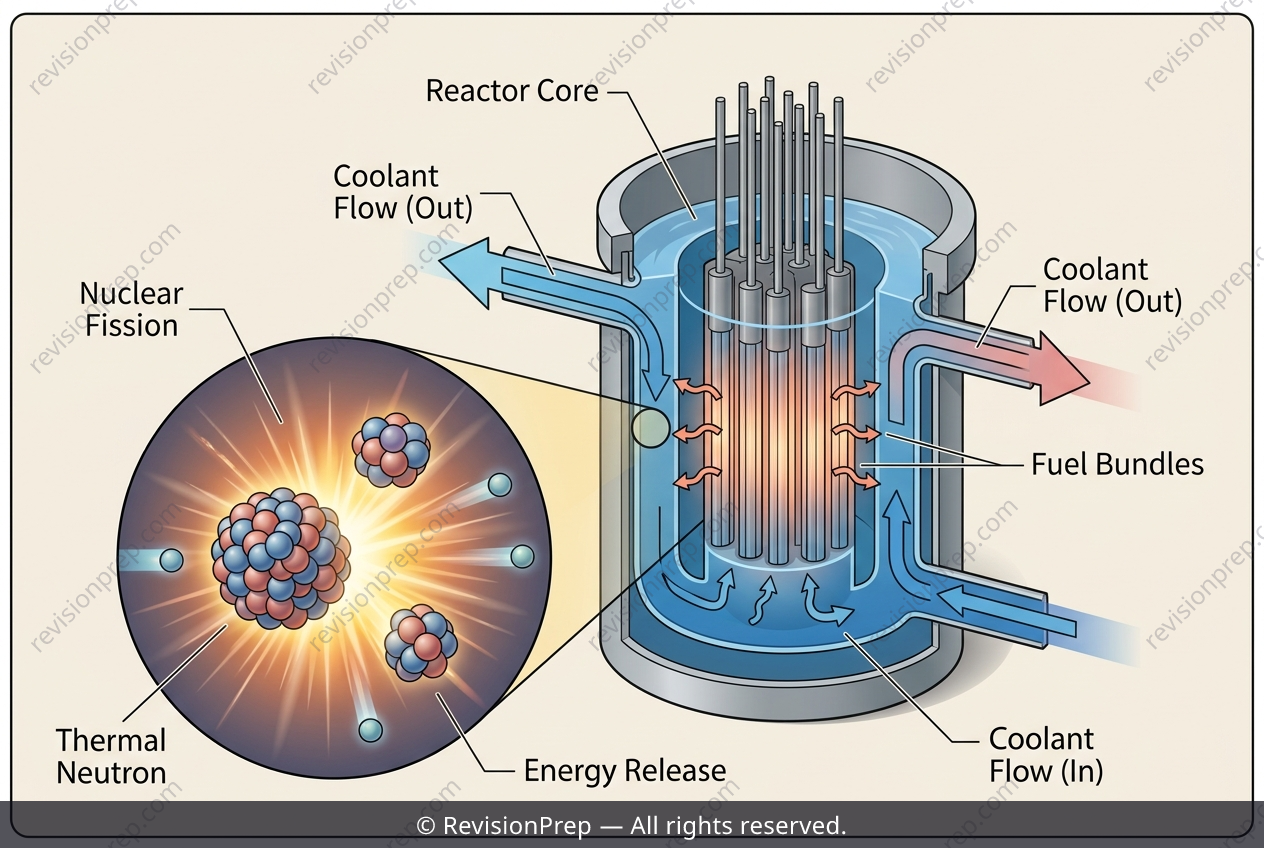
Physics: The Fission-to-Heat Connection
Nuclear fission is the process by which a heavy nucleus, such as uranium-235, splits into lighter fragments after absorbing a neutron, releasing a substantial amount of energy. In a CANDU reactor, natural uranium—containing only 0.720% fissile U-235—is used with heavy water to sustain a chain reaction. The energy released per fission can be calculated directly from the difference in binding energy per nucleon between the parent nucleus and the fission products, such as barium-144 and krypton-89, using the formula ΔE = (Eproducts) − Ereactant. This energy output is enormous, but managing it safely is the real engineering challenge. The reactor’s coolant and moderator must absorb and carry away heat without boiling away, which would compromise safety. By comparing the total energy released from a given mass of fuel—accounting for the fraction of U-235 and the efficiency of fission—to the heat capacity of the cooling water, you can determine whether the thermal management system is adequate. This connection between nuclear physics and practical thermal limits is central to understanding how reactors operate and why design constraints matter.
Start practising IB questions today
150,000+ IB-styled questions, criteria-mapped and instantly accessible.