
Physics: the Lorentz Force: IB Physics Coil in a Magnetic Field
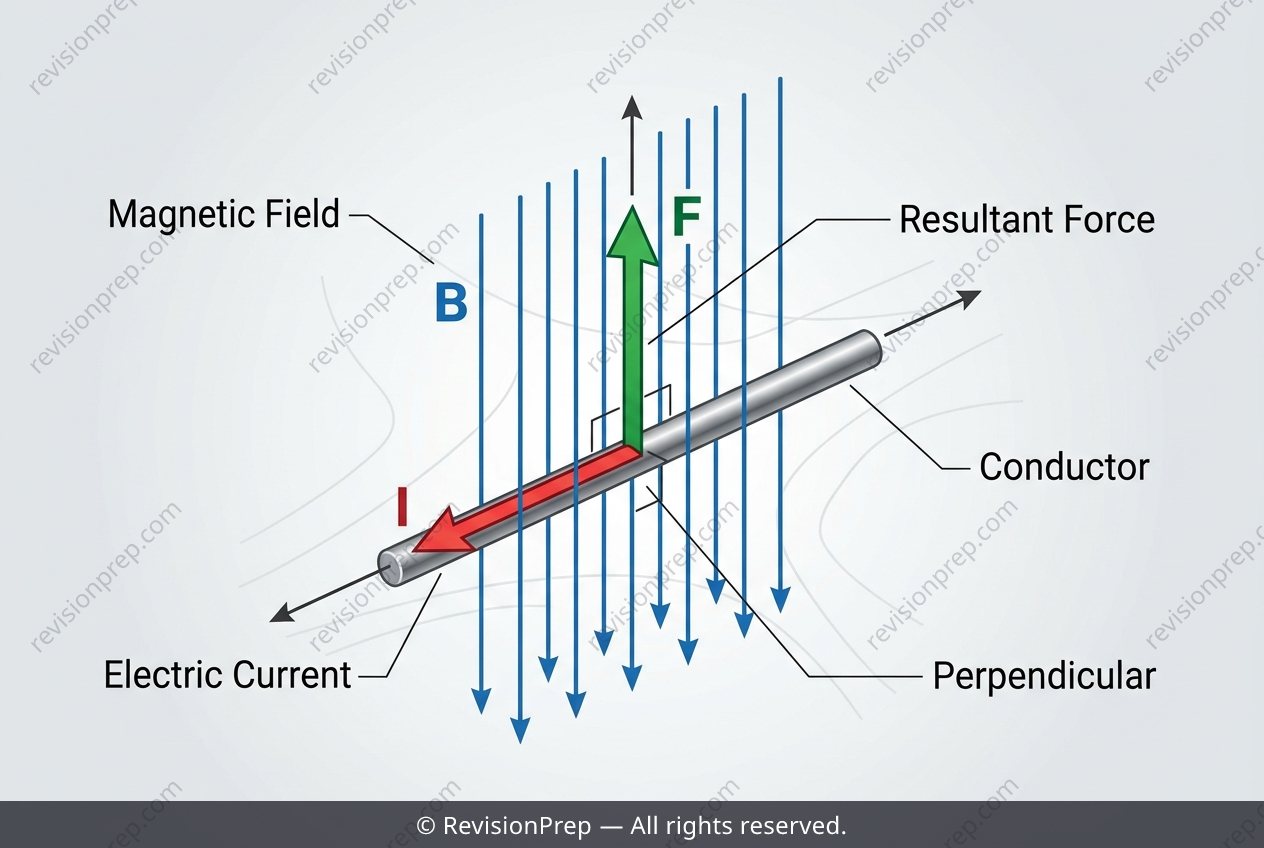
When a current-carrying wire is placed inside a magnetic field, it experiences a force—this is the essence of the motor effect, and it forms the foundation of how electric motors convert electrical energy into mechanical motion. The force arises from the interaction between the moving charges in the wire and the external magnetic field, and its magnitude is given by F = BIL, where B is the magnetic flux density, I is the current, and L is the length of wire within the field. This relationship is central to understanding how to control and predict the behaviour of electromagnetic devices. The Lorentz force, as it is formally known, is not just a theoretical curiosity—it explains why a coil spins between the poles of a horseshoe magnet, and why changing the current or the magnet’s strength alters the resulting motion. Because the force is directly proportional to both current and wire length, and also depends on the strength of the magnetic field, there are multiple ways to increase it. Recognising these interconnected variables helps you see why a single-factor explanation, such as only swapping for a stronger magnet, is incomplete—the same effect can be achieved by adjusting other physical parameters in the system.
Start practising IB questions today
150,000+ IB-styled questions, criteria-mapped and instantly accessible.