
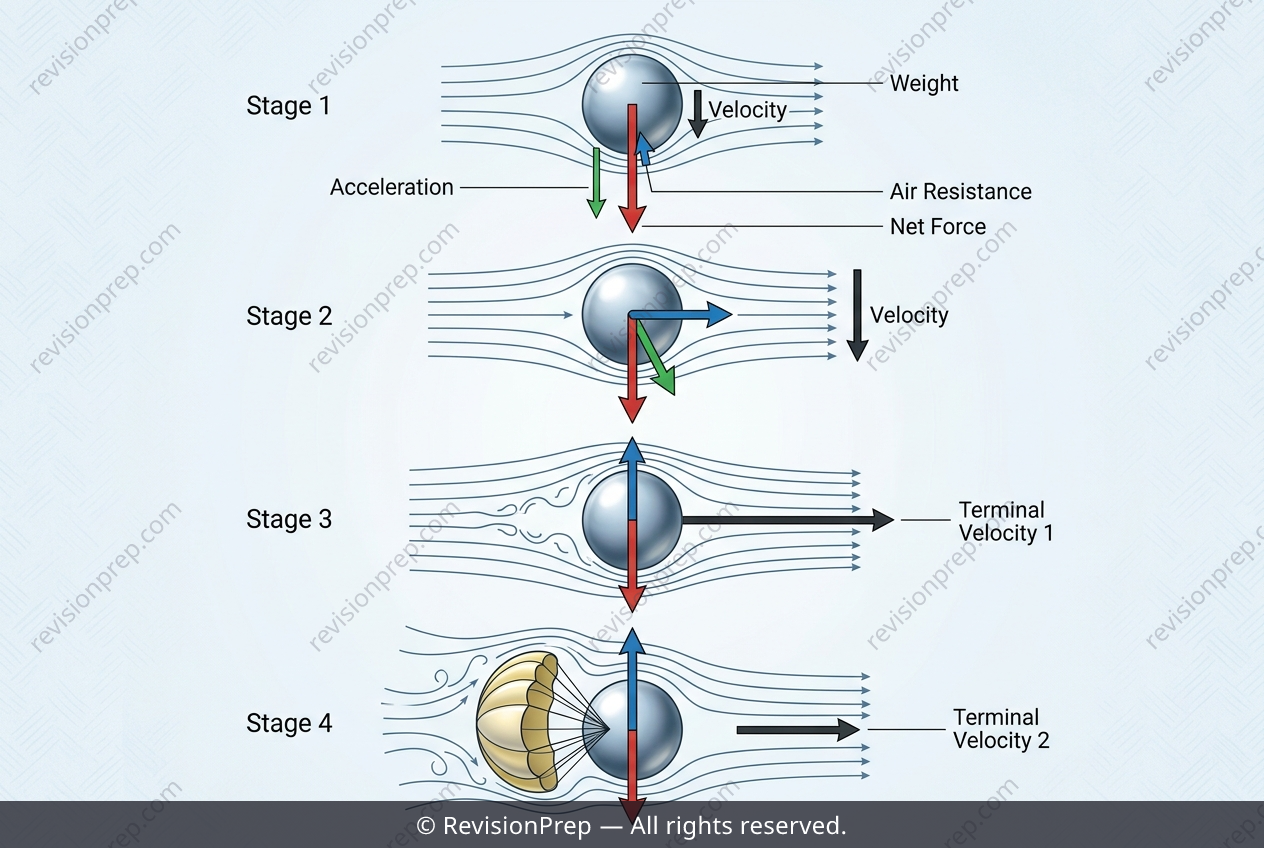
Physics: Why a Parachute Resets Terminal Velocity
Terminal velocity is the point at which a falling object stops accelerating because the upward force of air resistance (drag) grows to exactly balance the downward force of gravity (weight). With the net force reduced to zero, the object continues falling at a constant speed rather than speeding up further. This idea matters because it explains why a skydiver's descent is governed not by gravity alone, but by the ongoing tug-of-war between weight and drag. As speed increases, drag increases; as the skydiver slows, drag falls again. Opening a parachute dramatically increases surface area, so drag suddenly exceeds weight, producing a net upward force that decelerates the skydiver until the two forces rebalance at a new, much lower terminal velocity — the key to a safe landing.
Start practising IB questions today
150,000+ IB-styled questions, criteria-mapped and instantly accessible.