
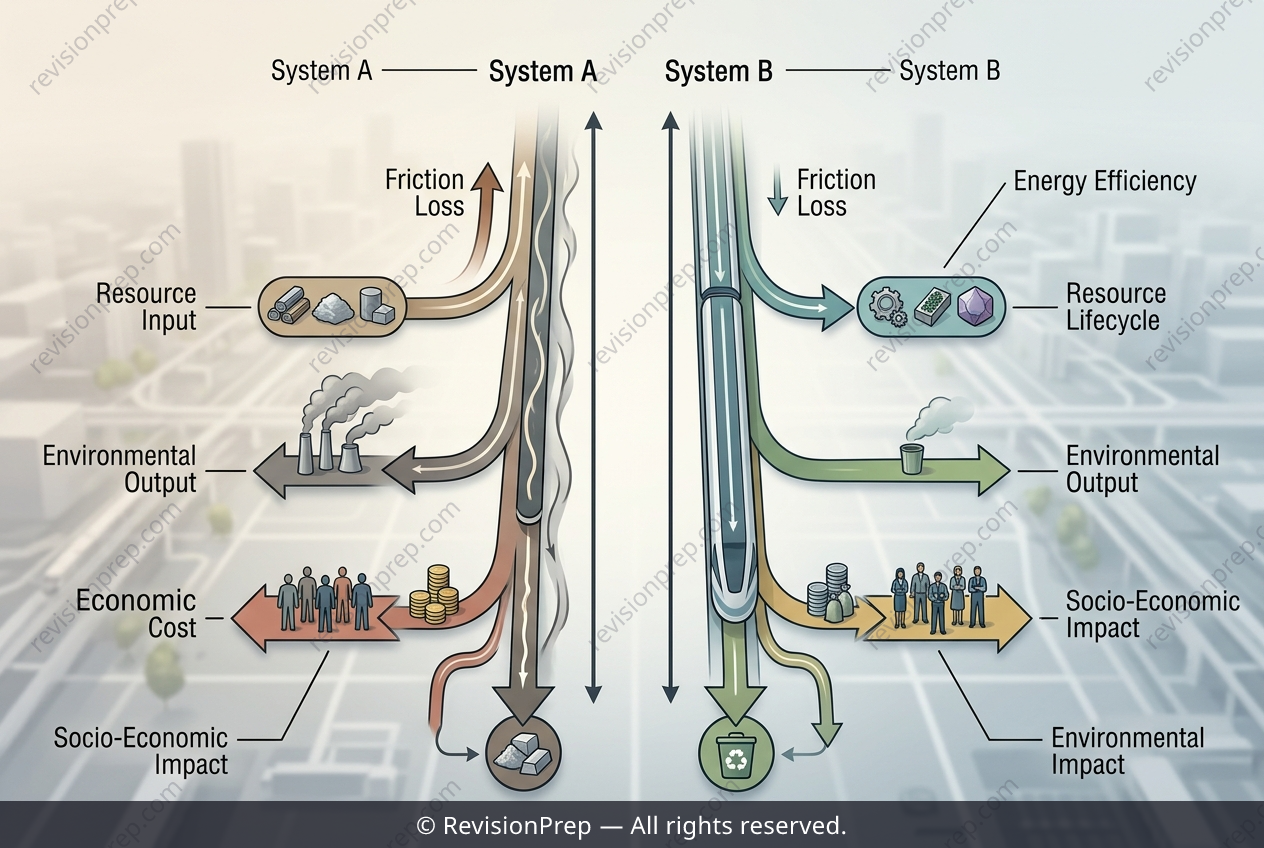
Physics: Weighing the True Cost of Maglev Travel
Balanced and unbalanced forces determine whether an object's motion changes. When forces cancel, velocity stays constant; when they don't, acceleration results, as described by F = ma. In transport, friction is a resistive force opposing motion, so removing it — as maglev trains do by levitating above the track — reduces the driving force and electrical energy needed to maintain speed. This matters because lower energy consumption means less electricity drawn from the grid, and therefore fewer emissions. But the relationship isn't simple: with only 40% renewable generation, the remaining fossil-fuel share still produces CO2, so maglev cuts emissions without eliminating them. Levitation electromagnets also demand continuous power, and rare earth elements add further lifecycle costs. Evaluating such systems means weighing energy, environmental impact, infrastructure expense and workforce disruption together, not treating any single factor as decisive.
Start practising IB questions today
150,000+ IB-styled questions, criteria-mapped and instantly accessible.