
Electricity and Magnetism
Circuits, conductors, magnets and electromagnets — the core chain of reasoning behind MYP 1 Sciences electricity questions.
Quick facts
MYP 1 Sciences ties electricity and magnetism together in one clean chain: charge moves as current, the circuit's shape (series or parallel) decides how it behaves, the material decides whether charge can move at all, and moving charge in a coil creates a magnetic field. Exam and unit-test questions rarely ask you to define a term — they ask what happens to the flow of charge, and why. That means series vs parallel circuits, conductors vs insulators, magnetic pole behaviour, and electromagnets show up again and again as short-answer 'describe' and 'calculate' questions. This teaser walks through the five ideas worth locking down before your test, with the common traps examiners see every year. For full worked examples, the complete comparison tables, and every definition in one place, the full revision note has you covered.
What you’ll be able to do
Series and Parallel Circuits
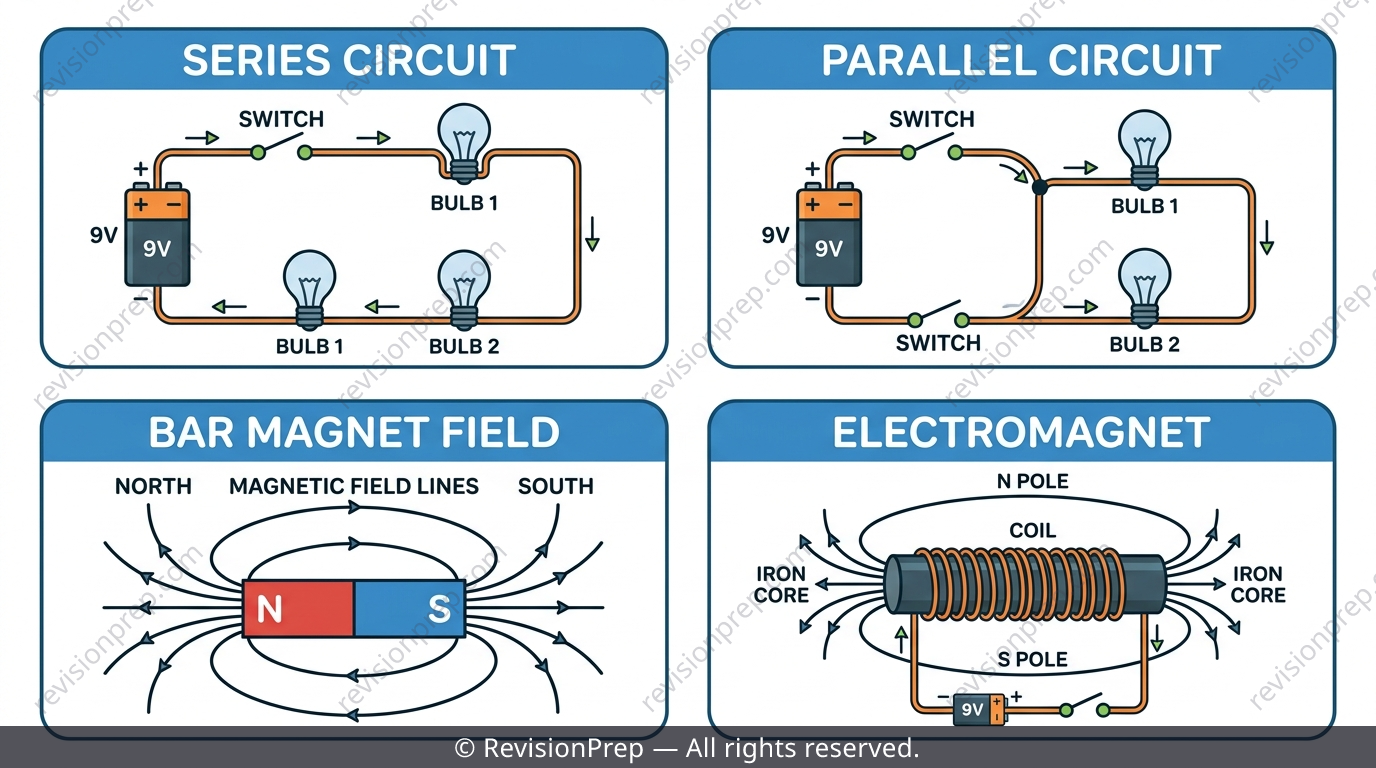
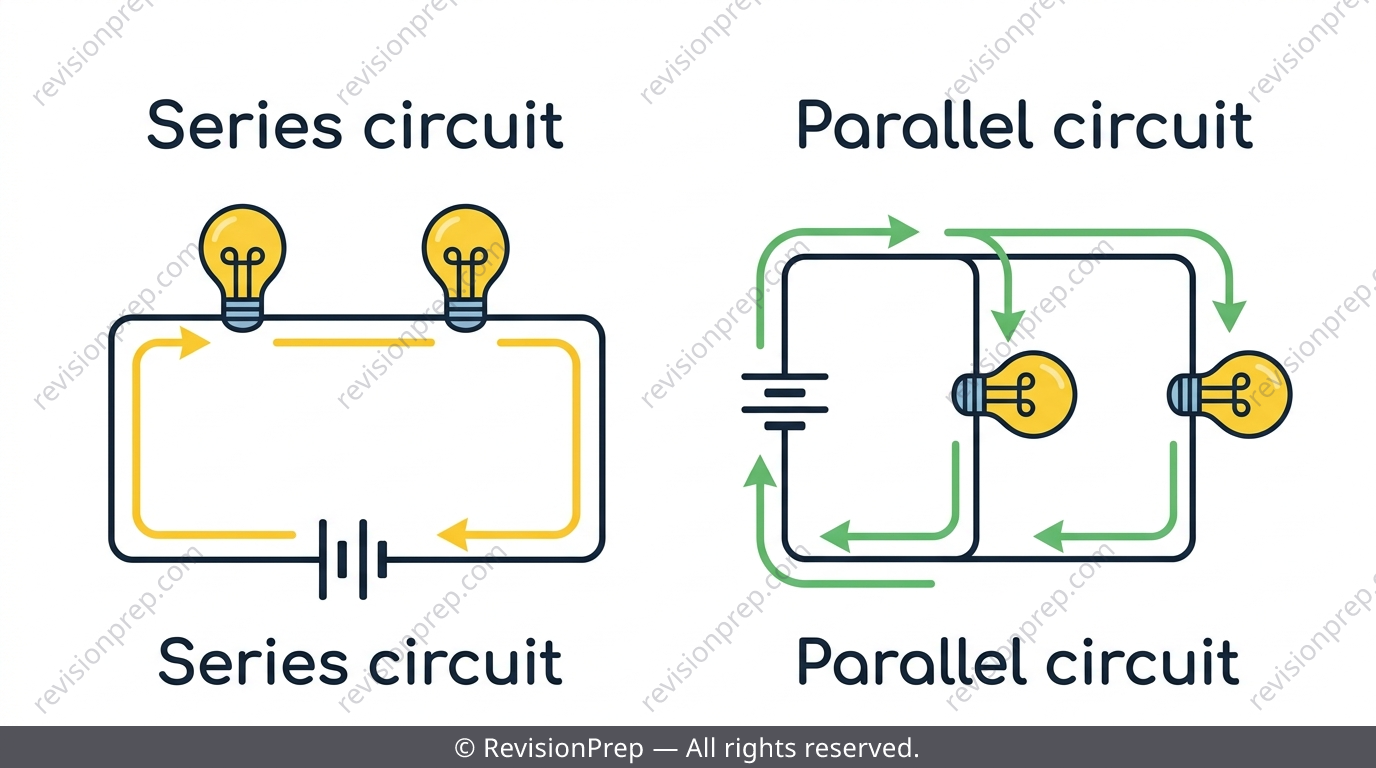
A series circuit gives current exactly one path — through every component in a single loop — so the current is the same everywhere. A parallel circuit splits into branches, each a complete loop back to the battery, so the current through the battery equals the sum of the branch currents. Adding bulbs in series increases resistance and drops current; adding bulbs in parallel opens more paths, so total resistance falls and total current rises.
Exam tip
For 'describe' questions worth one mark, give exactly one clear, complete reason rather than two half-finished ideas — markers award the mark for one fully developed point.
Common mistake
Don't assume removing a bulb always kills the whole circuit. Trace the actual wire path first: in series it does, but in parallel only that branch goes dark.
Mini summary
Series = one path, same current everywhere; parallel = branching paths, currents add up at the battery.
Current, Voltage and Resistance
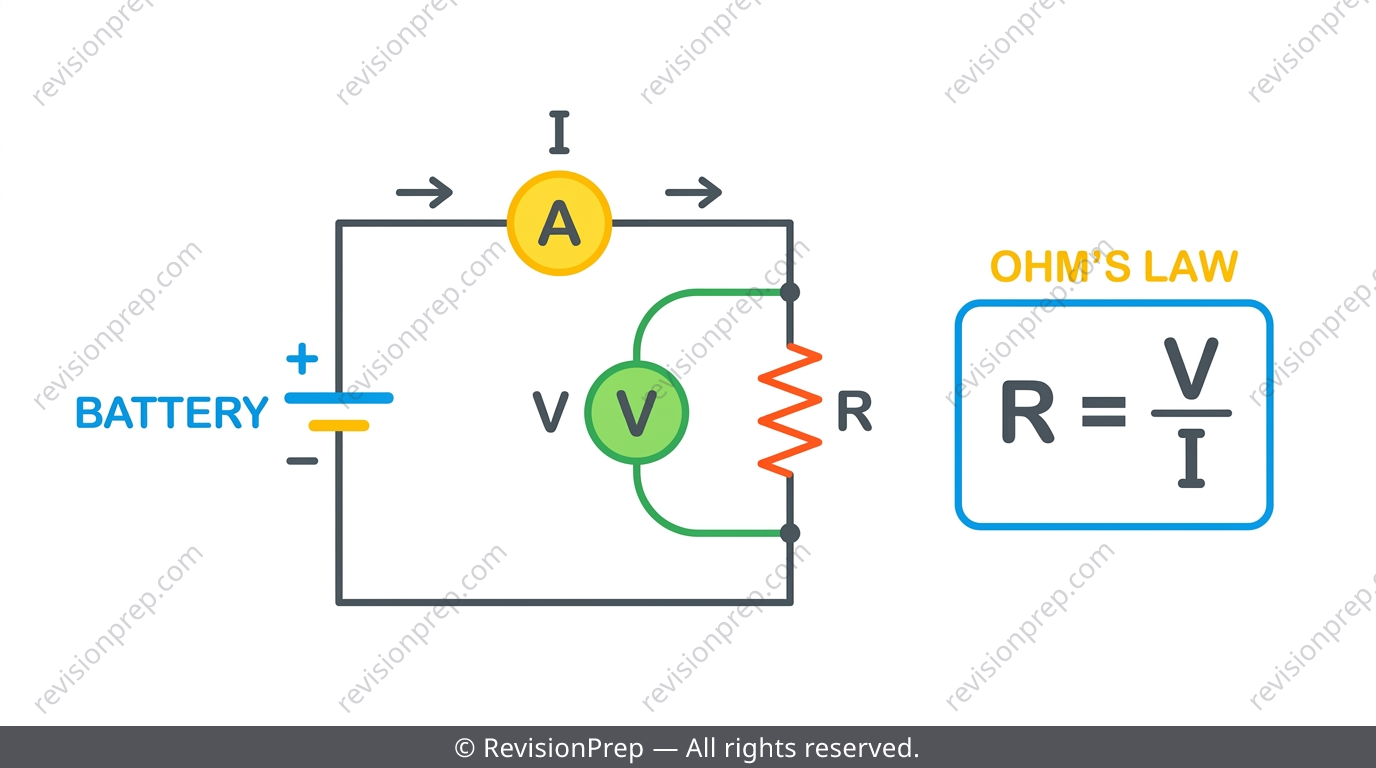
Current (I) is the rate of flow of charge, measured in amperes with an ammeter. Voltage (V) is the 'push' driving that current, measured in volts with a voltmeter. Resistance (R) measures how much a component opposes current flow, measured in ohms, and links to the other two through .
Exam tip
Always calculate resistance from the given V and I values — never guess a ratio, even when bulbs look identical.
Mini summary
R = V/I connects current, voltage and resistance — use the numbers given, not assumptions.
Conductors and Insulators
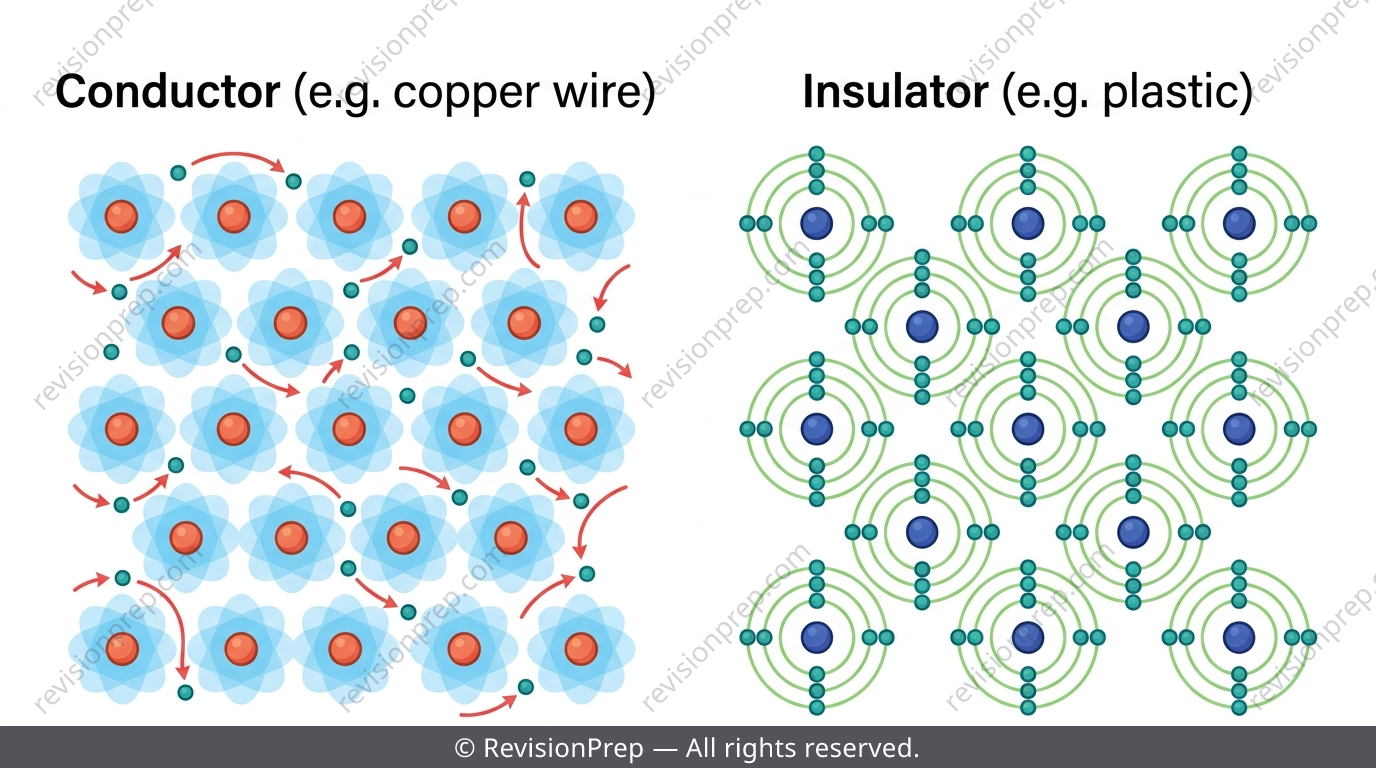
Conductors, mostly metals like copper, have free electrons that drift easily through the material, allowing current to flow. Insulators, like plastic, rubber and glass, hold their electrons tightly bound to atoms, so no current can pass. Copper is the standard wire material because it conducts well and is far cheaper than silver or gold.
Common mistake
Don't say insulators have 'no electrons' — every material has electrons. The difference is whether those electrons are free (conductors) or tightly bound (insulators).
Mini summary
Free electrons = conductor; tightly bound electrons = insulator. Every material has electrons either way.
Magnets and Magnetic Fields
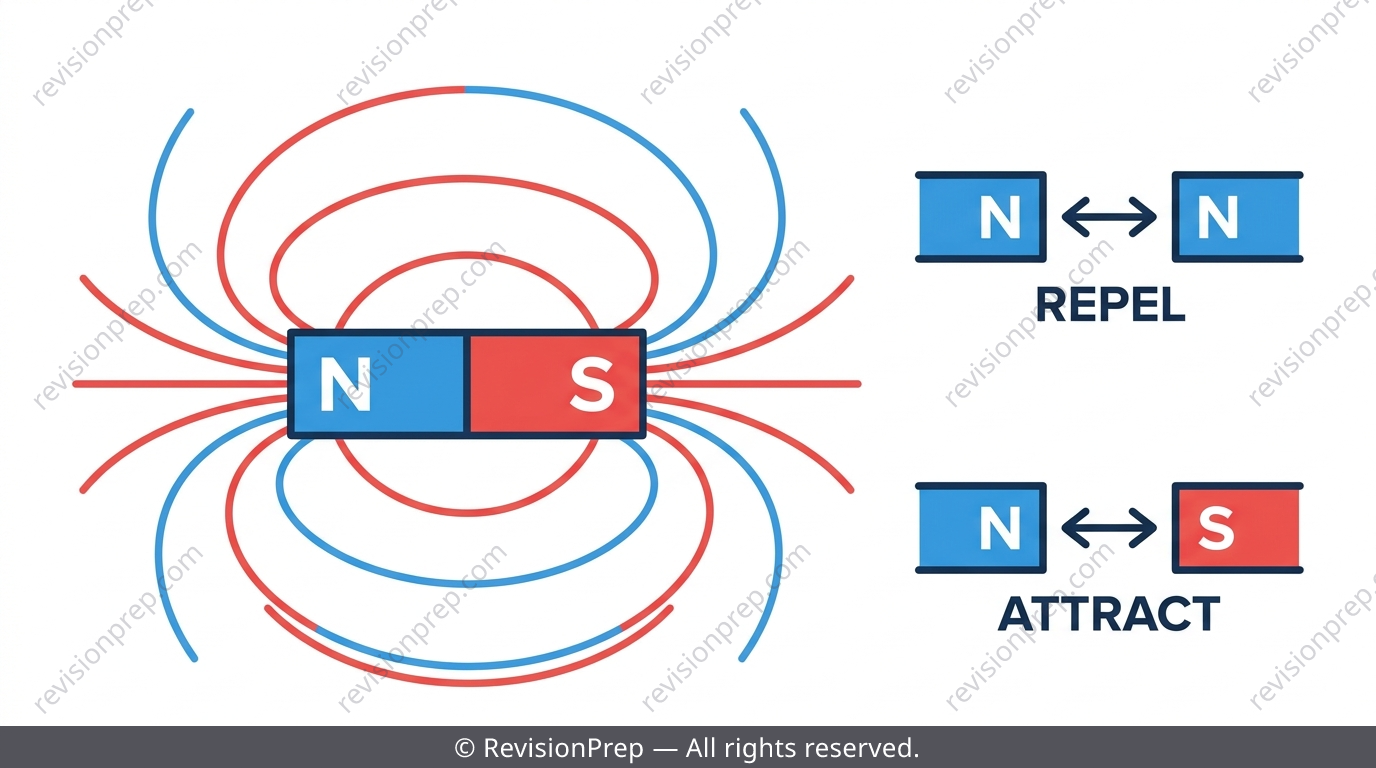
Every magnet has a north and south pole, with field lines running from N to S outside the magnet, strongest right at the poles. Like poles repel and unlike poles attract — the rule behind every magnet-interaction question. Only ferromagnetic materials like iron, nickel and cobalt respond strongly, and a magnet can attract unmagnetised iron by temporarily inducing opposite poles in it.
Common mistake
A magnet picking up a paperclip isn't the like/unlike pole rule at work — it's induced magnetism, since the paperclip wasn't magnetised beforehand.
Mini summary
N-to-S field lines, like poles repel, unlike poles attract, and only ferromagnetic materials respond strongly.
Electromagnets and Their Applications
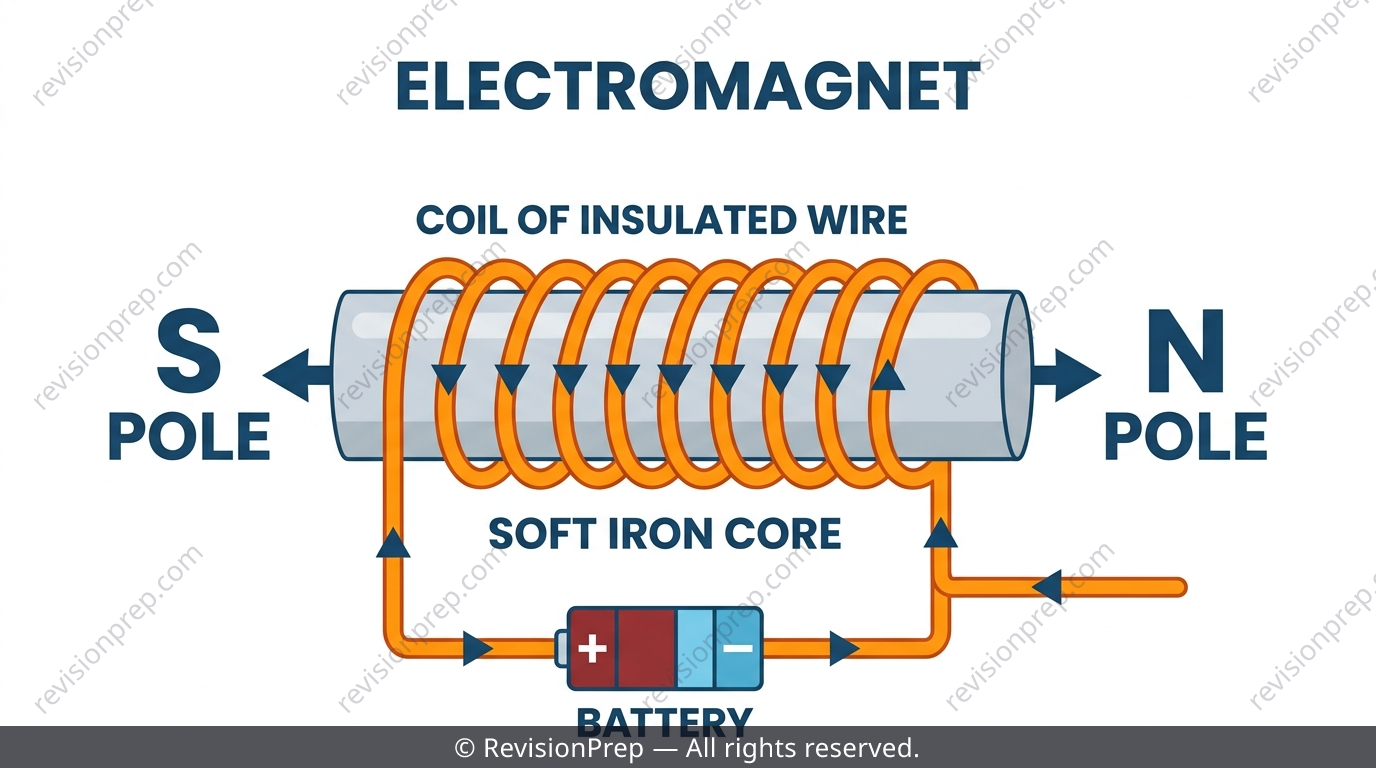
An electromagnet is a coil of insulated wire (a solenoid) carrying current, which creates a magnetic field just like a bar magnet, with N and S poles forming at each end. Adding a soft iron core inside the coil makes the field much stronger because the iron itself becomes magnetised while current flows. Unlike a permanent magnet, this field only exists while current flows, which is the key link between electricity and magnetism.
Mini summary
Current through a coil makes a magnetic field; an iron core makes it stronger; it switches off when current stops.
Quick formula sheet
Practice questions
- Define the terms conductor and insulator, giving one example of each.
- State one reason why houses are wired in parallel rather than series.
- Identify the pole arrangement (attract or repel) when two north poles face each other.
- Explain why removing one bulb from a parallel circuit does not affect the other bulbs, but removing one from a series circuit does.
- Describe how an electromagnet's magnetic field is created and how a soft iron core changes it.
- Explain, in terms of electrons, why copper conducts electricity but plastic does not.
- A series circuit with a 3 V battery has a current of 0.5 A. Calculate the total resistance of the circuit.
- A student claims a magnet attracts a paperclip because the paperclip has a north and south pole like the magnet. Evaluate this claim.
- Two identical bulbs are connected first in series then in parallel to the same battery, giving currents of 0.5 A and 1.0 A respectively. Calculate the total resistance in each case and explain why they differ.
Frequently asked questions
What is the main difference between a series and a parallel circuit?+
A series circuit has one single path for current, so it's the same everywhere; a parallel circuit has multiple branches, so the current splits and the branch currents add up to the total through the battery.
Why doesn't a parallel circuit stop working when one bulb breaks?+
Each branch in a parallel circuit is its own complete loop back to the battery, so a break in one branch doesn't affect the current flowing through the others.
Why is copper used for electrical wires instead of silver or gold?+
Copper conducts electricity very well because of its free electrons, and it's far cheaper than silver or gold, making it the practical choice for wiring.
Do insulators contain electrons at all?+
Yes — every material contains electrons. Insulators simply hold their electrons tightly bound to atoms, so they can't move freely and carry current, unlike conductors.
How does a magnet pick up an unmagnetised paperclip?+
The magnet's field temporarily induces opposite poles inside the iron paperclip, pulling it in, rather than the paperclip already having its own permanent poles.
What makes an electromagnet different from a regular bar magnet?+
An electromagnet's magnetic field is created by current flowing through a coiled wire and only exists while the current flows, unlike a permanent bar magnet whose field is always present.
Get the full MYP 1 Electricity and Magnetism revision notes
Related articles