
Biology: How Water Parameters Reveal Pollution Sources
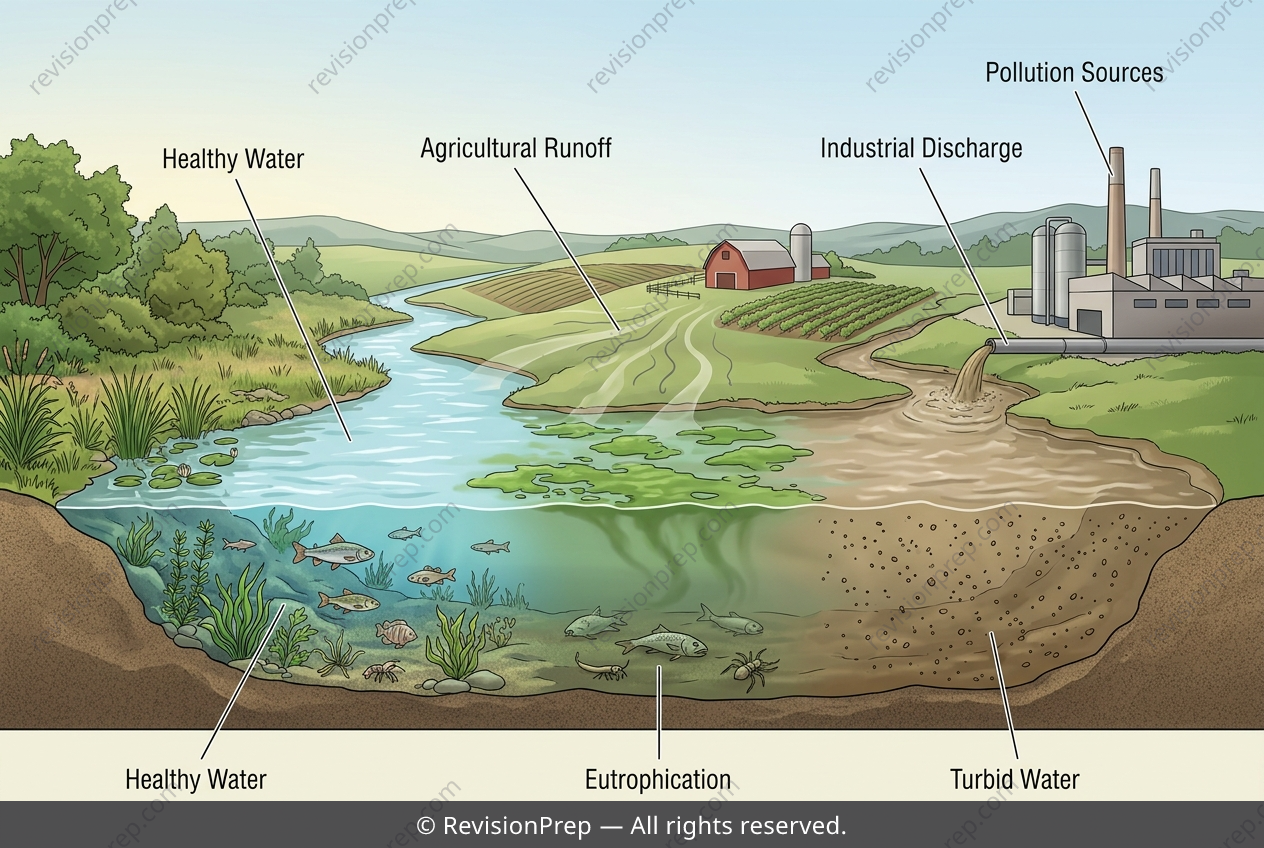
Water quality is the foundation of healthy river ecosystems, and it can be assessed through key chemical and physical parameters. Nitrates and phosphates are plant nutrients; dissolved oxygen supports aquatic life; cloudiness (turbidity, measured in NTU) reflects suspended particles. Comparing these values upstream and downstream of human activity reveals how land use shapes a river's health. This matters because rivers receive runoff from farmland, industry, and settlements, and their effects are often invisible until measured. Farming typically raises nitrate and phosphate levels through fertiliser runoff, which can trigger eutrophication and lower dissolved oxygen as decomposing algae consume it. Factories, by contrast, often increase turbidity by releasing particulates or waste, even when nutrient levels stay low. Reading the data means linking each parameter to its likely source: nutrients to agriculture, oxygen depletion to organic pollution, and cloudiness to suspended solids. Together, these measurements turn a simple water sample into evidence about pollution.
Start practising IB questions today
150,000+ IB-styled questions, criteria-mapped and instantly accessible.