
Biology: One Adaptation Principle, Two Extreme Habitats
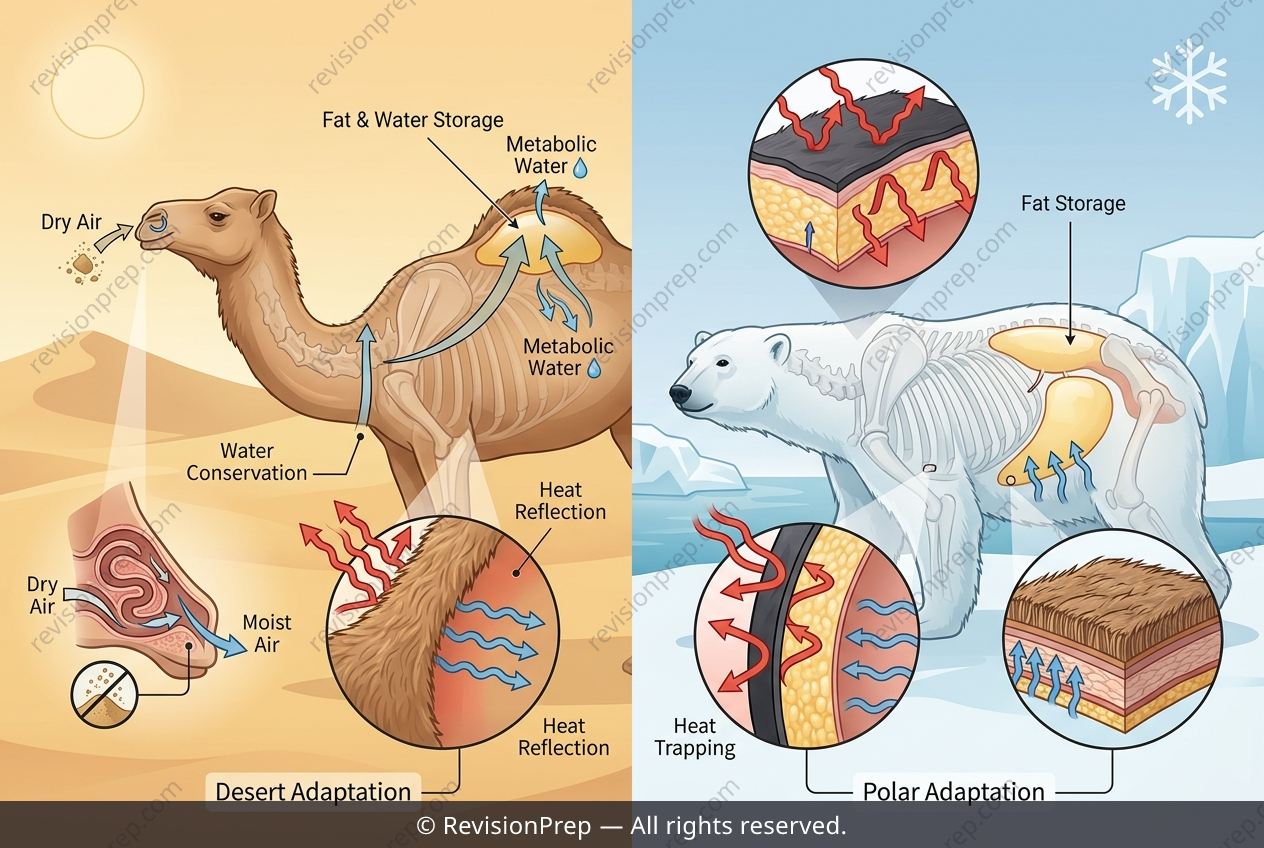
Desert and polar habitats sit at opposite extremes of the same problem: how to keep a body working when the environment is trying to drain or freeze it. Camels and polar bears both rely on structural adaptations — a hump, closable nostrils, thick fur — yet each feature is tuned to a very different set of conditions. The camel's hump stores fat, a concentrated energy reserve that also limits heat trapped across the body. Its nostrils close against blowing sand and recover moisture from exhaled air, cutting water loss in a landscape where every drop counts. Thick fur works as insulation in both animals, but the direction of heat flow differs: for the camel it blocks intense solar radiation by day and retains warmth on cold desert nights, while for the polar bear it simply slows heat escaping into freezing air. Same principle — trapping air to control heat exchange — applied to opposite temperature extremes.
Start practising IB questions today
150,000+ IB-styled questions, criteria-mapped and instantly accessible.