
Biology: Pollution's Path from Source to Ecological Harm
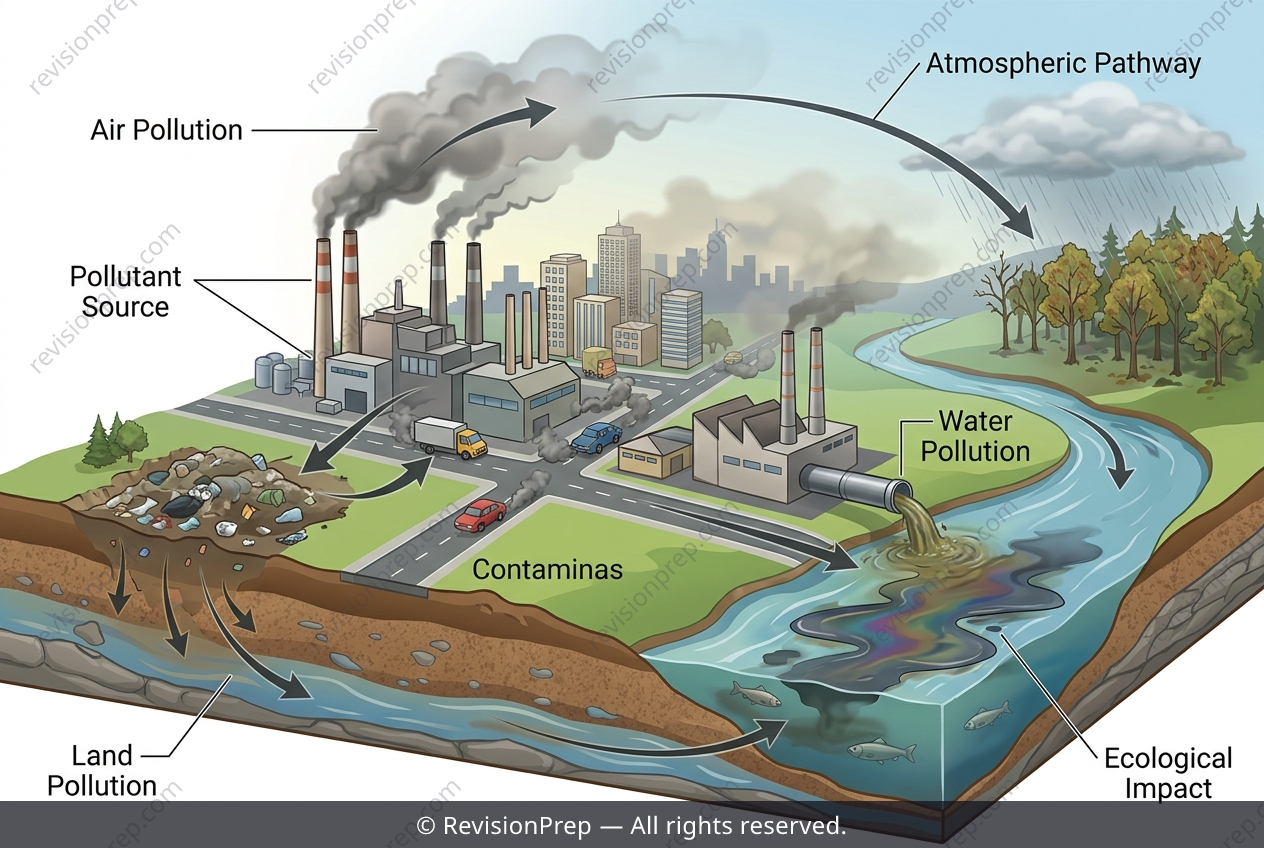
Environmental pollution is classified by the medium it enters — air, water, or land — and each pathway carries distinct ecological consequences. A smoky factory chimney releases particulates and gases into the atmosphere, producing air pollution, while oil discharged into a river spreads across the water surface and dissolves into the ecosystem, harming the organisms that depend on it. Understanding these pathways matters because pollution rarely stays contained. Once a pollutant enters a medium, it disperses, accumulates, and interacts with living systems, so the same substance can behave very differently depending on where it is released. The key relationship is straightforward: a source emits a pollutant, the pollutant enters a medium, and that medium carries it to organisms. Describing pollution therefore means linking the source to the medium and then to the harm caused — naming the pollution type alone, without explaining what happens to the water, air, or soil and the life within it, misses the mechanism that makes the concept meaningful.
Start practising IB questions today
150,000+ IB-styled questions, criteria-mapped and instantly accessible.