
Biology: Why Energy Loss Limits Higher Trophic Levels
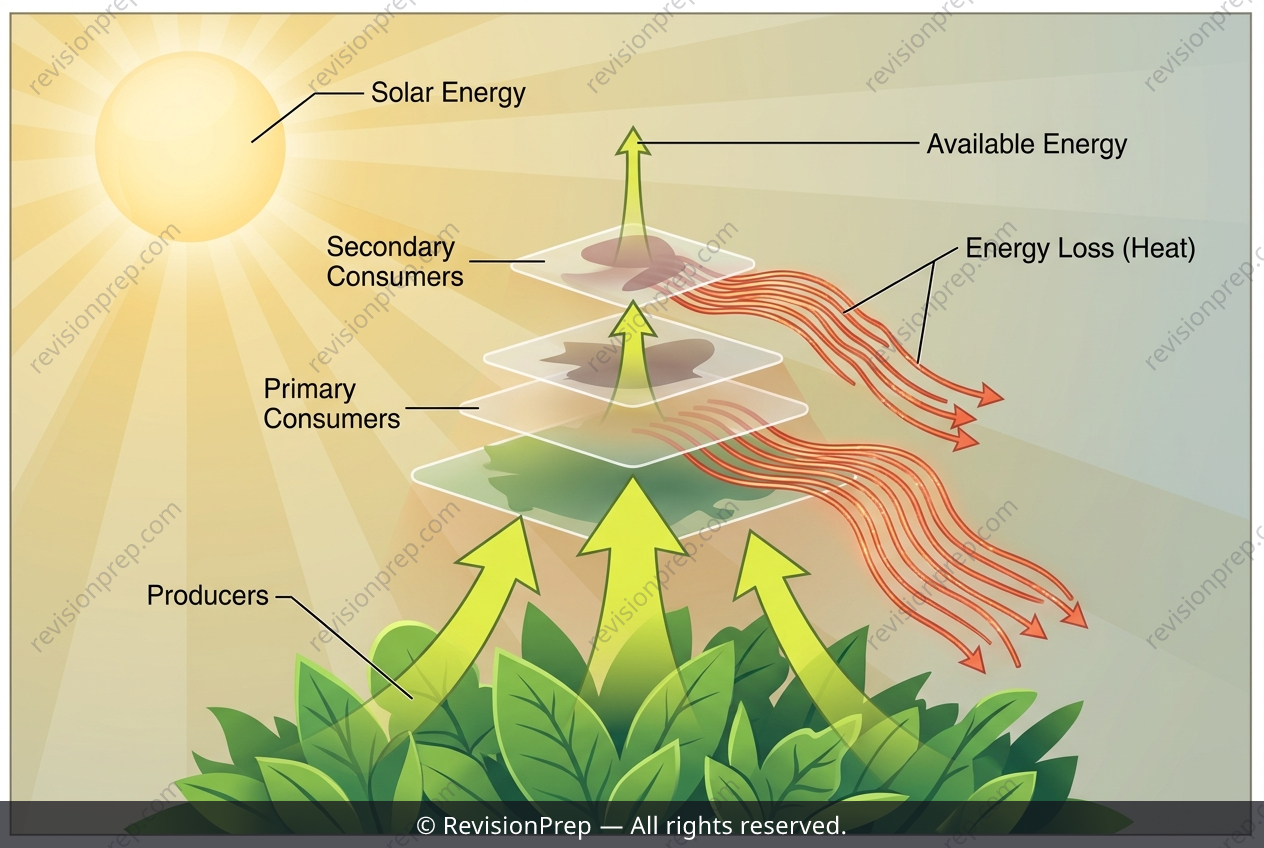
Energy flows through ecosystems in one direction, passing from producers to consumers along food chains. At each level, only a fraction of the energy is transferred onward; the rest is lost, mostly as heat during respiration. This is why ecological pyramids narrow as they rise: grass supports fewer rabbits, and those rabbits support even fewer foxes. Understanding this transfer matters because it explains why food chains rarely exceed four or five levels, and why top predators need large territories. The key relationship is that energy available at each trophic level decreases, since some is always lost as heat rather than passed on. In the pyramid shown, the arrow leaving the rabbit level represents that loss, meaning less energy reaches the fox than the rabbit obtained from the grass. Recognising this connection between energy loss and reduced availability at higher levels is central to understanding how ecosystems are structured and limited.
Start practising IB questions today
150,000+ IB-styled questions, criteria-mapped and instantly accessible.