
Physics: How Charge Transfer Creates Electrostatic Force
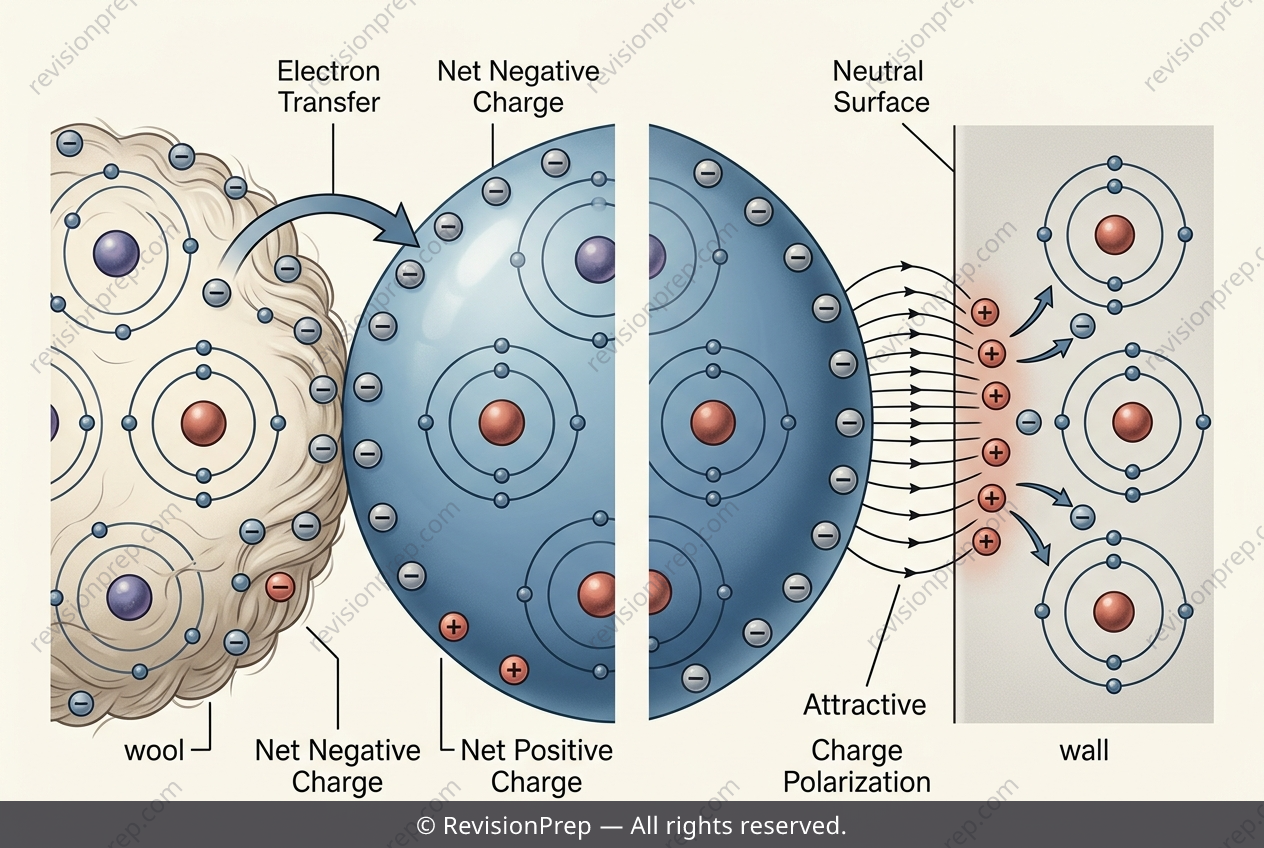
Electrostatic charging explains how objects can attract or repel each other without direct contact, simply through the movement of electrons. When two different materials are rubbed together, electrons can transfer from one surface to the other. The material that gains electrons becomes negatively charged, while the one that loses electrons becomes positively charged. This transfer creates an imbalance of charge, which is the foundation of static electricity. Charging by induction extends this idea further. A charged object brought near a neutral surface can push or pull electrons within that surface, causing charge to redistribute. For example, a negatively charged balloon repels electrons away from the nearby wall, leaving a local positive charge. The resulting attraction between opposite charges holds the balloon in place. Together, these processes reveal how charge transfer and charge separation produce the forces behind everyday electrostatic phenomena.
Start practising IB questions today
150,000+ IB-styled questions, criteria-mapped and instantly accessible.