
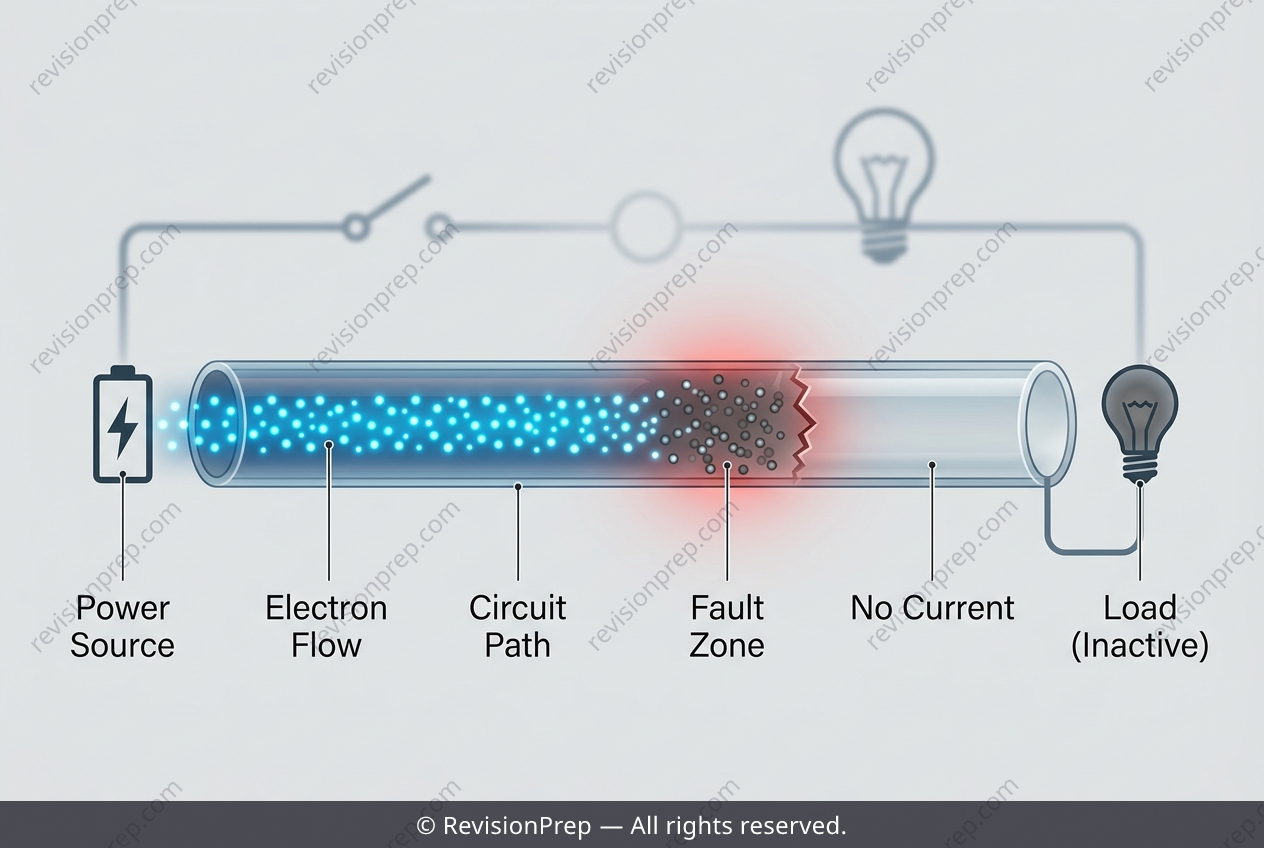
Physics: One Dark Bulb, Four Possible Culprits
A simple circuit is a loop through which electrical energy flows from a source, through connecting wires, and back again. For current to flow, that loop must be complete and every component must function: the battery must supply a potential difference, the wires must conduct, the switch must close the path, and the bulb must convert electrical energy into light. Remove or break any one link, and the circuit stops working. This matters because a bulb that stays dark when the switch is closed tells you something specific has failed, not simply that "electricity isn't working." The fault could lie with a burned-out filament, a flat battery, a switch failing to make contact, or a loose or broken wire. Each possibility points to a different component, and tracing the fault to its source is what allows a repair to be targeted, efficient, and safe, avoiding unnecessary work on a live circuit that risks shock, short circuits, or fire.
Start practising IB questions today
150,000+ IB-styled questions, criteria-mapped and instantly accessible.