
Physics: One Switch, Countless Energy Savings
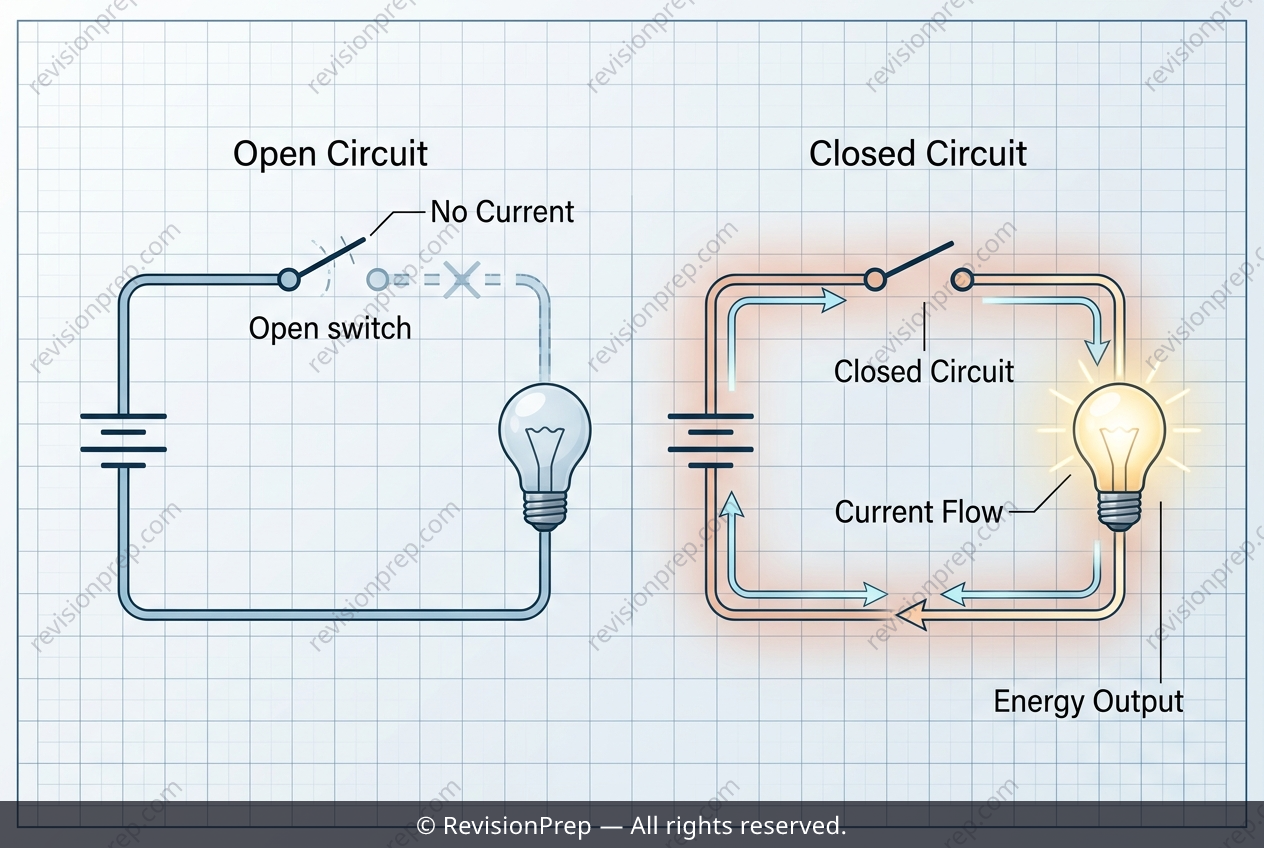
A switch is a simple component that opens or closes a circuit, controlling whether current can flow. When closed, it completes the conducting path so charge moves through the bulb; when open, it breaks that path and the current stops. This on/off behaviour is the foundation of how circuits are managed in everyday life. Understanding this matters because circuit states directly shape how electrical energy is transferred and used. A closed circuit allows energy to move from the source to a device, while an open circuit halts that transfer entirely. In homes, this gives people control over lighting on demand — turning lights on only when needed and off when a room is empty, which reduces electricity consumption and lowers energy bills. The same principle of opening and closing circuits underpins safety, convenience, and efficiency in countless devices, connecting a single switch to wider ideas about power, energy use, and responsible consumption.
Start practising IB questions today
150,000+ IB-styled questions, criteria-mapped and instantly accessible.