
Physics: Why Insulation Prevents Shock and Fire
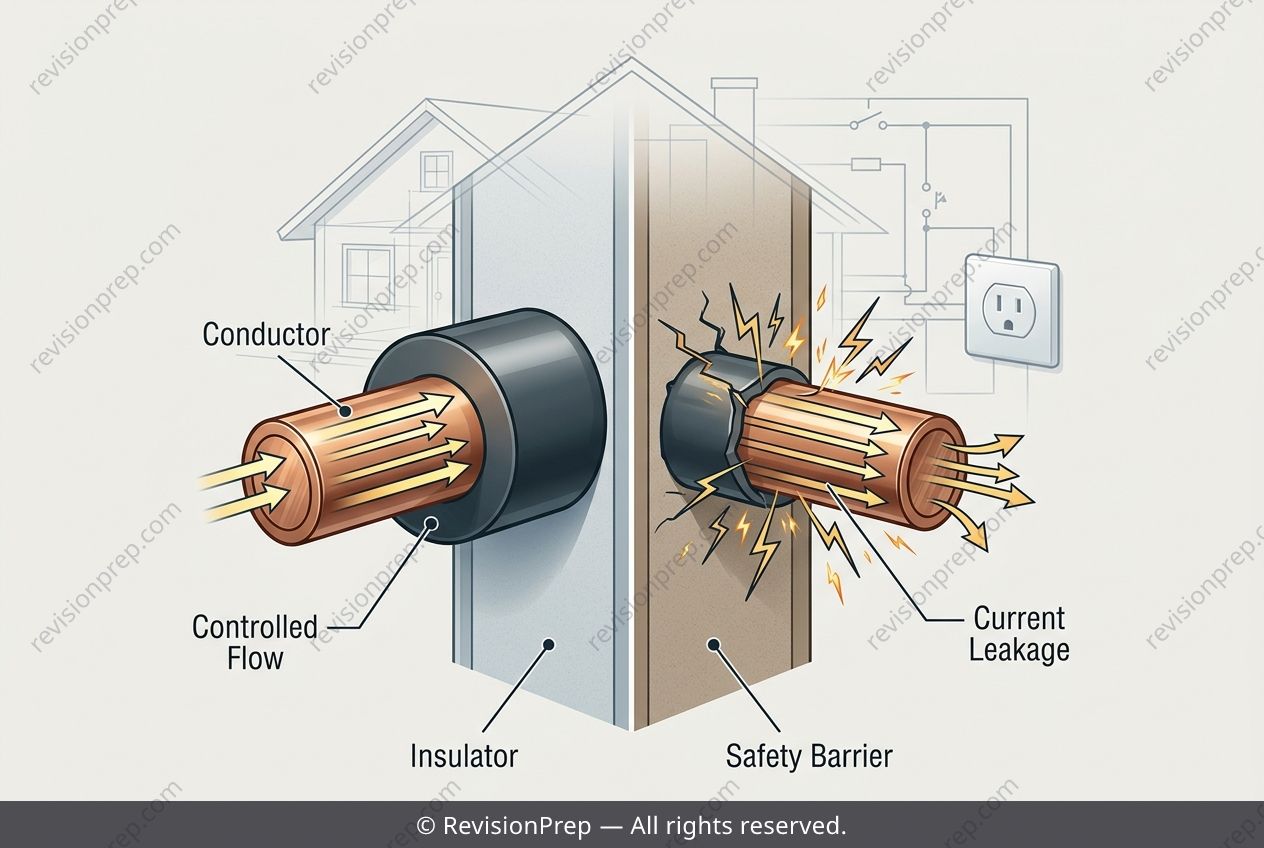
Electrical insulation is the principle that some materials block the flow of electric current while others allow it to pass freely. Conductors, such as copper, let charge move easily, whereas insulators, like rubber, hold their electrons tightly so current cannot escape the wire. This contrast is what makes safe household wiring possible: a conducting core carries energy to sockets and appliances, while an insulating coating keeps that current contained along its intended path. The real-world value of this becomes clear when we consider what happens without insulation. If current escapes into surrounding materials, it can reach a person touching the wire or ignite nearby surfaces. Rubber prevents this by acting as a barrier, so the current stays inside the conductor rather than flowing outward. This single property underpins two everyday safety outcomes — protection from electric shock and reduced risk of electrical fires — making insulation one of the most important applications of conductor and insulator theory in residential buildings.
Start practising IB questions today
150,000+ IB-styled questions, criteria-mapped and instantly accessible.