
Chemistry: Temperature, Solubility and Crystallisation
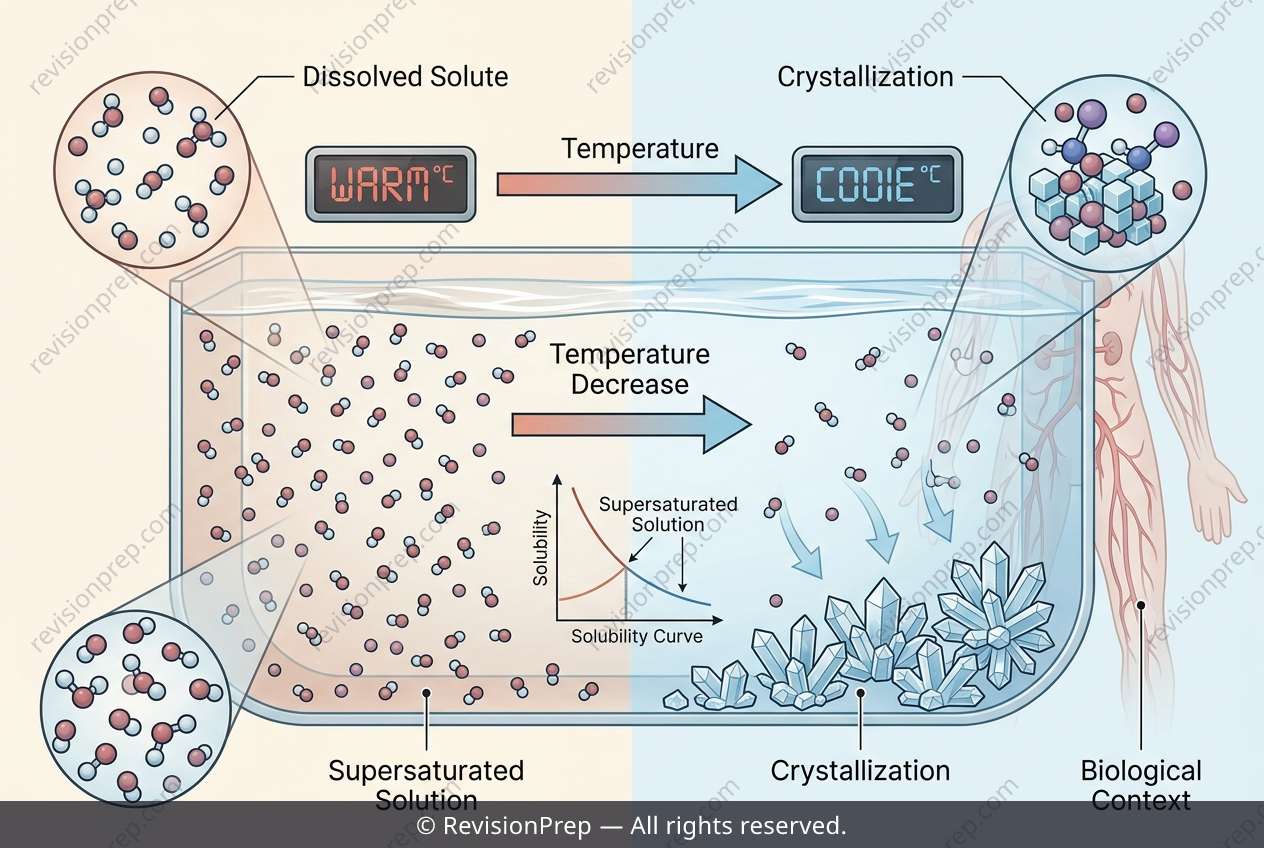
Solubility is not a fixed property — it shifts with temperature, and potassium nitrate shows this dramatically. Its solubility climbs from 32 g per 100 g water at 20 °C to 110 g at 60 °C, meaning a solution that is comfortably dilute when warm can become supersaturated as it cools. When concentration exceeds the local solubility limit, the excess solute precipitates as solid crystals. This matters because crystallisation is not confined to the laboratory. In the human body, core temperature near 37 °C keeps ingested KNO₃ dissolved, but cooler extremities — hands and feet, approaching 20–30 °C — lower the solubility threshold, so crystals may form in peripheral tissues and cause localised damage. Yet the solubility curve alone cannot predict toxicity: it is measured in pure water, while body fluids contain salts and proteins that alter effective solubility, and excretion, circulation, and individual organ function all reshape real risk.
Start practising IB questions today
150,000+ IB-styled questions, criteria-mapped and instantly accessible.