
Physics: How Energy Sources Affect Climate and Security
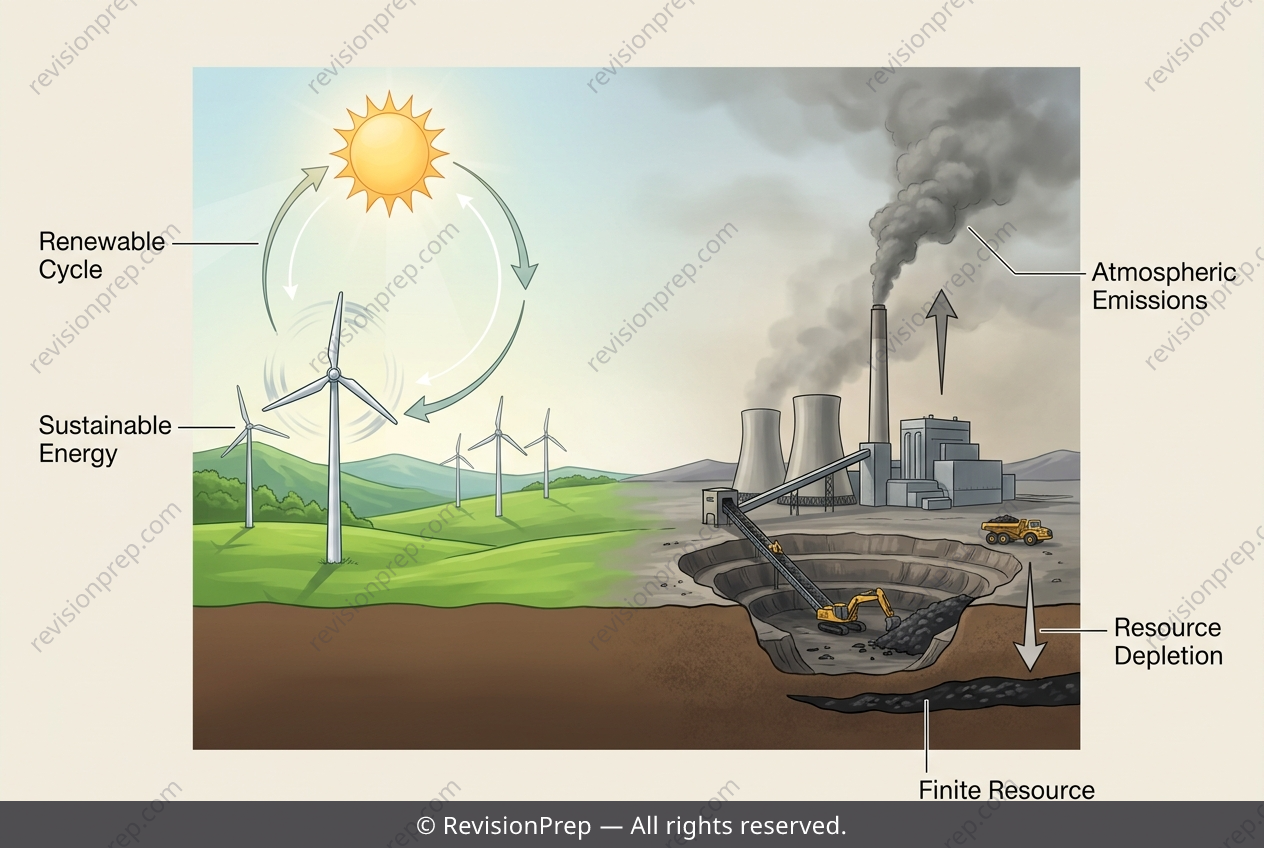
Every watt of electricity on a national grid comes from somewhere, and the source behind it shapes everything from long-term energy security to the planet's climate. Energy resources divide into two broad families: renewable sources such as wind, solar and hydro, which are naturally replenished and will not run out, and non-renewable sources such as coal, oil and natural gas, whose reserves are finite and eventually exhausted. This distinction underpins how societies plan their energy futures. The difference matters because the two families carry very different environmental consequences. Burning coal releases carbon dioxide, a greenhouse gas that drives the enhanced greenhouse effect and climate change, along with pollutants such as sulfur dioxide and particulates that cause acid rain and harm health. Wind turbines, by contrast, generate electricity through mechanical rotation with no combustion emissions during operation. Comparing a wind farm with a coal-fired power station therefore reveals the central trade-off between resource longevity and environmental impact.
Start practising IB questions today
150,000+ IB-styled questions, criteria-mapped and instantly accessible.