
Physics: How Net Force Shapes an Object's Acceleration
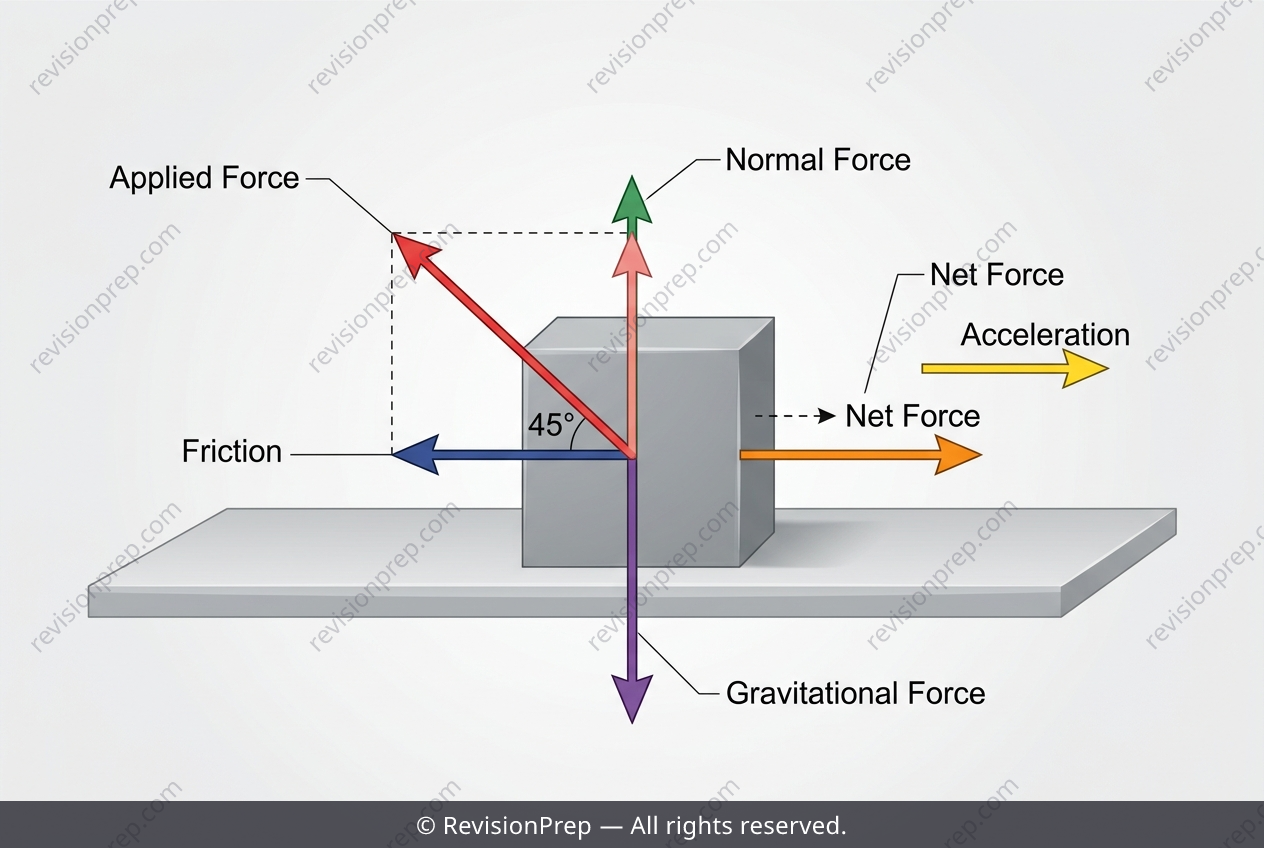
Forces rarely act alone. A crate pulled by a warehouse robot experiences tension at an angle, friction opposing motion, weight, and a normal force all at once. Understanding how these combine is the heart of Newton's Second Law, Fnet = ma, which links the net force on an object to its acceleration. What matters is the net force, not any single force. Tension must be resolved into components, such as Tx = T cos(θ), so only the horizontal part drives motion while friction subtracts from it. When forces balance, acceleration is zero; when they are unbalanced, the object speeds up, slows down, or changes direction. This concept underpins everything from machinery to vehicle safety, showing how adjusting one force, like increased friction, proportionally changes acceleration for a constant mass.
Start practising IB questions today
150,000+ IB-styled questions, criteria-mapped and instantly accessible.