
Physics: Mass, Weight, and Why Measurement Matters
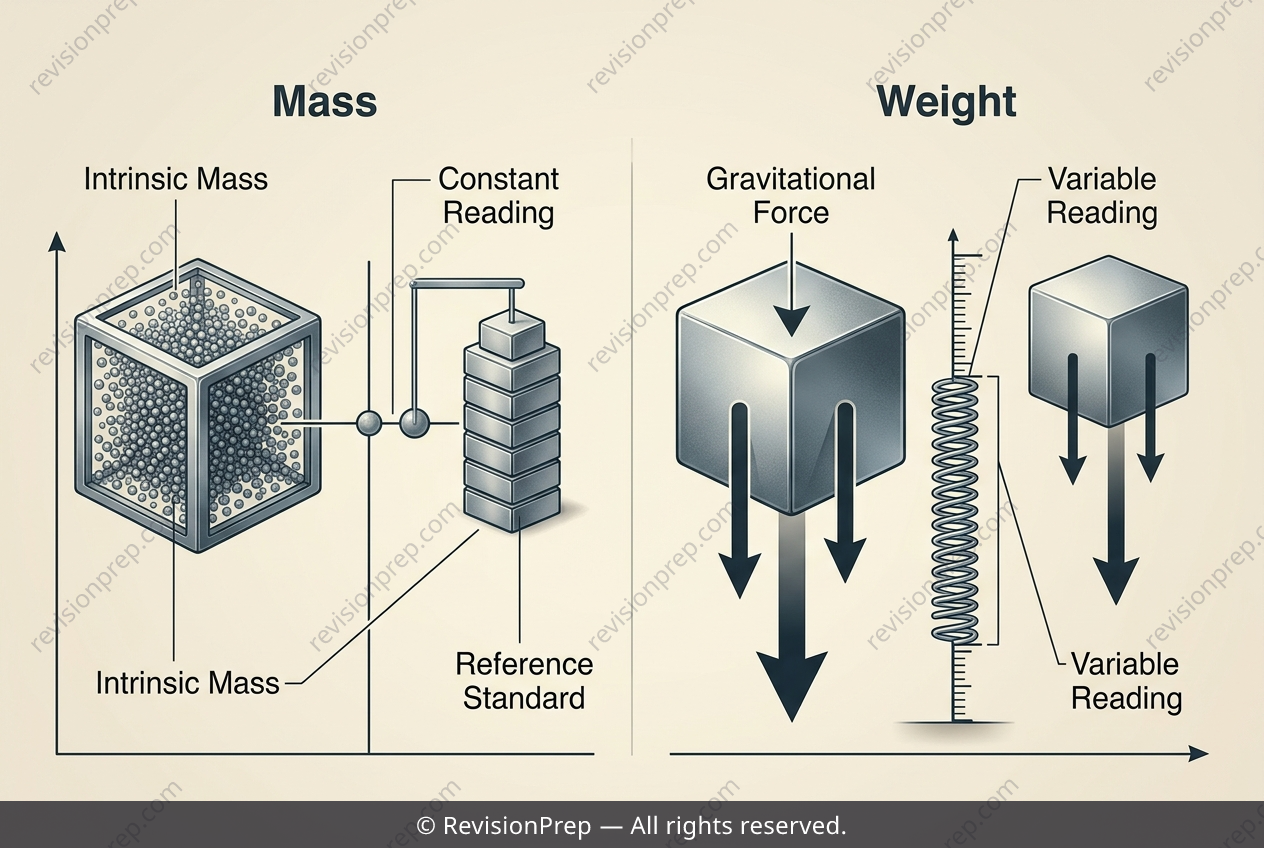
Mass and weight are often used interchangeably in everyday language, yet physics treats them as fundamentally different quantities. Mass measures how much matter an object contains and is measured in kilograms, while weight is the gravitational force acting on that mass, measured in newtons and given by W = mg, where g is the gravitational field strength. Because g varies from place to place, weight changes with location while mass does not. This distinction matters because it shapes how we choose and interpret measuring instruments. A spring balance measures weight by detecting the force stretching the spring, so its reading depends on the local gravitational field. A beam balance compares the object against reference masses, and since both sides experience the same gravitational field strength, the comparison stays valid anywhere. Understanding this relationship between mass, weight, and gravity is essential for interpreting measurements correctly, whether on Earth or elsewhere.
Start practising IB questions today
150,000+ IB-styled questions, criteria-mapped and instantly accessible.