
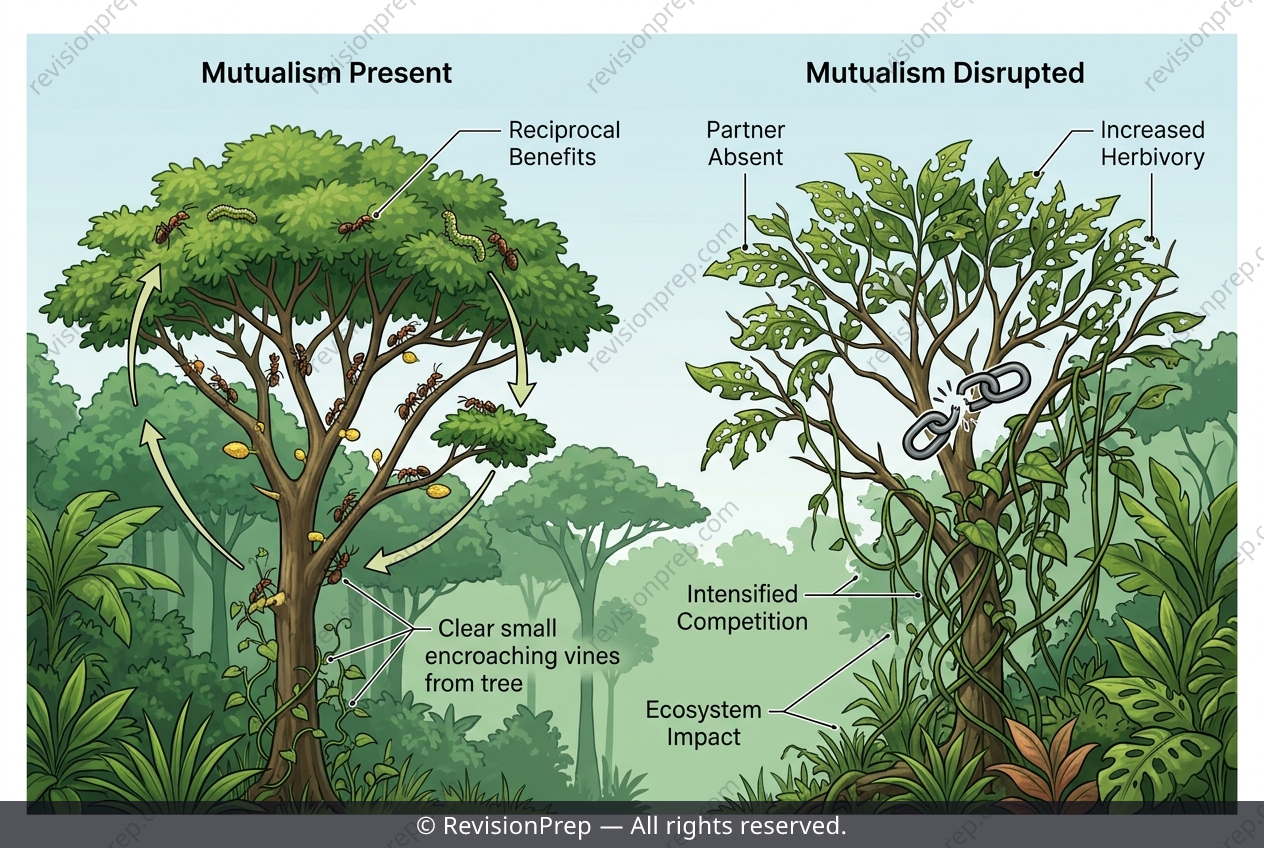
Biology: How Acacia and Ants Depend on Each Other
Mutualism is a close ecological relationship in which two different species both benefit from living together. In the tropical rainforest, Pseudomyrmex ants nest inside the hollow thorns of Acacia cornigera, gaining shelter and food from extrafloral nectaries, while the acacia receives protection from herbivores and help removing competing vegetation. This exchange illustrates how each partner supplies something the other cannot easily obtain alone, so their survival and reproduction become linked. Understanding mutualism matters because it shows how species depend on one another within an ecosystem, and how disrupting one partner can ripple through the whole relationship. The benefits flow in both directions: defence and cleaning from the ants, shelter and nutrition from the tree. If one side is removed, the balance breaks down, and the costs normally offset by the partner reappear. This interdependence is central to form and function in ecological communities.
Start practising IB questions today
150,000+ IB-styled questions, criteria-mapped and instantly accessible.