
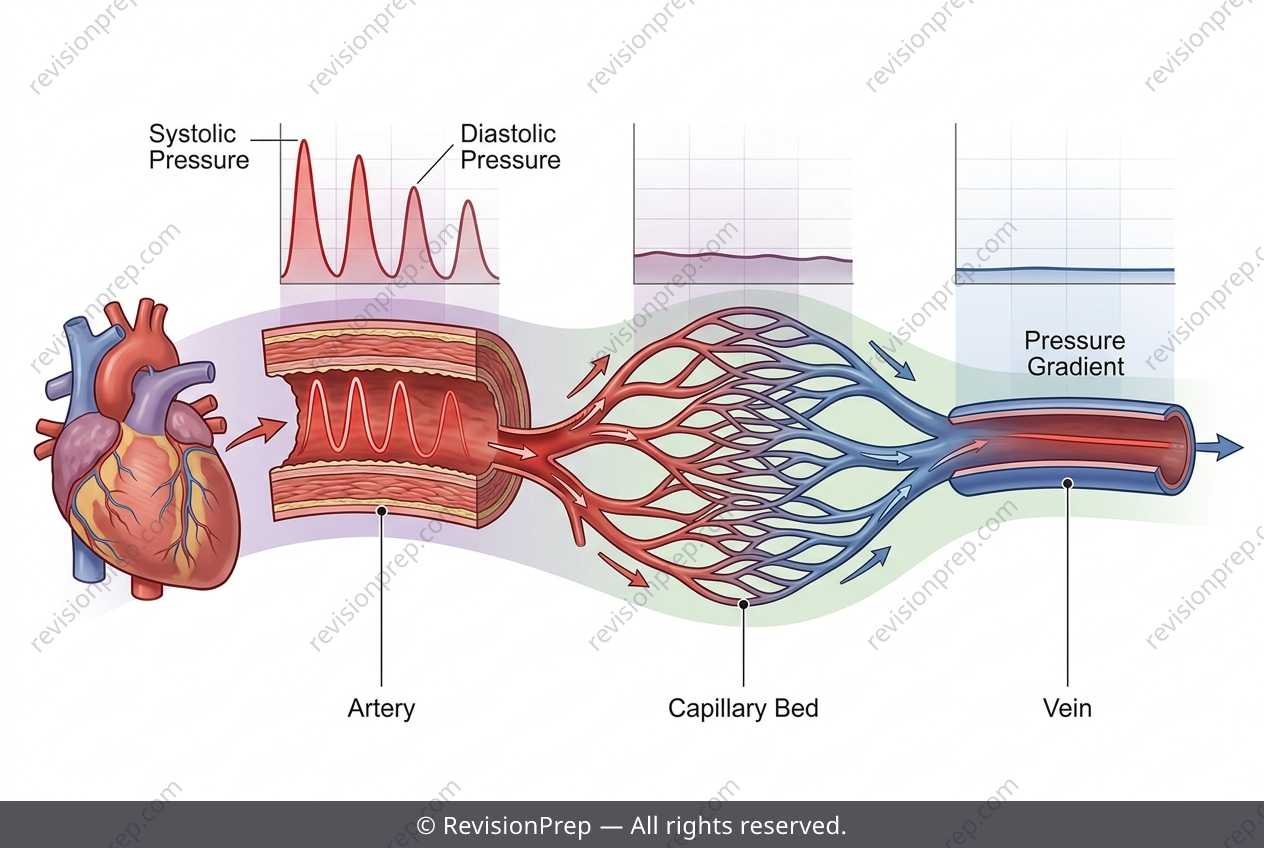
Biology: How Arterial Elasticity Smooths Blood Flow
Blood pressure is not a single, steady value but a rhythmic cycle of peaks and troughs, and the vessels of the systemic circulation each experience that rhythm differently. Systolic pressure reflects the surge generated when ventricles contract, while diastolic pressure marks the trough as the heart relaxes and refills. The difference between these two values, the pulse pressure, reveals how much pressure fluctuates within a given vessel. This fluctuation is greatest in arteries, which receive blood directly from ventricular contractions. Their elastic walls stretch during systole, storing energy, then recoil during diastole, smoothing flow downstream. This pulse dampening means capillaries, venules and veins experience progressively steadier, lower pressures. Understanding this gradient matters because it explains how blood keeps moving forward, why elastic recoil sustains flow between heartbeats, and how vessel structure matches function across the circulation.
Start practising IB questions today
150,000+ IB-styled questions, criteria-mapped and instantly accessible.