
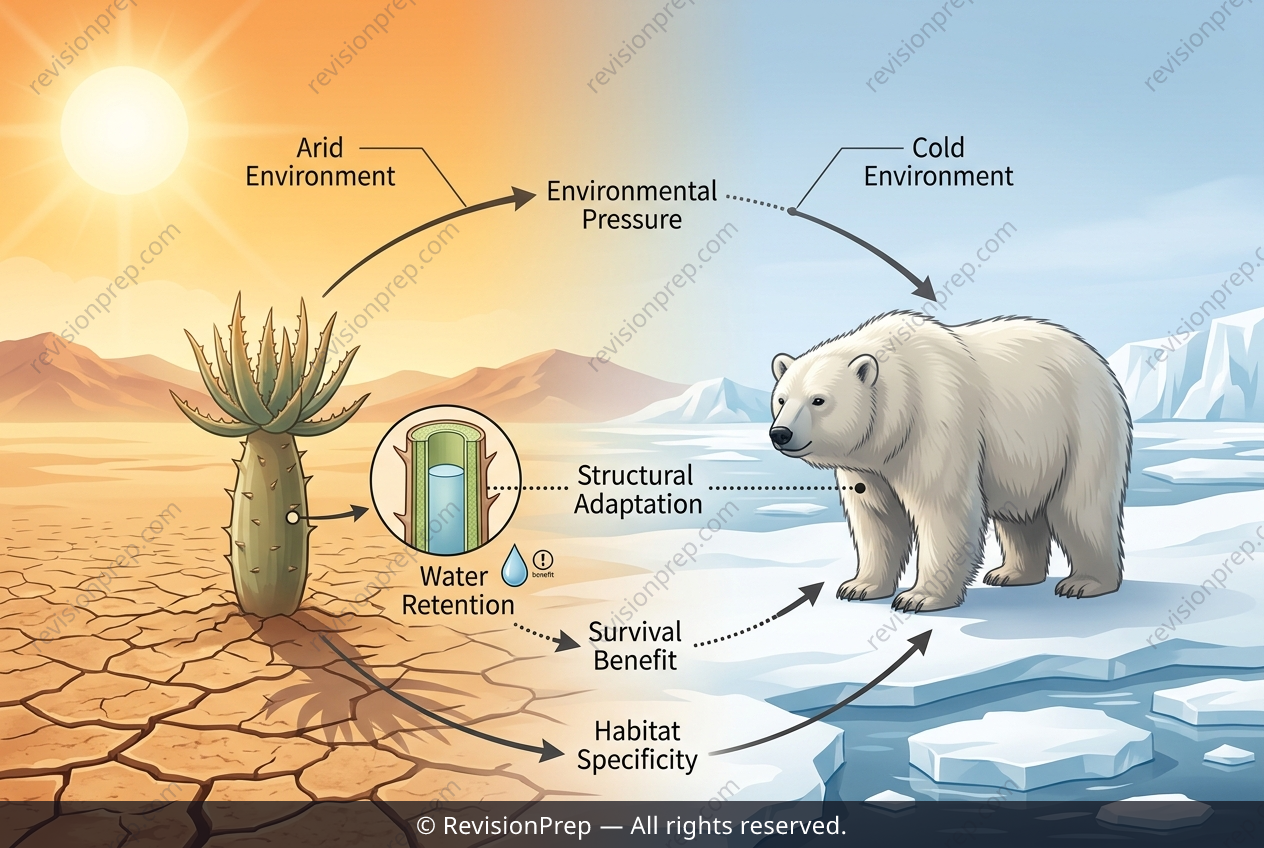
Biology: How Harsh Habitats Shape Structural Adaptations
Structural adaptations are physical features of an organism's body that improve its chances of survival in a particular habitat. A cactus, for example, may have a thick waxy stem, spines instead of leaves, wide shallow roots, or a waxy coating — each feature reducing water loss or improving water uptake in the desert. A polar bear, by contrast, may have thick fur, a layer of blubber, large paws, small ears, or white fur, all of which help it retain heat, move across snow, or hunt effectively in the Arctic. These adaptations matter because survival depends on an organism's ability to cope with its environment. The relationship is simple: the harsher the conditions, the more specialised the structural feature must be. Each adaptation connects to a specific challenge — heat loss, water shortage, or camouflage — and the mechanism behind it explains why the feature is beneficial. Recognising these links helps build a clear picture of how organisms are suited to their habitats.
Start practising IB questions today
150,000+ IB-styled questions, criteria-mapped and instantly accessible.