
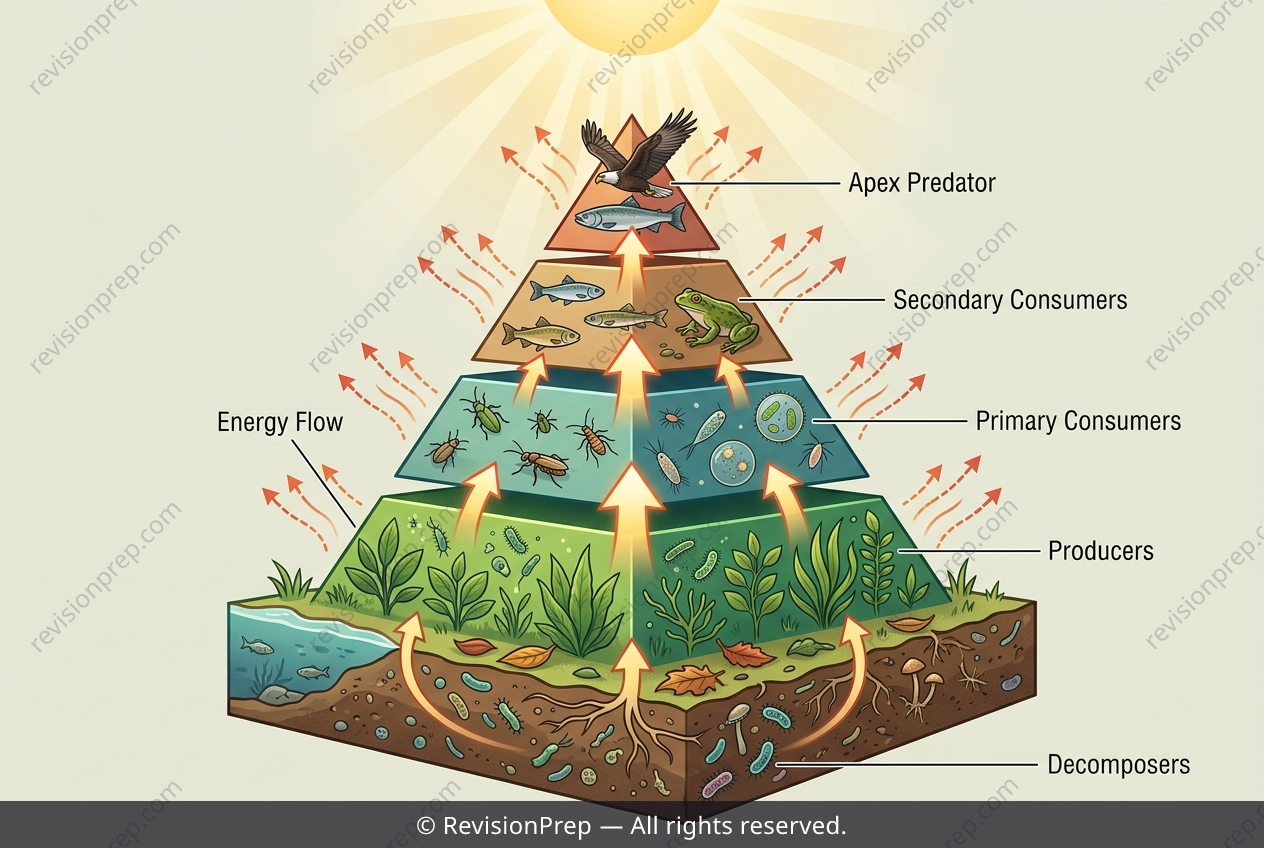
Biology: How Trophic Structure Links Predator and Prey
Every ecosystem runs on a simple rule: energy enters through producers and passes along a chain of eaters. In the coastal food web above, seagrass captures sunlight and converts it into chemical energy, making it the producer that anchors the entire system. From there, energy moves to primary consumers like the sea turtle and small fish, and finally to apex predators such as the shark. Understanding trophic structure matters because it explains how organisms are connected through feeding relationships. A predator is any organism that hunts and consumes another, while the prey is the organism being eaten — so the shark acts as a predator on both the small fish and the sea turtle. Energy is lost at each transfer, which is why food chains rarely extend beyond four or five levels. Recognising these links helps explain population changes, ecosystem stability, and why removing one species can ripple through the whole web.
Start practising IB questions today
150,000+ IB-styled questions, criteria-mapped and instantly accessible.