
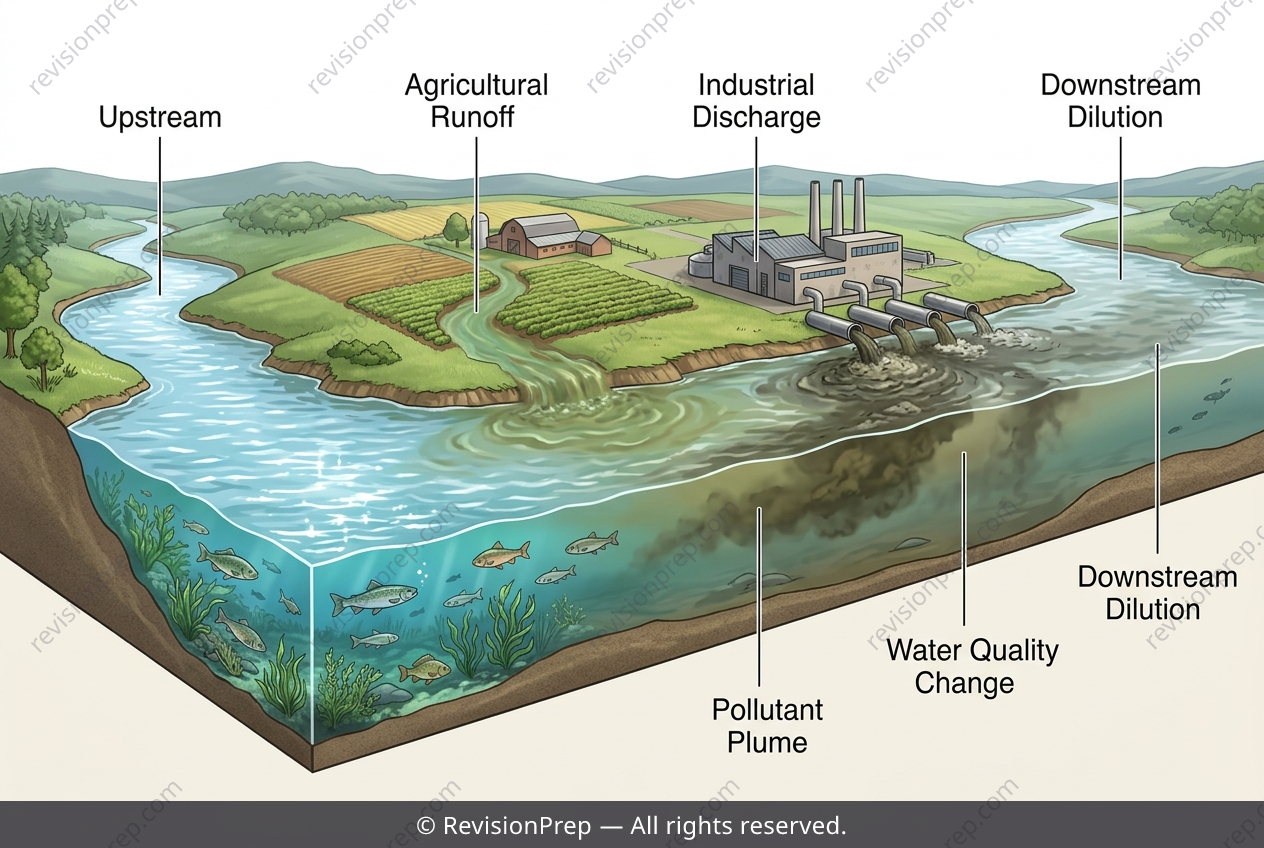
Biology: How Pollution Rises and Fades Downstream
Riverine pollution dynamics describe how the quality of a river changes as it flows through a landscape, and how human activity at different points along its course shapes that change. Water quality is typically measured through indicators such as nitrate, phosphate and bacteria concentrations, recorded in parts per million (ppm), which together reveal whether a river is relatively clean or heavily degraded. This matters because rivers are both ecosystems and water sources, so pollution entering at one point can affect everything downstream. The pattern is rarely uniform: pollution often stays low in undisturbed headwaters, rises sharply where a specific input such as farm runoff enters, then gradually declines as dilution, distance and natural processes reduce concentration. Comparing an upstream reference point with sites near farms, factories and downstream locations therefore shows how a single pollution source can create a peak that fades with distance — the key relationship linking land use, pollutant concentration and river recovery.
Start practising IB questions today
150,000+ IB-styled questions, criteria-mapped and instantly accessible.