
Biology: How Tree Loss Disrupts Oxygen and Carbon Cycling
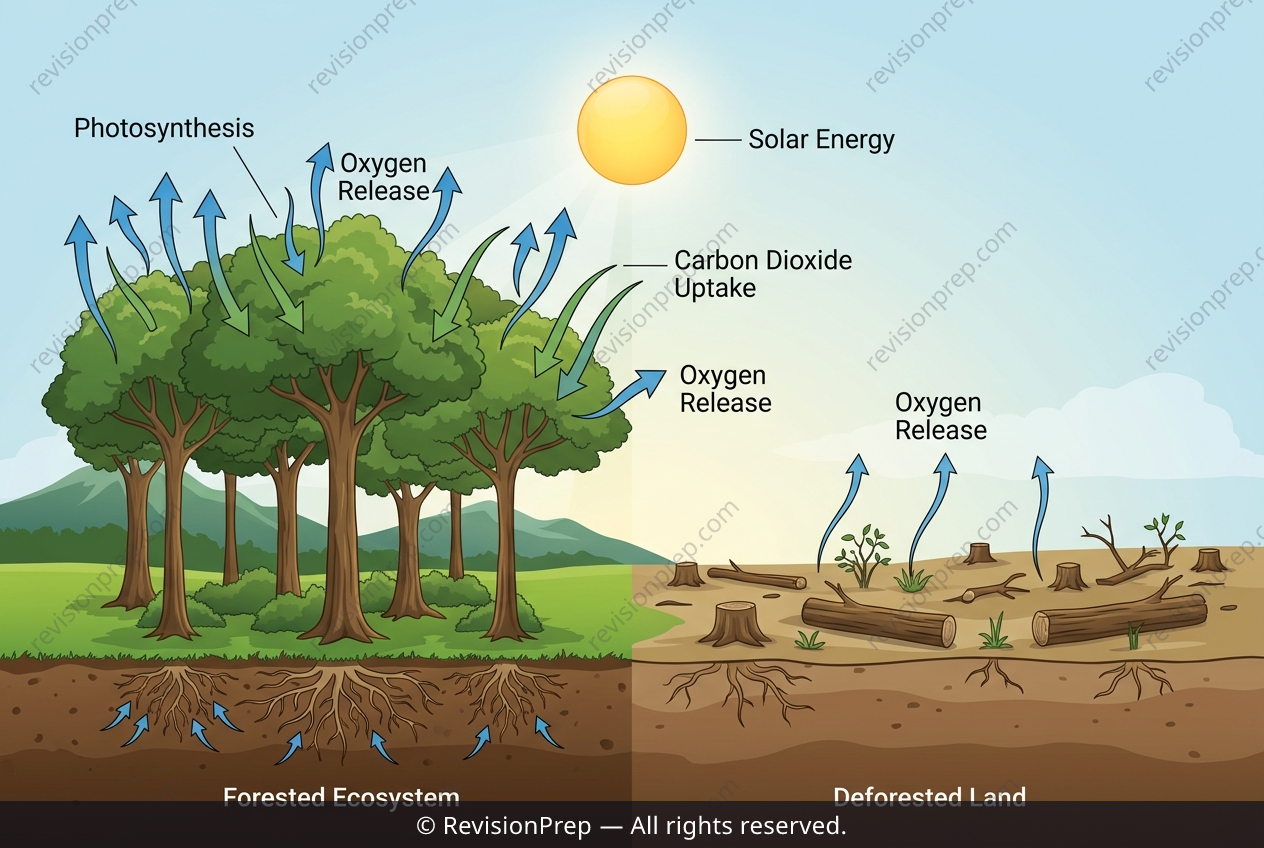
Photosynthesis is the process by which trees use sunlight, water, and carbon dioxide to produce oxygen, forming the foundation of ecosystem function and carbon cycling. Within any biome, green plants absorb light energy and convert CO₂ and H₂O into glucose and oxygen, releasing O₂ into the atmosphere as a by-product. This continuous exchange links the living and non-living components of an ecosystem, regulating atmospheric composition and storing carbon in plant biomass. The balance of photosynthesis across a landscape directly shapes how much oxygen is released and how much carbon is captured. A forested area, with many trees photosynthesising simultaneously, produces far more oxygen than an equivalent cleared area where trees have been removed. Comparing these two areas reveals a simple relationship: fewer trees means less photosynthesis, and therefore less oxygen production. Understanding this connection is central to explaining how deforestation alters ecosystem function, carbon storage, and the global cycling of matter and energy.
Start practising IB questions today
150,000+ IB-styled questions, criteria-mapped and instantly accessible.