
Physics: The Three Factors Behind Magnet Strength
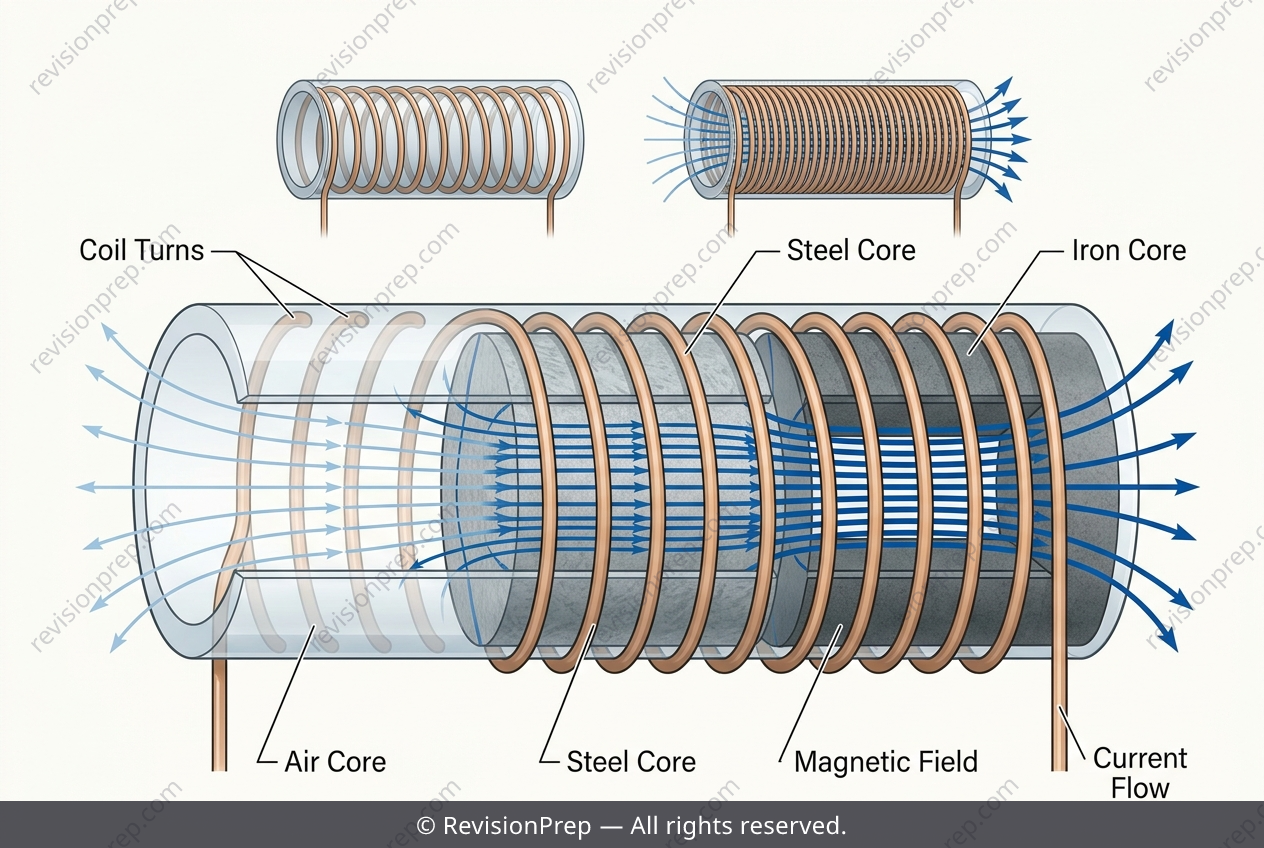
Electromagnetism underpins countless technologies, from motors to MRI machines, and at its heart lies a simple question: what makes an electromagnet strong? The magnetic field produced depends on several interacting factors — the current flowing through the coil, the number of turns of wire, and the material of the core. Each turn of wire contributes to the field around the core, so more turns mean a stronger field and a greater force exerted on magnetic materials. The core material matters just as much: iron concentrates the field far more effectively than steel, while a coil with no core produces almost no measurable effect. These relationships connect neatly. When current and core material stay constant, the mass of paperclips lifted is directly proportional to the number of turns, so mass per turn remains fixed. This lets you predict the performance of a new electromagnet from a known one, using mass per turn = mass ÷ turns. Understanding how current, turns, and core material combine to determine field strength is essential for designing electromagnets suited to different tasks.
Start practising IB questions today
150,000+ IB-styled questions, criteria-mapped and instantly accessible.