
Maths: Why Significant Figures Affect Dosage Safety
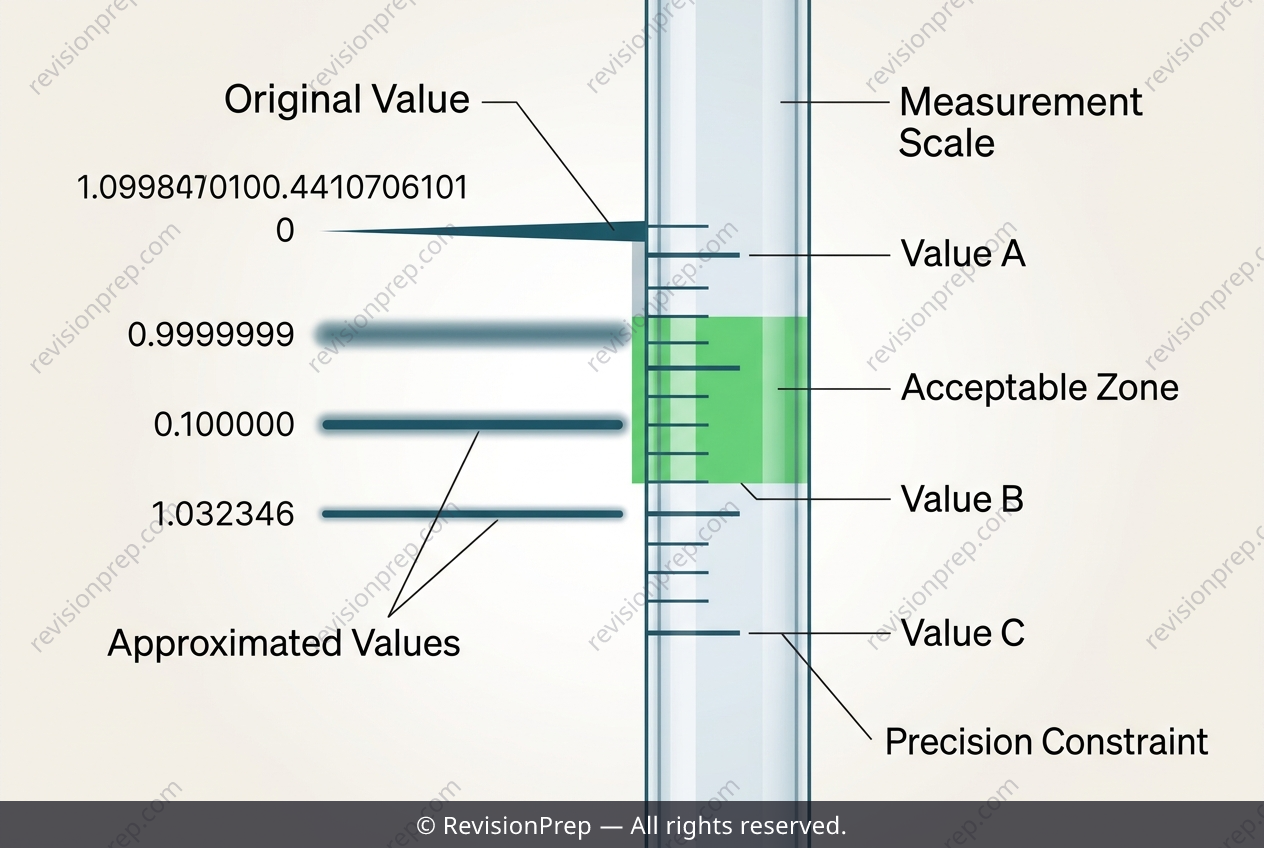
Rounding a number is never just a mechanical exercise — it is a decision about how much precision a situation genuinely supports. Significant figures, the digits that carry meaningful information about a quantity, determine how a value is expressed once it is rounded to one, two, or three figures, each time checking the digit immediately after the last one kept. This matters because precision and practicality are not the same thing. A syringe graduated to the nearest 0.1 mL simply cannot deliver a reading like 2.49 mL, however accurate that number looks on paper; such a value implies a level of precision the instrument cannot provide. Meanwhile, a safe dosage range of 2.4 mL to 2.6 mL shows that acceptable values form an interval, not a single point, so rounding can shift a measurement either inside or outside safety limits. The real skill lies in connecting numerical accuracy, instrument limitations, and acceptable ranges — choosing a value that is both safe and physically measurable.
Start practising IB questions today
150,000+ IB-styled questions, criteria-mapped and instantly accessible.