
Biology: How Niche Partitioning Enables Coexistence
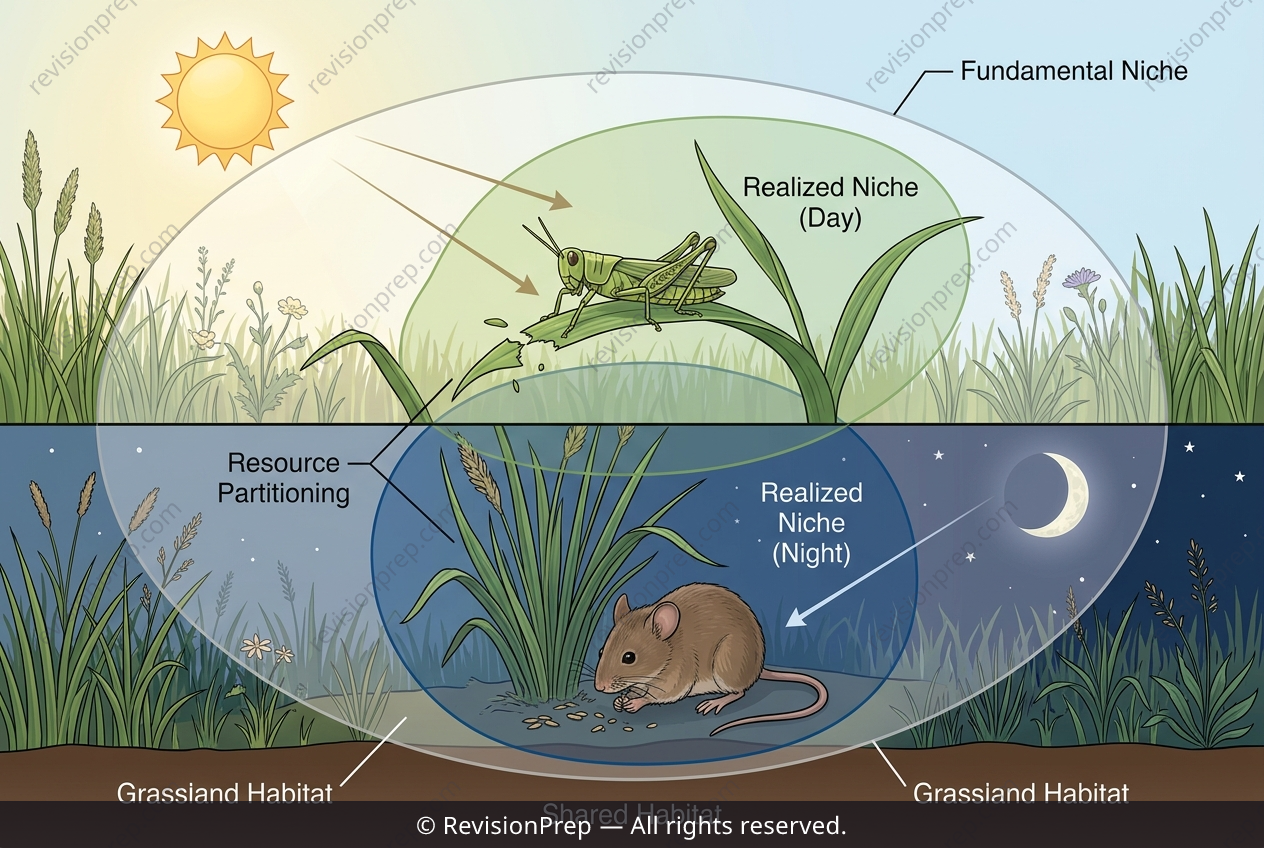
Every organism occupies an ecological niche — the full set of resources and conditions it actually uses to survive. A fundamental niche describes where a species could theoretically live, while a realized niche describes where it truly does, shaped by competition and resource availability. This distinction matters because it explains how biodiversity persists: species avoid extinction by dividing resources rather than fighting over them. Niche partitioning lets organisms coexist by separating along resource type, space, or time. In a grassland, two herbivores might both depend on grass yet never truly compete if one eats leaves by day and the other eats seeds by night. Their realized niches differ because actual resource use differs — different food, different timing. Understanding this connection between fundamental and realized niches reveals why shared habitats can still support distinct ecological roles.
Start practising IB questions today
150,000+ IB-styled questions, criteria-mapped and instantly accessible.