
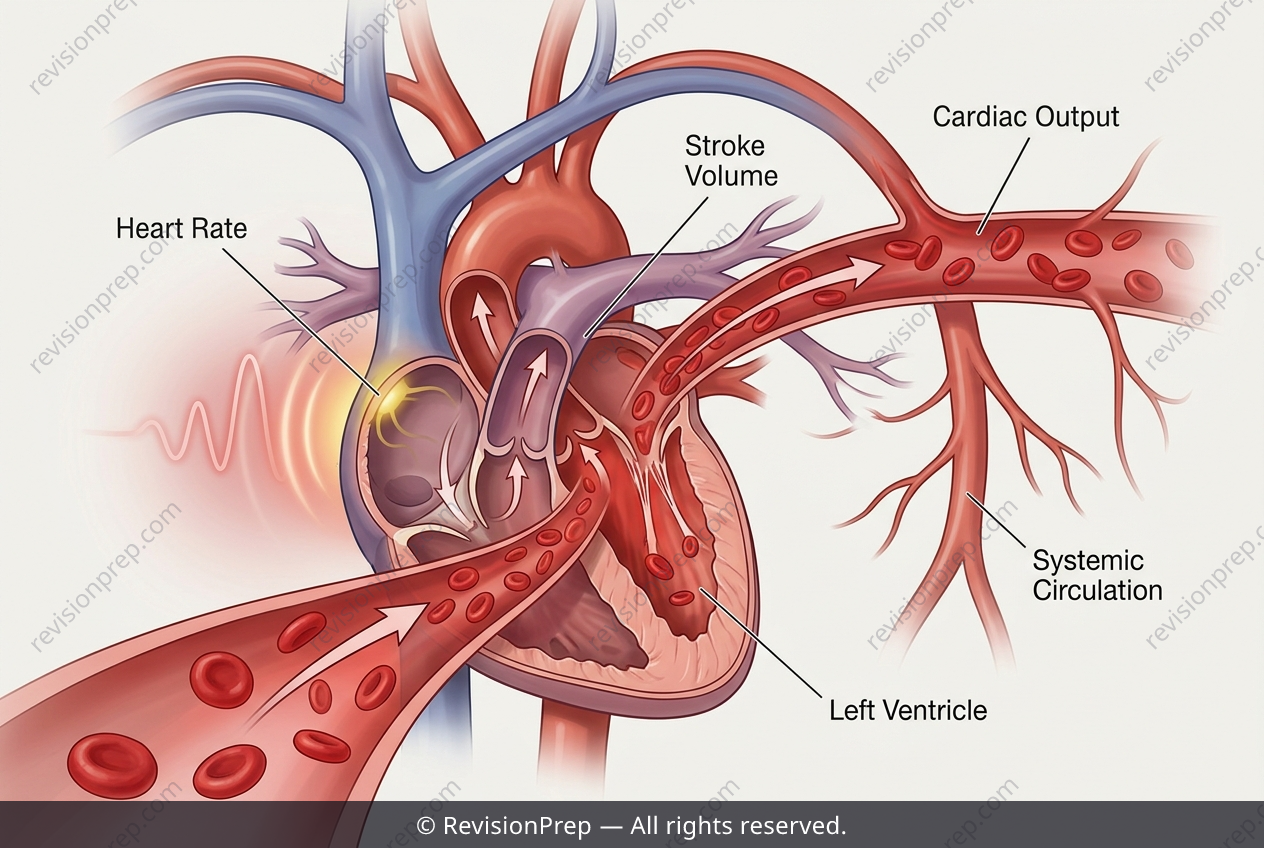
Biology: How Heart Rate and Stroke Volume Drive Output
Cardiac output is the volume of blood pumped by one ventricle per minute, and it sits at the heart of how the circulatory system matches supply to demand. It emerges from two simpler variables: heart rate, the number of beats per minute, and stroke volume, the blood ejected in a single beat. Their relationship is neatly captured by the equation cardiac output = heart rate × stroke volume, so any change in either factor directly reshapes the flow delivered to the body. This matters because cardiac output determines how efficiently oxygen and nutrients reach working tissues, and how readily waste products are cleared. At rest, a modest output suffices; during exercise, both rate and volume rise to meet heightened metabolic need. Notice how the units connect too: millilitres per minute convert to litres per minute by dividing by 1000, linking the raw calculation to the physiological values clinicians and athletes actually interpret. Understanding this relationship is foundational for exploring how the heart adapts across different states of activity.
Start practising IB questions today
150,000+ IB-styled questions, criteria-mapped and instantly accessible.