
Biology: How Vessel Structure Reveals Its Function
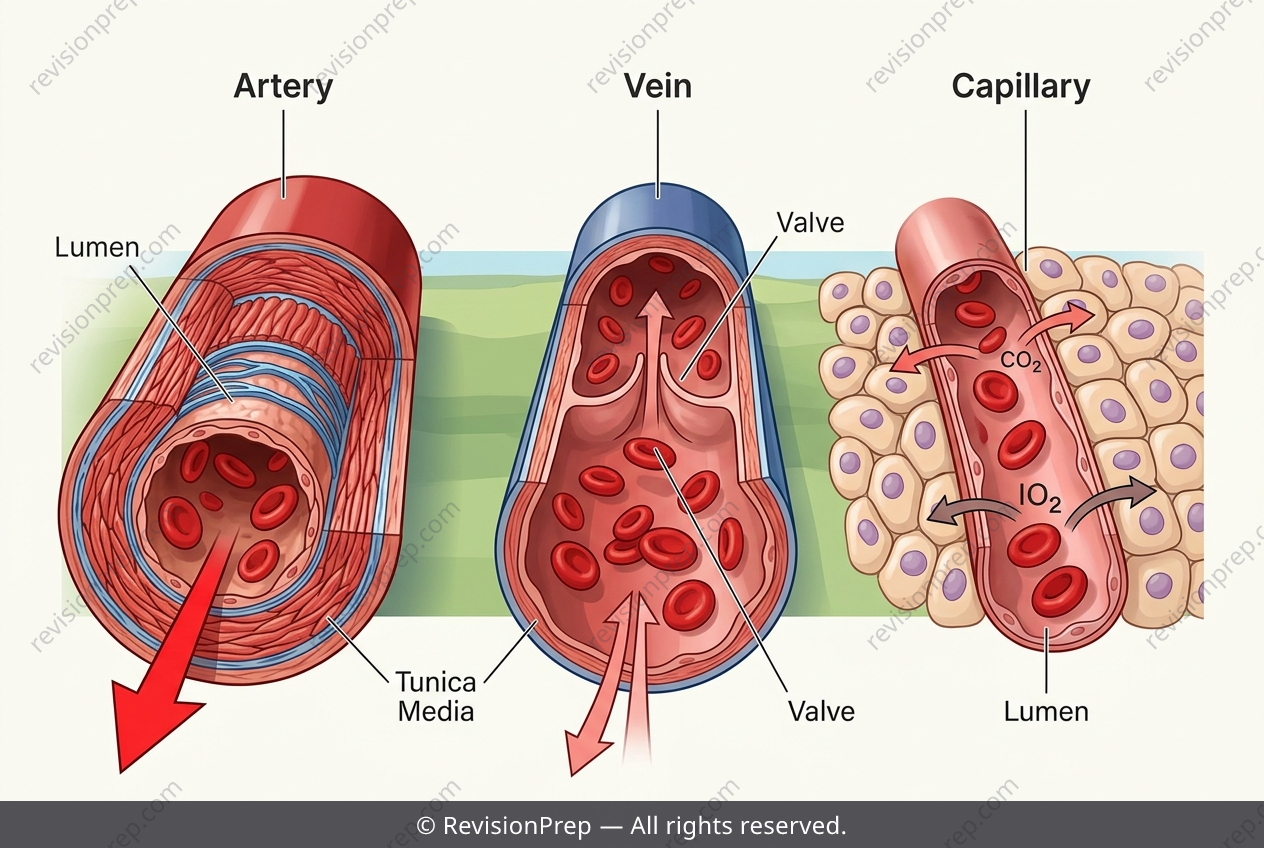
The circulatory system relies on a precise match between the structure of each blood vessel and the job it performs. Arteries, veins and capillaries each show distinct adaptations — wall thickness, lumen diameter, elasticity and the presence of valves — that together keep blood flowing efficiently under very different pressures. Understanding these differences is central to the Biology SL topic of form and function, where every structural feature can be traced back to a specific role in transport. Arteries carry blood away from the heart at high pressure, so their walls are thick, muscular and elastic, allowing them to stretch and recoil with each heartbeat. Their relatively narrow lumen helps maintain that pressure, and because flow is directed onward, valves are unnecessary. Veins, by contrast, operate at low pressure and rely on valves to prevent backflow, while capillaries have walls just one cell thick to maximise diffusion. Recognising how these features connect explains why a vessel's appearance reveals its identity and function.
Start practising IB questions today
150,000+ IB-styled questions, criteria-mapped and instantly accessible.