
Biology: How Energy Transfer Efficiency Shapes Food Chains
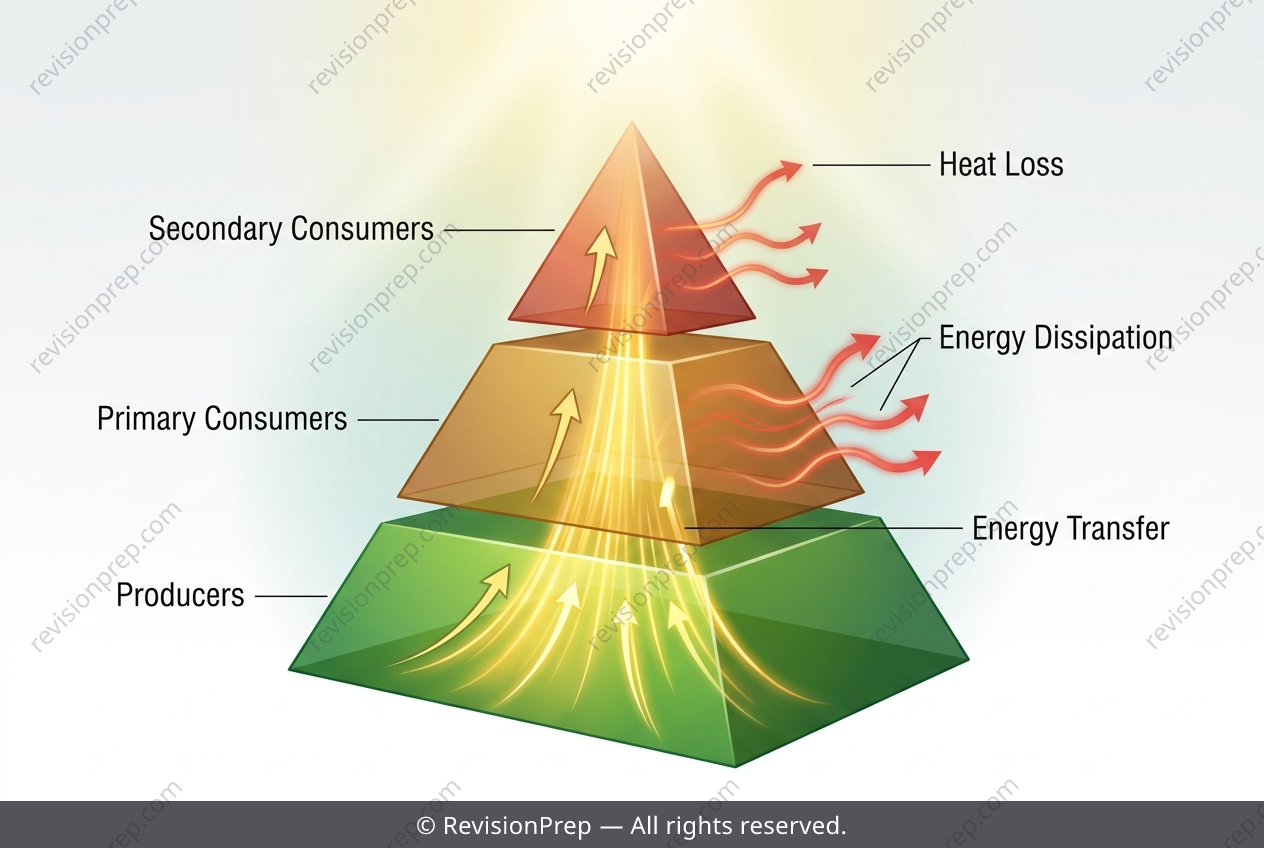
Energy transfer between trophic levels is never perfectly efficient. As energy moves from producers to consumers, most is lost through respiration, heat, movement and undigested material, so only a fraction of what a plant captures is actually stored as new biomass in the animal that eats it. This transfer efficiency can be expressed simply as energy stored in the consumer divided by energy available in the food source, often shown as a pyramid of energy. This matters because that fraction shapes how much food an ecosystem, or a farm, can ultimately produce. The lower the transfer efficiency between grass and cows, the less biomass is available at each successive level, meaning fewer animals can be supported on a given area of land. Understanding these losses helps explain why food chains are short, why meat production demands far more land than crops, and how energy pyramids connect each feeding level to the next.
Start practising IB questions today
150,000+ IB-styled questions, criteria-mapped and instantly accessible.