
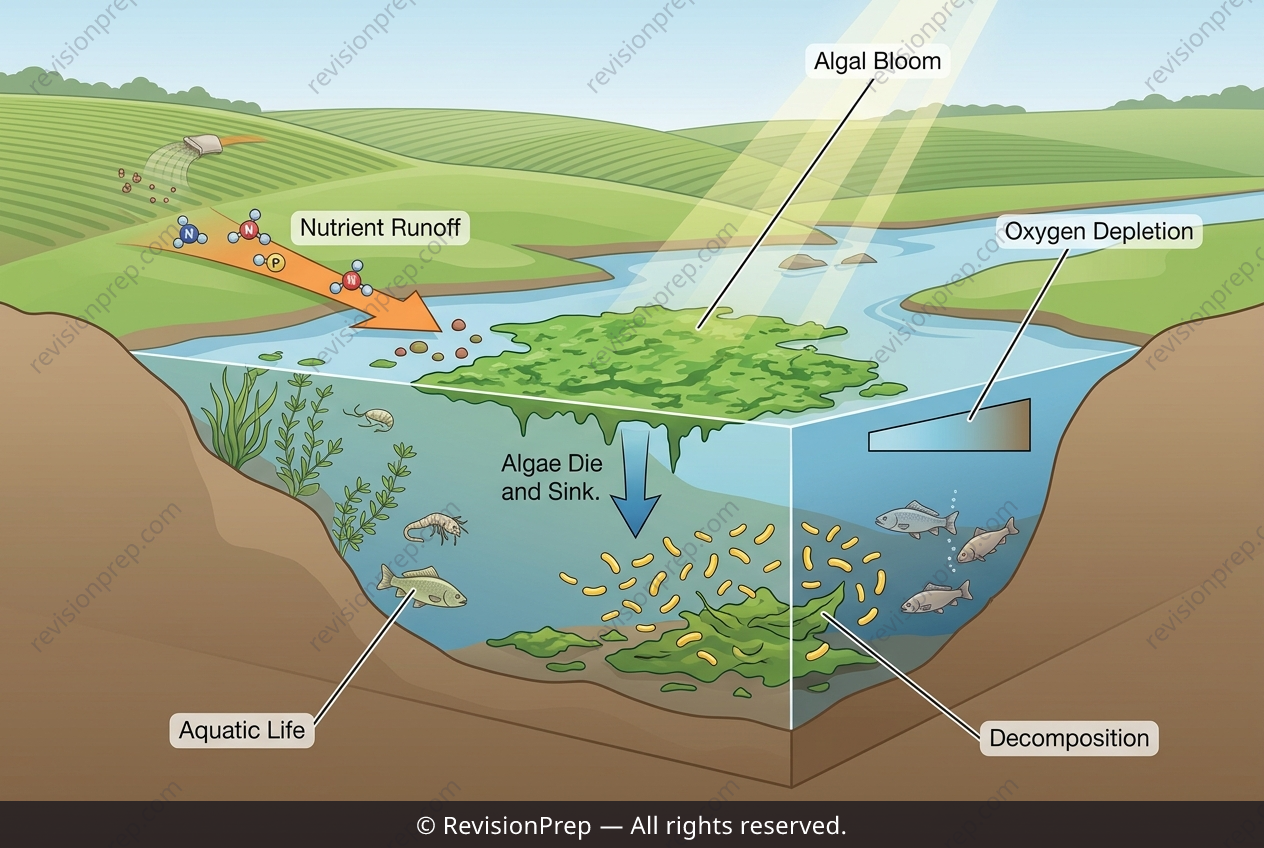
Biology: How Fertiliser Runoff Triggers Eutrophication
Eutrophication is the process by which excess nutrients enter a body of water and trigger runaway plant growth. Fertilisers spread on farmland are rich in nitrates and phosphates — the same compounds plants need to thrive. When rain washes them into a river, they act like plant food, feeding rapid blooms of algae that turn the water green and cloudy. This matters because a single nutrient imbalance can unravel an entire aquatic ecosystem. The blooming algae consume oxygen dissolved in the water, leaving fish and other animals unable to breathe. They also block sunlight from reaching underwater plants, while their decay releases foul smells and slimy residue. The knock-on effects reach people too, as the water can become unsafe to drink or swim in. Understanding this chain — nutrients in, algae bloom, oxygen depleted, life suffocates — shows how farming practices, water chemistry and biodiversity are tightly linked.
Start practising IB questions today
150,000+ IB-styled questions, criteria-mapped and instantly accessible.