
Biology: How Cilia Keep the Airways Clean
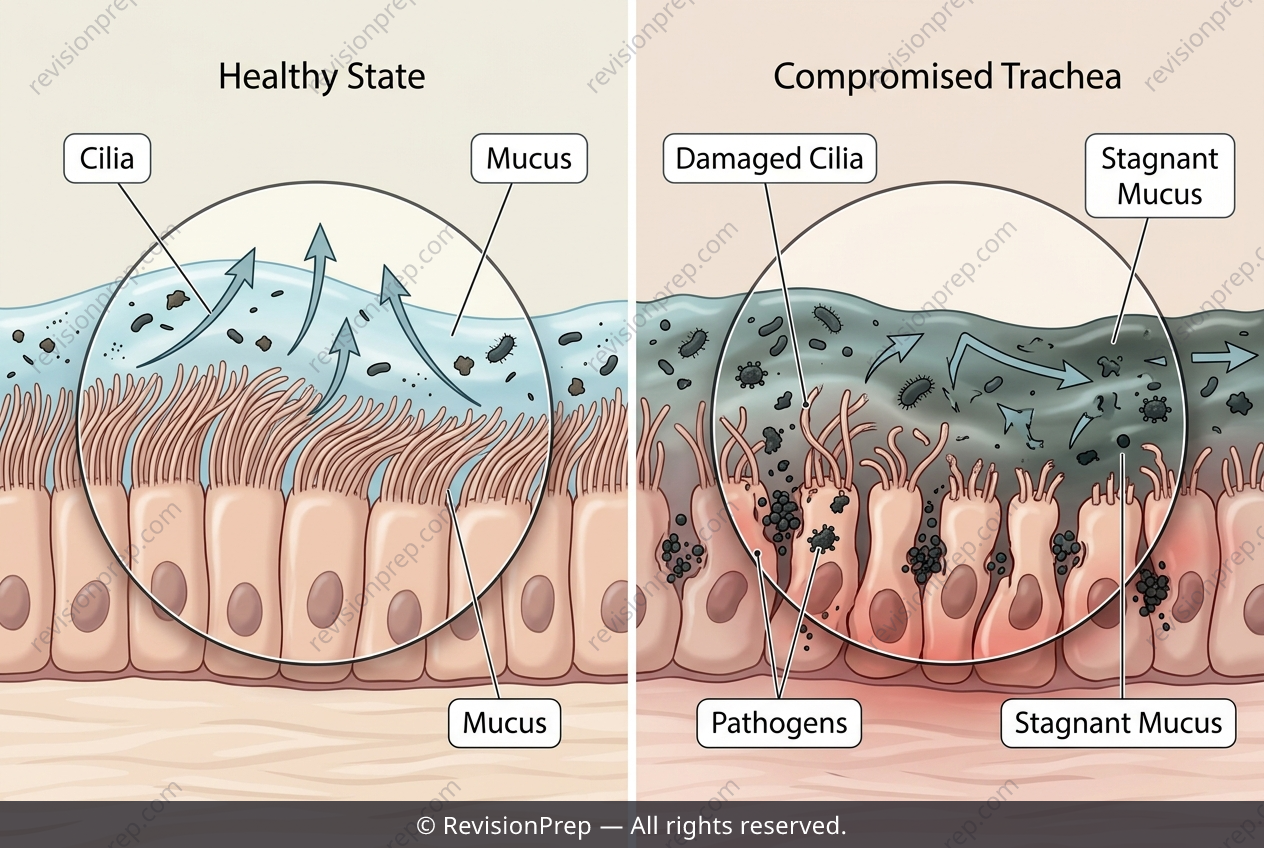
The mucociliary escalator is the respiratory system's self-cleaning mechanism, built from ciliated epithelial cells lining the trachea. Each cell bears cilia — hair-like projections on its apical surface — while mucus-secreting goblet cells sit interspersed among them. Together they form a coordinated defence against inhaled particles and pathogens. This matters because the airways are constantly exposed to dust, bacteria and viruses. Cilia beat in rhythmic, coordinated waves, sweeping the overlying mucus layer upward toward the throat, so trapped debris is carried away from the lungs rather than settling in them. The relationship is simple but vital: goblet cells supply the mucus, cilia provide the motive force, and the epithelium maintains the barrier. When cigarette smoke destroys cilia, this escalator breaks down. Mucus laden with pathogens accumulates, prolonging contact with the respiratory epithelium and sharply raising infection risk — the mechanism behind conditions such as chronic bronchitis.
Start practising IB questions today
150,000+ IB-styled questions, criteria-mapped and instantly accessible.