
Biology: How Light Controls Oxygen in Aquatic Ecosystems
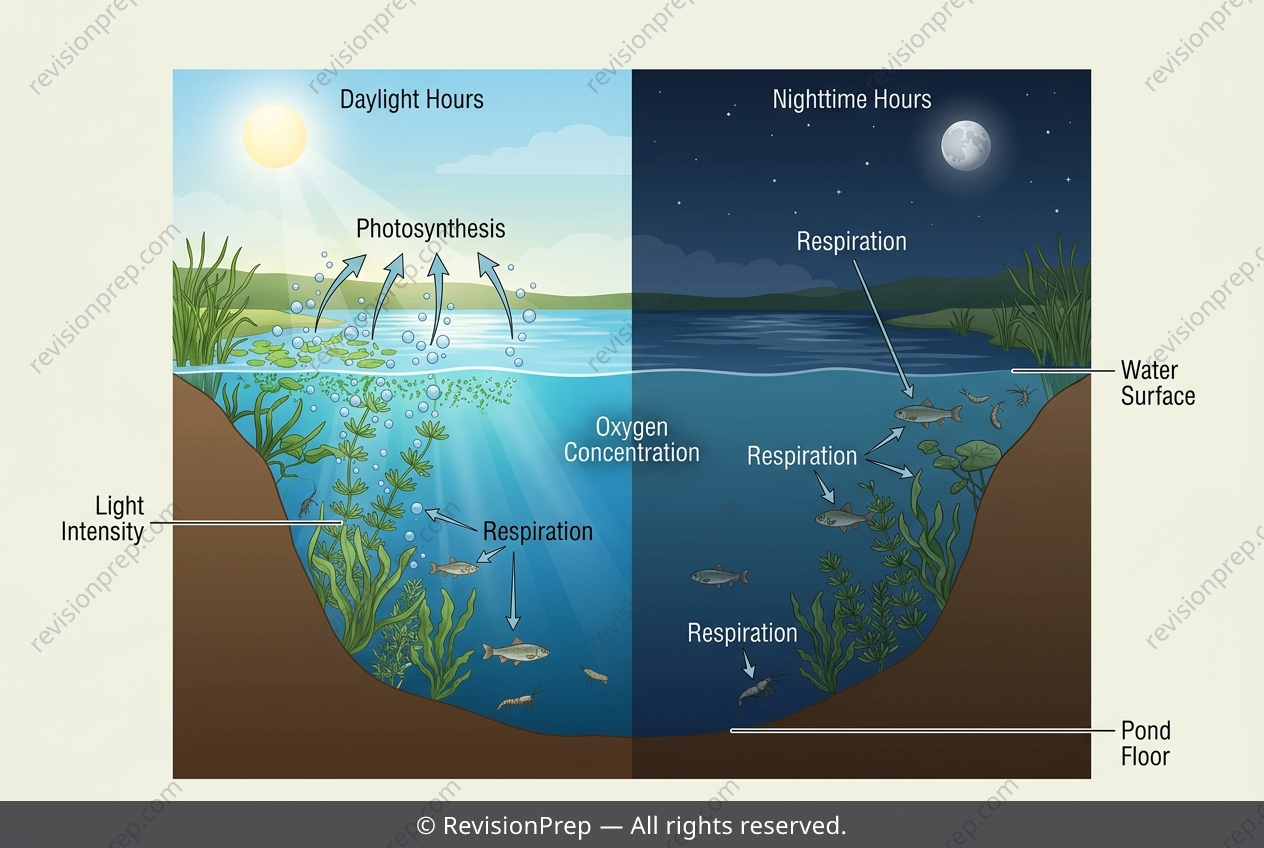
Photosynthesis and respiration are two halves of a single cycle: the oxygen released by photosynthesis fuels the aerobic respiration that powers life, while the carbon dioxide respiration releases is the raw material photosynthesis needs. In aquatic ecosystems, this interdependence becomes visible as a measurable rhythm of oxygen concentration, shaped by light, depth, and time of day. At the sunlit surface, aquatic plants and algae photosynthesise during daylight, releasing O2 that dissolves directly into the water. Light intensity falls sharply with depth, so photosynthesis becomes negligible at the bottom, where respiration by bottom-dwelling organisms and decomposers steadily consumes oxygen. Surface oxygen therefore rises from its midnight minimum to a noon peak before declining again by evening, tracking photosynthetic output against continuous respiratory demand. At night, when photosynthesis stops, respiration alone drives concentrations down. Comparing surface and bottom readings — such as the difference between noon and midnight values — reveals how profoundly oxygen availability depends on light, and why all aerobic life in a pond ultimately rests on photosynthesis.
Start practising IB questions today
150,000+ IB-styled questions, criteria-mapped and instantly accessible.