
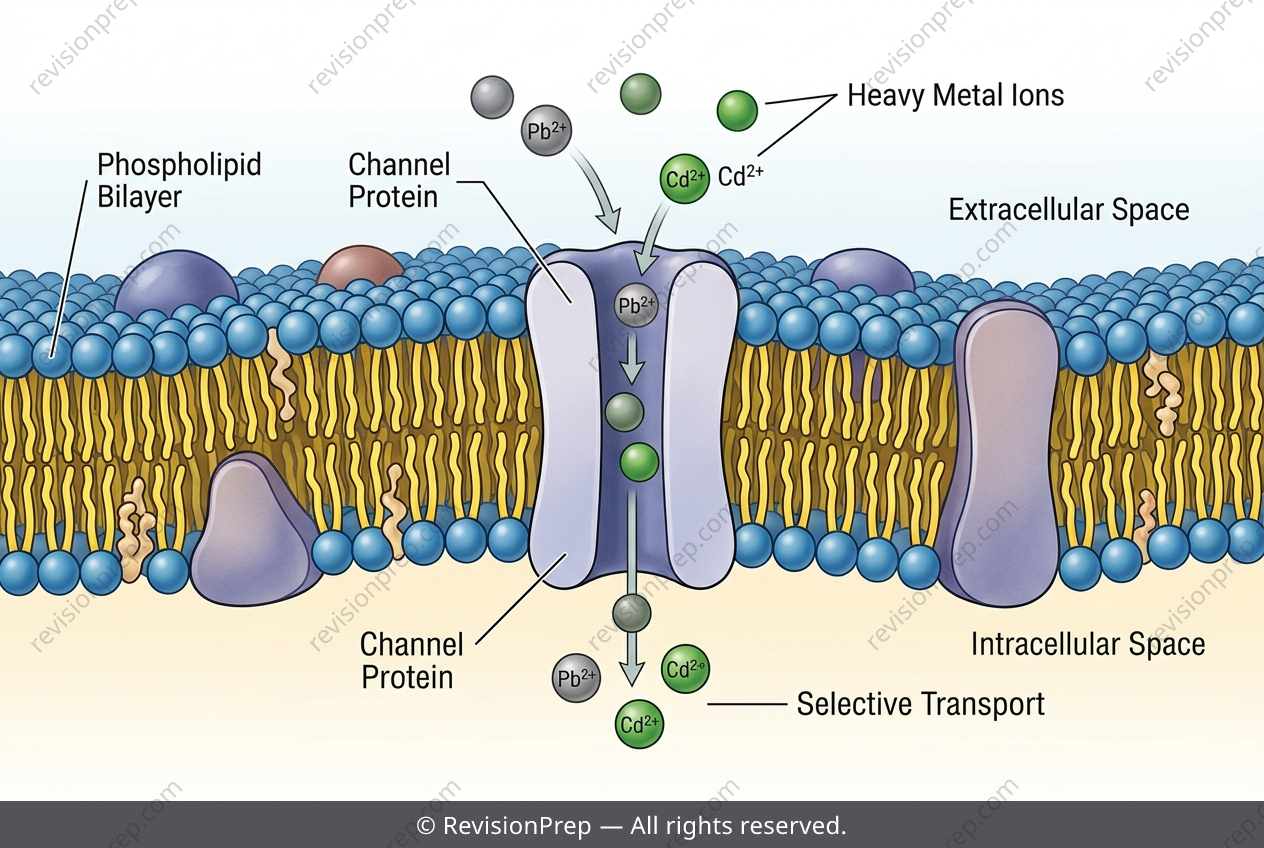
Biology: How Membrane Proteins Control Ion Transport
The fluid mosaic model describes cell membranes as a phospholipid bilayer studded with proteins that drift laterally through it. Transmembrane channel proteins sit within this bilayer, their hydrophobic regions anchoring them in the non-polar core while hydrophilic pores face the watery environments on each side. This structure underpins selective transport, allowing specific ions to cross a barrier that would otherwise exclude them. That selectivity matters because membranes control what enters and leaves a cell, shaping everything from nutrient uptake to waste removal. In the scenario above, synthetic channel proteins extend this principle to engineered bacteria that draw heavy metal ions such as Cd²⁺ and Pb²⁺ out of contaminated water. Yet the same biology that makes this possible also carries risk: genes for these proteins can spread to native bacteria through horizontal gene transfer, and sequestered metals can move up food chains as organisms consume one another, concentrating toxins at higher trophic levels.
Start practising IB questions today
150,000+ IB-styled questions, criteria-mapped and instantly accessible.