
Biology: The Trade-offs of Artificial Photosynthesis
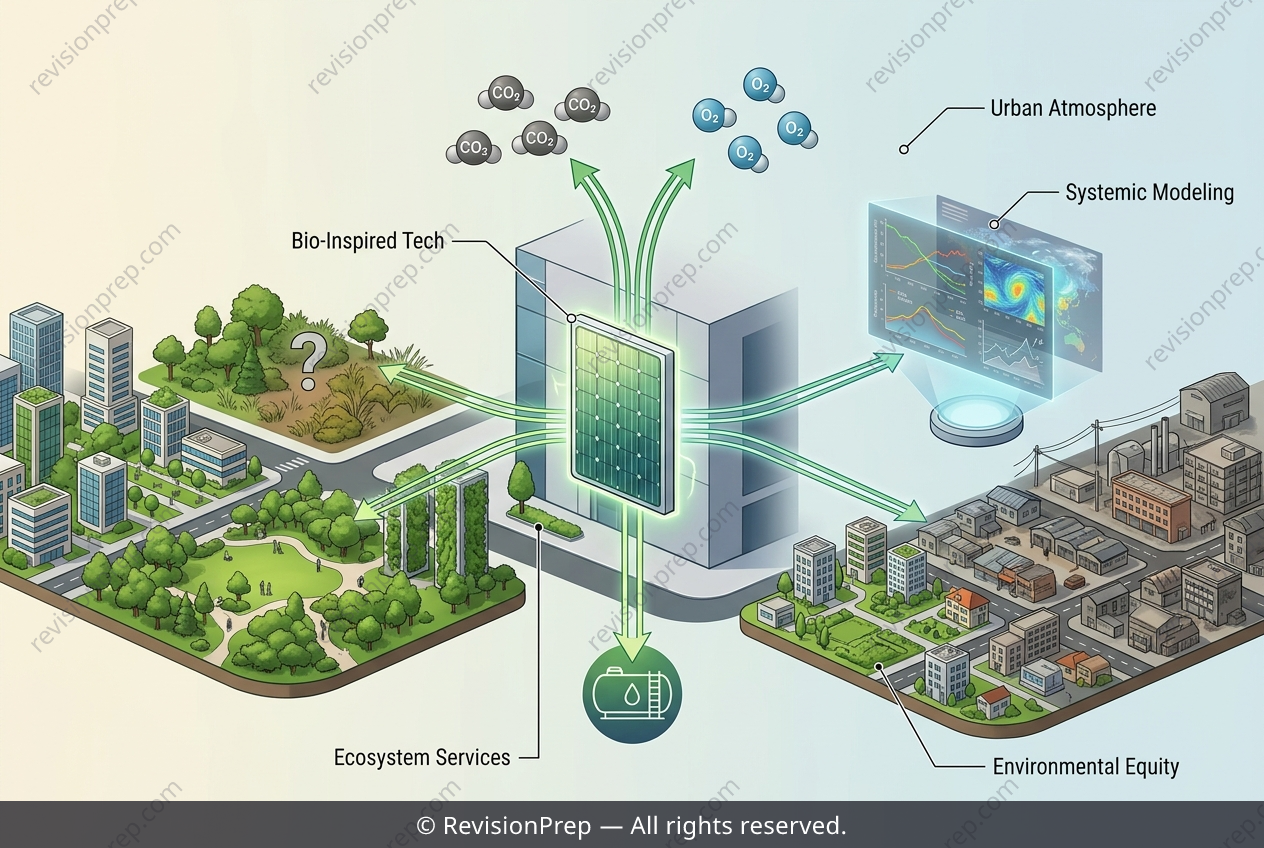
Bio-inspired technologies increasingly translate natural processes into engineered systems, and artificial photosynthesis is a striking example. Like its biological counterpart, it uses sunlight, water and carbon dioxide to produce oxygen and a usable fuel, echoing the balanced reactions of respiration and photosynthesis that sustain energy flow through ecosystems. The core idea is that human-made devices might supplement what living organisms already do, capturing carbon and releasing oxygen where green space is scarce. This matters because cities face rising CO₂ levels, poor air quality and limited renewable energy options, while natural wall vegetation already delivers ecosystem services such as habitat, temperature regulation and water retention. The tension lies in the trade-offs: devices may reduce atmospheric CO₂ and generate fuel, yet replacing living plants could disrupt food webs and reduce biodiversity. Ethical questions also emerge, since access to these benefits may depend on wealth, raising environmental justice concerns and risks of greenwashing.
Start practising IB questions today
150,000+ IB-styled questions, criteria-mapped and instantly accessible.