
Chemistry: How Elements Differ From Chemical Compounds
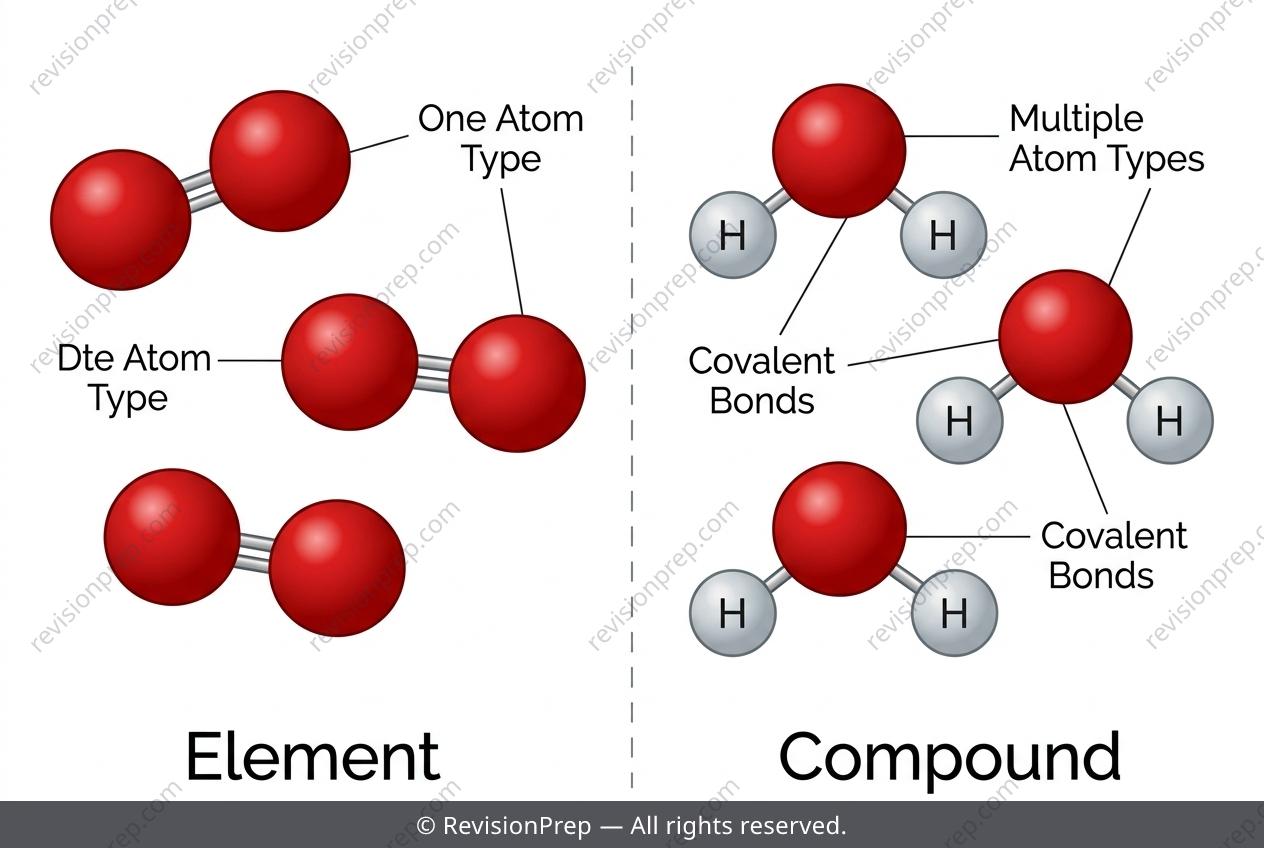
Every pure substance is either an element or a compound, and the difference comes down to the types of atoms it contains. An element is a pure substance made of only one type of atom, while a compound is a pure substance made of two or more different types of atoms chemically bonded together. This distinction underpins the whole classification of matter, from the oxygen we breathe to the water we drink. Consider two simple examples: O₂, where two identical oxygen atoms share a double covalent bond, and H₂O, where two hydrogen atoms bond to a single oxygen atom. Both are pure substances held together by covalent bonds, yet O₂ contains only one type of atom and H₂O contains two. Bonding type alone does not decide the category — atomic composition does. Recognising this relationship between atoms, bonds, and classification is essential for predicting how substances behave and react.
Start practising IB questions today
150,000+ IB-styled questions, criteria-mapped and instantly accessible.