
Chemistry: How Latent Heat Makes Steam Sterilise
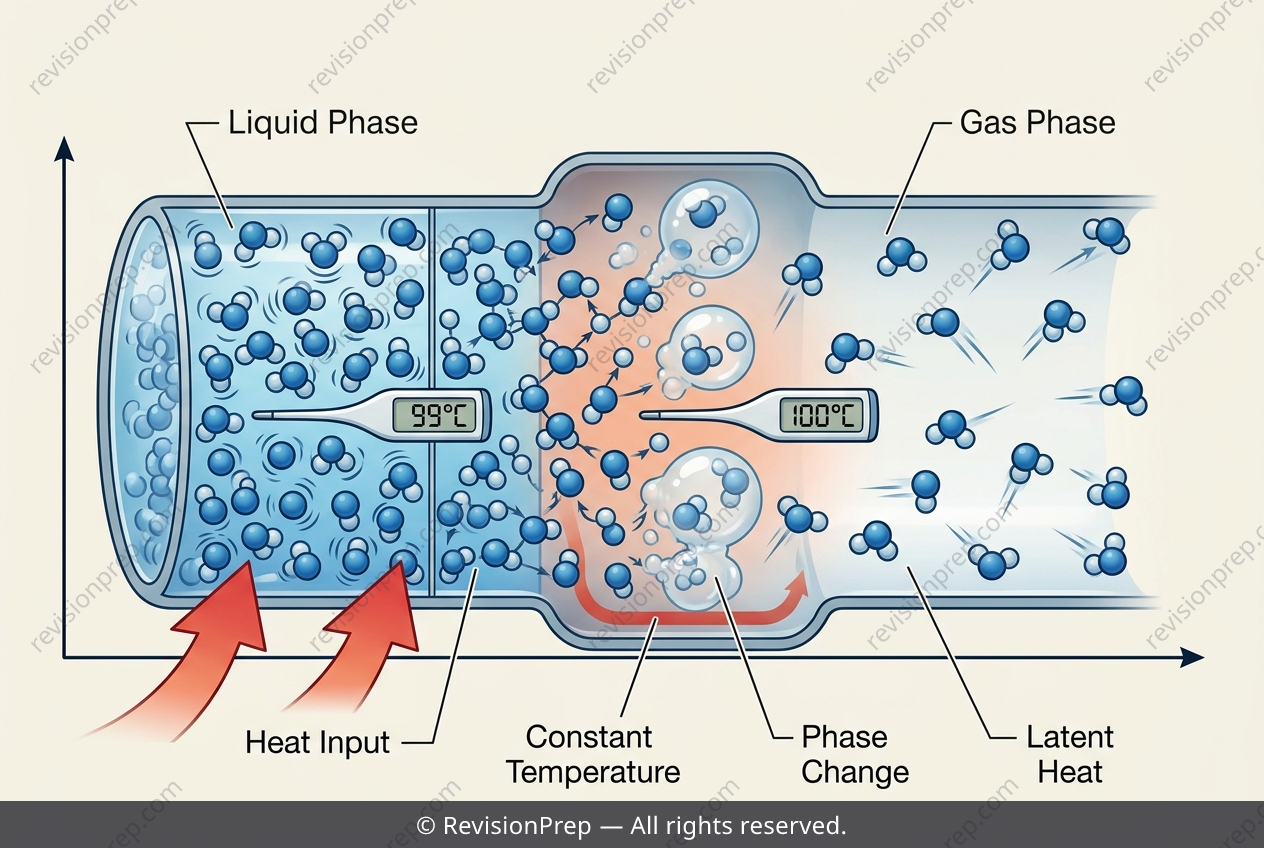
When a substance is heated, its temperature does not always rise steadily. During a phase change, energy is absorbed while the temperature stays fixed, producing the flat plateaus seen on a heating curve. This energy is called latent heat, and it goes into weakening and breaking the intermolecular forces holding particles together rather than increasing their kinetic energy. For water boiling at standard pressure, this plateau marks vaporisation, the transition from liquid to gas, where the substance absorbs its latent heat of vaporisation at a constant temperature. This idea matters far beyond the laboratory. In an autoclave, steam condenses on cooler instruments and releases that stored latent energy directly onto their surfaces at a steady temperature, delivering a large, reliable dose of heat. Dry air in an oven, by contrast, has a much lower heat capacity and transfers energy slowly. Understanding how latent heat and phase transitions connect energy input to temperature behaviour explains why steam sterilises so effectively.
Start practising IB questions today
150,000+ IB-styled questions, criteria-mapped and instantly accessible.